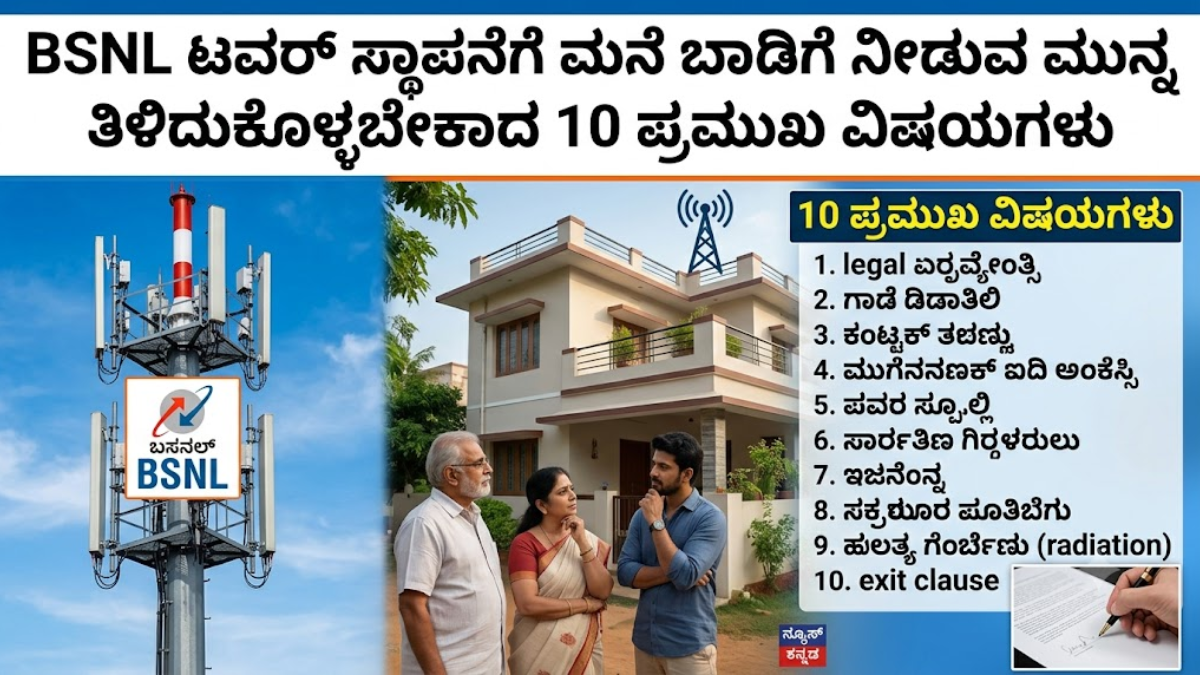
Installing a mobile communication tower on a residential property can provide homeowners with a regular rental income while allowing telecom companies to improve network coverage in a particular area. Many property owners are interested in BSNL tower installation on their home roof or land for rent, but it is important to understand the process, eligibility requirements, agreements, safety considerations, and possible fraud before making any decision.
What Is a BSNL Tower Installation?
A telecom tower is a structure used to support antennas and other communication equipment. If a telecom operator or an authorized infrastructure company needs better network coverage in a particular location, it may look for suitable properties such as rooftops, vacant plots, or commercial buildings.
For a homeowner, renting part of the property for telecom equipment can become a source of additional income. However, tower installation is not automatically available to every property owner. The location must satisfy technical, legal, and network-related requirements.
Can You Install a BSNL Tower on Your Home?
The possibility of installing a tower depends mainly on the requirements of the telecom operator or infrastructure company. Factors such as population density, existing network coverage, building location, structural strength, accessibility, and local regulations may influence the decision.
A strong and legally documented property is generally more suitable. In the case of a rooftop installation, the building may also need to be inspected to determine whether it can safely support the proposed equipment.
Basic Process for Applying
Property owners should first identify whether there is an official requirement for telecom infrastructure in their area. Applications should be made only through legitimate channels connected with the telecom operator or an authorized infrastructure provider.
Typically, the process may involve:
- Submitting basic property information.
- Providing ownership or occupancy documents when requested.
- Allowing a technical team to inspect the location.
- Checking structural and technical suitability.
- Completing legal and regulatory verification.
- Negotiating rent, lease duration, and other terms.
- Signing a formal agreement.
- Obtaining necessary permissions before installation.
The exact procedure can vary depending on the company, location, type of installation, and applicable local rules.
How Much Rent Can a Property Owner Receive?
There is no universal fixed rent for a telecom tower. The amount may depend on the location, demand for network coverage, property type, available space, tower or equipment requirements, lease period, and commercial terms negotiated between the parties.
Therefore, homeowners should be careful about websites or agents promising a guaranteed monthly rental amount without first inspecting the property or confirming an actual requirement.
Important Documents and Permissions
Before signing an agreement, property owners should carefully verify ownership documents, identity and address information, property-related records, and any permissions required by local authorities.
A proper agreement should clearly mention the rental amount, payment schedule, lease period, maintenance responsibilities, access rights, electricity arrangements, installation conditions, termination provisions, and responsibility for removing the equipment after the agreement ends.
Beware of Tower Installation Scams
One of the biggest risks in this field is fraud. Fake websites and individuals sometimes claim to represent telecom companies and ask property owners to pay registration fees, security deposits, processing charges, taxes, NOC fees, or advance payments before a tower is installed.
Homeowners should never send money simply because someone promises a telecom tower and high monthly rent. Company details, authorization, documents, and payment requests should be independently verified through official sources.
Final Thoughts
Renting a rooftop or property for telecom infrastructure can be an attractive opportunity for eligible homeowners, but installation depends on genuine network requirements and technical feasibility. The safest approach is to deal only with verified telecom operators or authorized infrastructure companies, read every agreement carefully, and avoid advance payments to unknown agents.
A legitimate tower installation process involves property verification, technical assessment, legal documentation, necessary permissions, and a formal agreement. Taking these precautions can help property owners protect their property and avoid financial scams while exploring the possibility of earning rental income from telecom infrastructure.