Introduction
Women’s empowerment has become one of the most important goals of modern India. Financial independence plays a key role in empowering women, especially those from rural and economically weaker backgrounds. To support this vision, the Government of India and various state governments have introduced several schemes that provide loans, subsidies, and financial assistance exclusively for women.
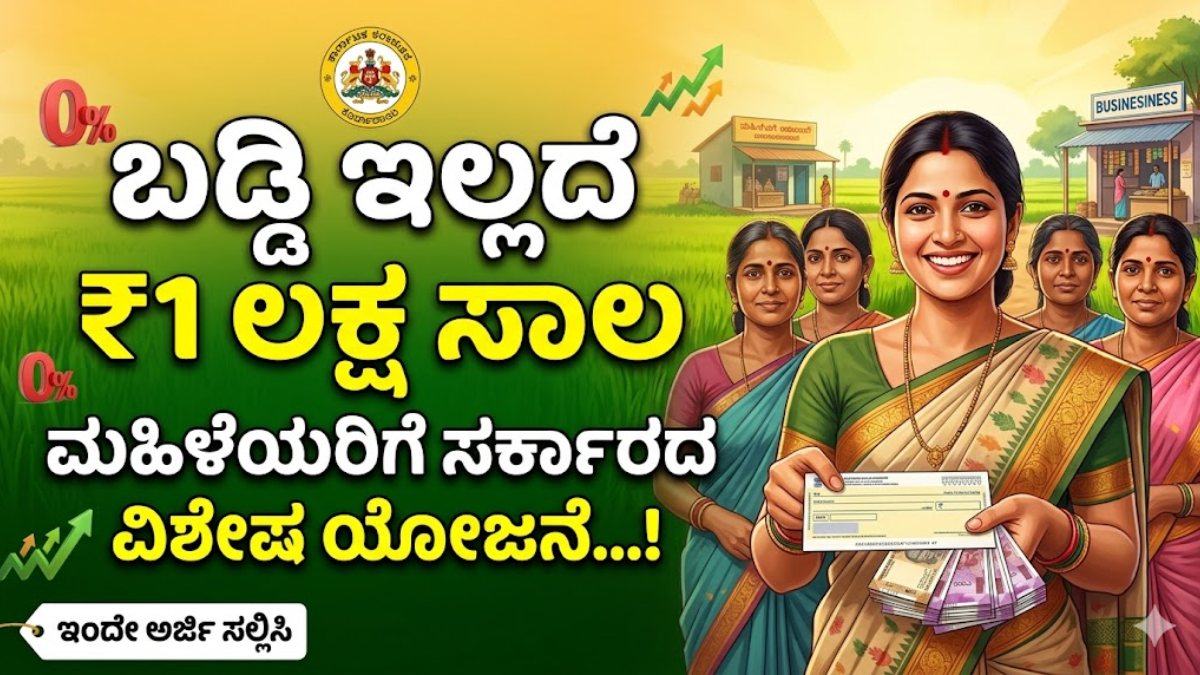
Among these initiatives, interest-free or low-interest loan schemes up to ₹1 lakh have gained significant attention. These schemes aim to help women start small businesses, become self-employed, and improve their standard of living without the burden of heavy interest rates.
This article provides a complete, detailed, and copyright-free explanation of such schemes, their benefits, eligibility criteria, application process, and overall impact on society.
Understanding Interest-Free Loan Schemes for Women
An interest-free loan scheme means that the borrower does not have to pay any additional interest on the borrowed amount. She only repays the principal amount over a fixed period. These schemes are usually supported by governments, self-help groups (SHGs), or subsidized financial institutions.
In India, one of the most relevant examples is the Mukhyamantri Mahila Utkarsh Yojana (MMUY), which offers interest-free loans up to ₹1 lakh to women for business purposes. (myScheme)
Additionally, schemes like the Udyogini Scheme also provide loans (including interest-free options for specific categories like SC/ST, widows, and disabled women) to promote entrepreneurship. (Paisabazaar)
Objectives of the Scheme
The primary objectives of government loan schemes for women include:
1. Promoting Women Entrepreneurship
These schemes encourage women to start small businesses such as tailoring, beauty parlors, food processing, handicrafts, and retail shops.
2. Financial Independence
Providing access to interest-free credit reduces dependency on family members or moneylenders.
3. Poverty Reduction
By enabling income generation, these schemes help families move out of poverty.
4. Rural Development
Most beneficiaries come from rural areas, leading to balanced regional development.
5. Employment Generation
Women entrepreneurs often create jobs for others in their communities.
Key Features of ₹1 Lakh Interest-Free Loan Schemes
Loan Amount
- Up to ₹1 lakh for small business or self-employment activities.
Interest Rate
- Zero interest (in some schemes like MMUY or SHG-based loans).
- Subsidized or partially waived interest in others.
Collateral Requirement
- Usually no collateral required.
- Loans are often given based on group guarantees (Self Help Groups).
Repayment Period
- Typically 1 to 5 years.
- Flexible EMI options.
Target Beneficiaries
- Women aged 18–60 years.
- Priority given to rural, low-income, and marginalized groups.
Major Government Schemes Offering Loans to Women
1. Mukhyamantri Mahila Utkarsh Yojana (MMUY)
This is one of the most popular schemes offering interest-free loans up to ₹1 lakh.
Key Highlights:
- Loan up to ₹1 lakh without interest.
- Designed for women self-help groups.
- Encourages small-scale entrepreneurship.
- No heavy documentation required.
Purpose:
To support women in starting or expanding small businesses and improving their economic condition.
2. Udyogini Scheme
The Udyogini Scheme is another important initiative aimed at empowering women entrepreneurs.
Features:
- Loans up to ₹3 lakh.
- Interest-free loans for specific categories like SC/ST women, widows, and disabled women. (Paisabazaar)
- Subsidy ranging from 30% to 50%.
Supported Activities:
- Agriculture
- Retail shops
- Small manufacturing units
3. Pradhan Mantri MUDRA Yojana (PMMY)
Although not completely interest-free, this scheme provides easy loans for women entrepreneurs.
Categories:
- Shishu: Up to ₹50,000
- Kishor: ₹50,000 to ₹5 lakh
- Tarun: ₹5 lakh to ₹10 lakh
Micro-credit schemes under MUDRA also support loans around ₹1 lakh for small businesses. (Mudra)
4. Self Help Group (SHG) Based Loans
Many state governments provide interest-free or subsidized loans through SHGs.
Features:
- Group-based lending system.
- Easy access to credit.
- Interest often reimbursed by the government.
In some states like Telangana, large-scale interest-free loan programs for women SHGs have been implemented to boost economic activity. (The Times of India)
Eligibility Criteria
Although criteria vary slightly by scheme, the general requirements are:
- Applicant must be a woman.
- Age between 18 and 60 years.
- Must belong to a Self Help Group (in many schemes).
- Should have a basic business idea or activity.
- Income should fall under specified limits (for some schemes).
- Preference for SC/ST/OBC/minority categories.
Documents Required
To apply for such schemes, the following documents are usually needed:
- Aadhaar Card
- PAN Card (if available)
- Address proof
- Income certificate
- Bank account details
- Passport-size photographs
- SHG membership proof (if applicable)
- Simple business plan (optional in some cases)
Application Process
Step 1: Identify the Scheme
Visit official government portals like myscheme.gov.in or local government offices.
Step 2: Visit Bank or SHG Office
Approach a nearby bank, microfinance institution, or SHG coordinator.
Step 3: Fill Application Form
Provide basic personal and business details.
Step 4: Submit Documents
Attach necessary documents for verification.
Step 5: Approval Process
Authorities review the application and verify eligibility.
Step 6: Loan Disbursement
Once approved, the loan amount is transferred to the applicant’s bank account.
Benefits of Interest-Free Loans for Women
1. No Financial Burden
Since there is no interest, repayment becomes easier and stress-free.
2. Encourages Entrepreneurship
Women can start businesses without fear of debt traps.
3. Improves Family Income
Additional income helps in better education, healthcare, and living standards.
4. Social Empowerment
Financial independence increases confidence and decision-making power.
5. Reduces Dependence on Moneylenders
Women avoid high-interest informal loans.
Types of Businesses Women Can Start
With a ₹1 lakh loan, women can start various small businesses such as:
- Tailoring and stitching units
- Beauty parlors or salons
- Grocery or small retail shops
- Dairy farming
- Poultry farming
- Food processing units
- Handmade crafts and products
- Mobile repair or small service centers
Challenges in Implementation
Despite the benefits, some challenges exist:
Lack of Awareness
Many women are unaware of these schemes.
Documentation Issues
Some applicants struggle with paperwork.
Limited Financial Literacy
Understanding loan processes can be difficult.
Social Barriers
In some areas, women face restrictions in starting businesses.
Government Efforts to Improve Access
The government is taking steps to overcome these challenges:
- Digital portals for easy access to schemes
- Awareness campaigns in rural areas
- Training programs for women entrepreneurs
- Simplified application processes
- Support through NGOs and SHGs
Impact on Society
Interest-free loan schemes have a significant positive impact:
Economic Growth
More small businesses contribute to the economy.
Women Empowerment
Women gain independence and confidence.
Rural Development
Income generation improves village economies.
Employment Creation
New businesses create job opportunities.
Future Scope
The future of such schemes looks promising:
- Expansion to more beneficiaries
- Increased loan limits
- Integration with digital banking
- More training and skill development programs
- Stronger support for startups led by women
Conclusion
Government schemes offering interest-free loans up to ₹1 lakh for women are powerful tools for economic and social transformation. They provide women with the opportunity to become financially independent, start businesses, and contribute to the nation’s development.
Schemes like Mukhyamantri Mahila Utkarsh Yojana and Udyogini Scheme demonstrate the government’s commitment to empowering women at the grassroots level. With proper awareness, support, and implementation, these initiatives can bring lasting change to millions of lives.
Women today are not just beneficiaries—they are entrepreneurs, leaders, and change-makers. With the right financial support, they can shape a stronger and more inclusive future for India.