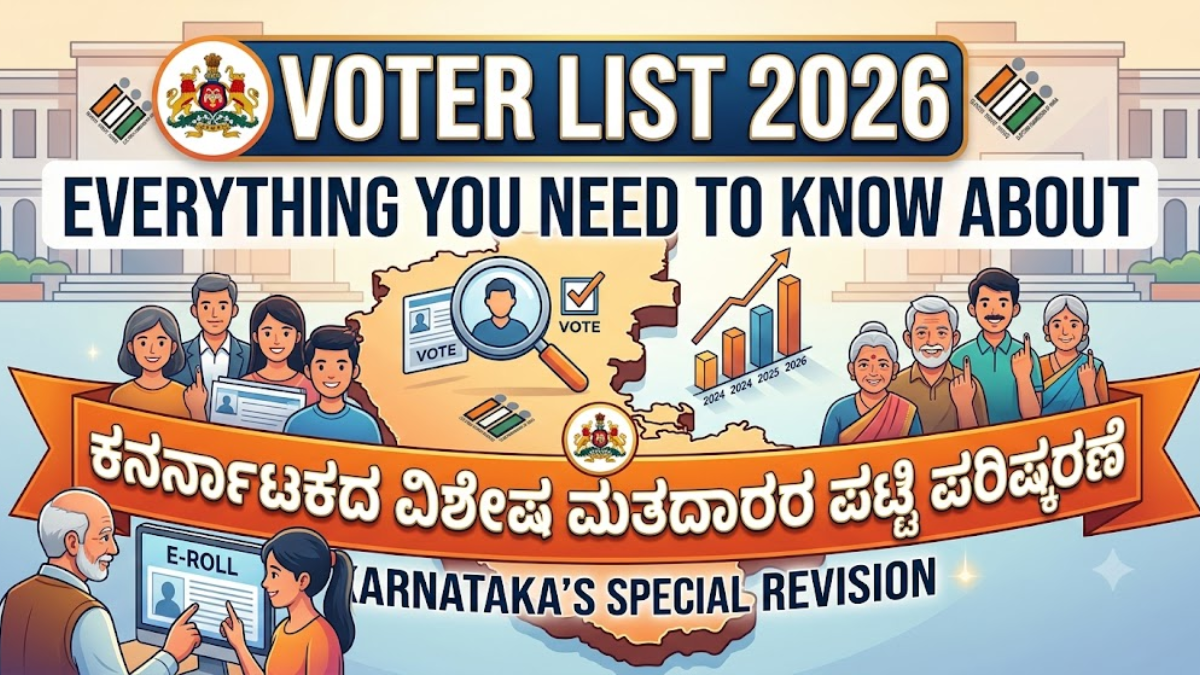
Voting is one of the most important rights enjoyed by citizens in a democratic country. Every eligible citizen has the opportunity to participate in choosing representatives who shape the future of the nation, state, and local communities. To ensure that every qualified voter is included in the electoral roll and that the voter database remains accurate and up to date, the Office of the Chief Electoral Officer, Karnataka, has launched a Special Intensive Revision (SIR) of the electoral roll for 2026.
The objective of this large-scale exercise is to verify voter records, include newly eligible citizens, remove ineligible or duplicate entries, and correct any errors in the electoral database. The revision also provides an opportunity for citizens to update personal information such as their address, name, age, or other details before future elections.
This comprehensive campaign is an essential step in strengthening democracy by ensuring that every eligible voter has the chance to exercise their constitutional right. Citizens are encouraged to actively participate in the revision process, cooperate with election officials, and verify that their names appear correctly on the electoral roll.
Why the Special Electoral Roll Revision Is Important
An electoral roll is the official list of people who are eligible to vote in elections. A clean and updated voter list helps ensure free, fair, and transparent elections. Over time, changes such as new voters turning 18, people changing residences, deaths, duplicate registrations, and corrections in personal details require the voter database to be updated.
The Special Intensive Revision for 2026 has been designed to:
- Register all newly eligible voters.
- Verify existing voter information.
- Remove duplicate or invalid entries.
- Correct errors in voter details.
- Update addresses and other personal information.
- Ensure that every eligible citizen has the opportunity to vote.
Maintaining an accurate electoral roll improves the credibility of the election process and prevents administrative issues during polling.
Eligibility Date for New Voters
For the 2026 revision, October 1, 2026 has been fixed as the qualifying date.
Any Indian citizen who will complete 18 years of age on or before October 1, 2026, and meets all other eligibility conditions under election laws, can apply to have their name included in the voter list.
Young citizens who become eligible to vote for the first time are encouraged to complete their voter registration well before the final electoral roll is published.
Door-to-Door Verification by Booth Level Officers
As part of the Special Intensive Revision, Booth Level Officers (BLOs) will conduct extensive field verification across Karnataka.
The house-to-house verification campaign will be carried out from June 30, 2026, to July 29, 2026.
During this period, Booth Level Officers will visit residential areas assigned to them to verify voter information and assist residents with the electoral roll revision process.
Citizens are advised to cooperate with the visiting officials by:
- Providing accurate personal information.
- Verifying details already available in voter records.
- Informing officials about any required corrections.
- Reporting if eligible family members are not included in the voter list.
- Informing officials about individuals who have permanently shifted, passed away, or are otherwise ineligible.
This field verification plays an important role in improving the quality and accuracy of the electoral roll.
Distribution of Application Forms
During the door-to-door campaign, Booth Level Officers will distribute the necessary application forms based on each citizen’s requirements.
Residents can obtain assistance in completing these forms if they need to:
- Register as a new voter.
- Correct mistakes in voter information.
- Change their residential address.
- Delete duplicate or incorrect voter entries.
- Update personal details.
Officials are available to explain the process and help citizens submit accurate information.
Draft Electoral Roll Publication
After the initial verification process is completed, the draft electoral roll will be officially published on August 5, 2026.
The publication of the draft list allows every citizen to review their voter information before the final electoral roll is prepared.
Once the draft list becomes available, voters should carefully verify:
- Whether their name appears.
- Correct spelling of their name.
- Father’s, mother’s, or spouse’s name.
- Age or date of birth.
- Residential address.
- Polling station details.
- Elector Photo Identity Card (EPIC) information.
Checking these details early helps avoid complications before elections.
Claims and Objections Period
If any mistakes are noticed in the draft electoral roll, citizens will have the opportunity to submit claims or objections.
The claims and objections period will remain open from August 5, 2026, to September 4, 2026.
During this time, eligible citizens can:
- Apply for inclusion of their names.
- Request corrections in personal details.
- Seek deletion of duplicate entries.
- Report names of deceased voters.
- Object to incorrect registrations.
- Update residential addresses.
Election authorities will examine every valid application before finalizing the electoral roll.
Final Electoral Roll
Once all claims and objections have been carefully reviewed and processed, the final electoral roll will be published on October 7, 2026.
The final list will serve as the official voter database for upcoming elections conducted after its publication.
Citizens should ensure that their details are accurate before the final publication date because any delay in submitting corrections could affect their voting eligibility in future elections.
Different Application Forms Used in the Revision Process
The Election Commission provides different application forms for various voter-related services.
Form 6 – Registration of New Voters
Form 6 is meant for Indian citizens who wish to register themselves as voters for the first time or whose names are not present in the electoral roll.
Young voters who have attained the qualifying age should use this form to apply for voter registration.
Form 6A – Overseas Indian Electors
Indian citizens living outside India but retaining Indian citizenship may apply through Form 6A for inclusion in the electoral roll as Overseas Electors, subject to applicable rules.
Form 7 – Deletion of Name
Form 7 is used when a voter’s name needs to be removed from the electoral roll.
This may include situations such as:
- Duplicate voter registration.
- Permanent migration.
- Death of a voter.
- Incorrect inclusion.
Submitting accurate information helps maintain a clean electoral database.
Form 8 – Corrections and Updates
Form 8 is used to make corrections or update existing voter details.
Common reasons for using Form 8 include:
- Correcting spelling mistakes.
- Updating photographs.
- Changing residential address.
- Correcting age or date of birth.
- Updating relationship details.
- Correcting gender information where applicable.
Submitting the correct form ensures faster processing of applications.
Online Verification of Voter Details
Citizens no longer need to depend solely on physical visits to election offices. Several digital services make it convenient to verify voter information from home.
Eligible voters can check their names in the electoral roll online using the National Voters’ Service Portal (NVSP) or through the ECINET mobile application.
These digital platforms allow users to:
- Search for their name in the electoral roll.
- View polling station information.
- Download voter-related information where available.
- Apply for voter registration.
- Submit correction requests.
- Track application status.
- Update voter information.
Online services significantly reduce paperwork and make the voter registration process more accessible.
Benefits of Digital Electoral Services
The digital voter services introduced by election authorities provide several advantages.
These include:
- Easy access from anywhere.
- Faster application submission.
- Reduced waiting time.
- Transparent application tracking.
- Convenient correction requests.
- Secure digital record management.
- Better accessibility for citizens living away from their hometown.
These services help improve citizen participation while reducing administrative burden.
Importance of Verifying Your Name
Many citizens assume that once they register as voters, their names will always remain in the electoral roll. However, changes in residence, administrative corrections, duplication, or data errors may sometimes affect voter records.
Therefore, every eligible voter should verify their information whenever a revised electoral roll is published.
Checking the voter list in advance helps avoid situations where individuals discover missing or incorrect entries only on election day.
Responsibilities of Citizens
The success of the Special Intensive Revision depends not only on election officials but also on public cooperation.
Citizens should:
- Respond honestly during verification.
- Keep necessary documents ready if required.
- Inform Booth Level Officers about any corrections.
- Verify the draft electoral roll.
- Submit applications within the prescribed timeline.
- Encourage eligible family members to register.
- Report duplicate or incorrect entries responsibly.
Active public participation contributes to a more reliable electoral system.
Importance of First-Time Voter Registration
Young voters represent an important segment of the democratic process.
Registering immediately after becoming eligible ensures that first-time voters can participate in future elections without unnecessary delays.
Educational institutions, families, and community organizations can also encourage newly eligible youth to complete their voter registration during the revision period.
Early registration helps election authorities prepare more accurate electoral rolls while encouraging civic engagement among young citizens.
Common Reasons for Updating Voter Information
Citizens may need to update their voter records for several reasons, including:
- Moving to a new residence.
- Marriage resulting in change of surname.
- Correction of spelling errors.
- Changes in personal information.
- Duplicate registration.
- Missing photographs.
- Incorrect age details.
- Changes in polling area due to relocation.
Keeping voter records updated ensures smoother participation during elections.
Role of Booth Level Officers
Booth Level Officers act as the primary link between election authorities and voters.
Their responsibilities include:
- Conducting field verification.
- Visiting households.
- Distributing application forms.
- Assisting citizens with voter registration.
- Verifying submitted information.
- Collecting completed applications.
- Reporting changes to electoral authorities.
- Helping maintain accurate electoral rolls.
Their work is essential for ensuring that the electoral database reflects the actual voting population.
How Citizens Can Prepare
To make the verification process easier, citizens should:
- Check whether they are eligible to vote.
- Keep identification documents ready if requested.
- Verify all family members’ voter details.
- Ensure residential information is accurate.
- Complete application forms carefully.
- Submit forms before the deadline.
- Track the status of submitted applications.
Taking these simple steps can help avoid delays in processing voter-related requests.
Important Dates for the 2026 Electoral Roll Revision
The key dates for Karnataka’s Special Intensive Revision are:
- June 30, 2026: Door-to-door verification begins.
- July 29, 2026: Completion of house-to-house verification.
- August 5, 2026: Publication of the draft electoral roll.
- August 5 to September 4, 2026: Period for filing claims and objections.
- October 1, 2026: Qualifying date for determining voter eligibility (18 years of age).
- October 7, 2026: Publication of the final electoral roll.
Citizens should keep these dates in mind to ensure they complete any required voter-related formalities within the prescribed schedule.
Help and Assistance
Individuals requiring guidance regarding voter registration, corrections, deletion requests, or electoral roll verification can contact the Election Commission’s voter helpline.
The toll-free 1950 helpline is available to answer voter-related queries and provide assistance regarding electoral services.
In addition, voters can seek help from their local Booth Level Officer or the Electoral Registration Officer assigned to their constituency.
Conclusion
The 2026 Special Intensive Revision of Karnataka’s electoral roll is a significant initiative aimed at creating a complete, accurate, and transparent voter database. Through door-to-door verification, online services, public participation, and clearly defined timelines, election authorities are working to ensure that every eligible citizen has an equal opportunity to exercise the right to vote.
Whether you are registering as a first-time voter, updating your address, correcting personal information, or simply confirming that your name appears on the electoral roll, participating in this revision process is an important civic responsibility. By verifying your voter details within the specified timeline and cooperating with Booth Level Officers, you contribute to a stronger and more inclusive democratic system where every eligible vote counts.