Introduction
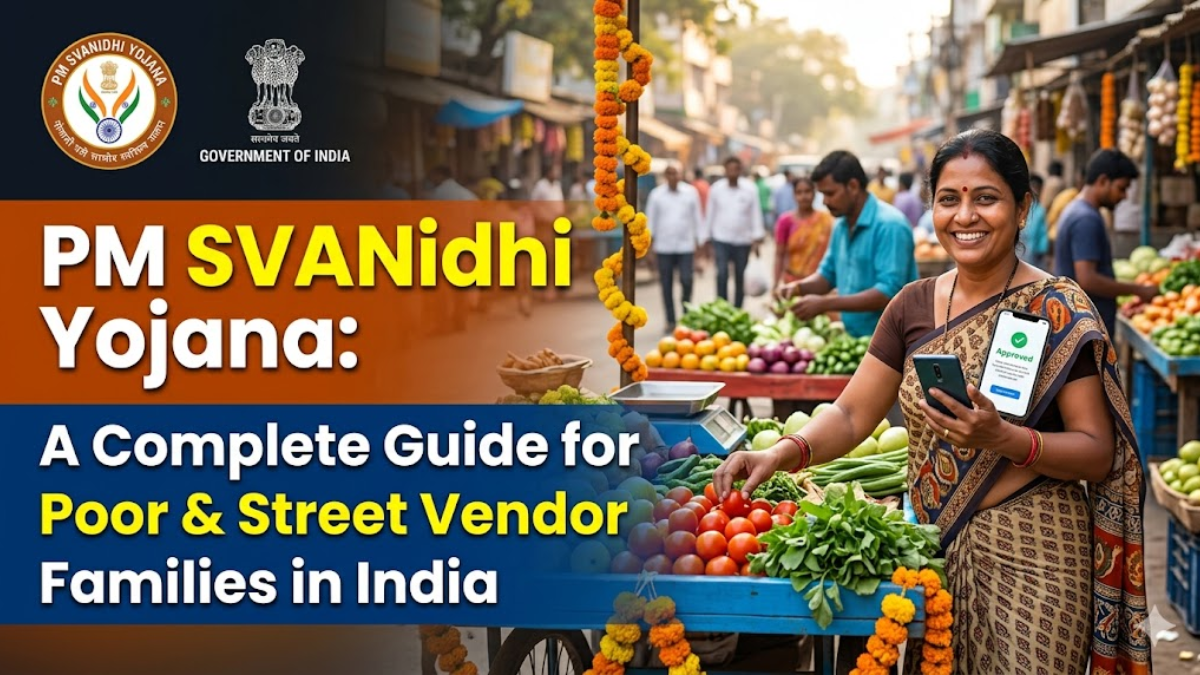
The Pradhan Mantri Street Vendor’s AtmaNirbhar Nidhi (PM SVANidhi) Yojana is an important government scheme launched by the Government of India to support street vendors and small traders. The scheme aims to provide affordable working capital loans to street vendors so that they can restart and expand their businesses. Many poor families in India depend on small roadside businesses such as selling vegetables, fruits, snacks, tea, clothes, flowers, and household items. PM SVANidhi helps these individuals become financially independent and improve their standard of living.
The scheme was launched in June 2020 by the Ministry of Housing and Urban Affairs. It was introduced mainly to help street vendors who suffered financial losses during the COVID-19 pandemic. However, its benefits continue to support millions of vendors across the country.
This article explains PM SVANidhi Yojana in detail, including its objectives, benefits, eligibility, loan process, required documents, repayment system, digital payment incentives, and overall impact on poor people.
What is PM SVANidhi Yojana?
PM SVANidhi stands for Pradhan Mantri Street Vendor’s AtmaNirbhar Nidhi. It is a micro-credit scheme that provides collateral-free loans to street vendors. The primary objective is to help small vendors access formal banking services and reduce dependence on private moneylenders who often charge high interest rates.
Under this scheme, eligible street vendors can obtain working capital loans to purchase stock, raw materials, equipment, and other items required for their businesses. The scheme also promotes digital transactions and financial inclusion.
PM SVANidhi is one of the most significant initiatives for the welfare of urban poor people because it provides easy access to credit without requiring any security or collateral.
Objectives of PM SVANidhi Yojana
The main objectives of the scheme are:
- To provide affordable loans to street vendors.
- To help vendors restart businesses affected by financial difficulties.
- To encourage self-employment and entrepreneurship.
- To reduce dependence on informal moneylenders.
- To promote digital payments among small vendors.
- To improve financial inclusion.
- To increase the income and living standards of poor families.
- To support urban livelihoods and economic growth.
Who Are Street Vendors?
Street vendors are people who sell goods and services in public places such as roadsides, markets, streets, footpaths, and open areas. Examples include:
- Vegetable sellers
- Fruit sellers
- Tea vendors
- Food stall owners
- Flower sellers
- Tailors
- Cobbler shops
- Street food vendors
- Mobile repair vendors
- Small cloth sellers
- Handicraft sellers
- Juice sellers
- Book sellers
These vendors play an important role in the local economy by providing affordable goods and services to the public.
Benefits of PM SVANidhi Yojana
The PM SVANidhi Yojana offers several benefits to poor and small business owners.
1. Collateral-Free Loan
The scheme provides loans without any collateral. Applicants do not need to mortgage property or provide security.
2. Easy Access to Credit
Street vendors can obtain loans through banks and financial institutions with simplified procedures.
3. Interest Subsidy
Beneficiaries receive an interest subsidy of 7% per annum on timely repayment of loans. The subsidy amount is directly transferred to the beneficiary’s bank account.
4. Digital Transaction Rewards
The government encourages digital payments. Vendors who conduct digital transactions can earn cashback incentives.
5. Higher Loan Eligibility
Vendors who repay their first loan on time become eligible for larger loans in subsequent cycles.
6. Financial Inclusion
The scheme helps vendors connect with formal banking systems, savings accounts, and financial services.
7. Business Growth
The loan amount can be used to purchase stock, improve services, and increase earnings.
8. Improved Quality of Life
With better business opportunities and income, families can afford education, healthcare, and better living conditions.
Loan Amount Under PM SVANidhi
The scheme offers loans in different stages.
First Loan Cycle
Eligible vendors can receive a working capital loan of up to ₹10,000.
Second Loan Cycle
After successful repayment of the first loan, beneficiaries can obtain a loan of up to ₹20,000.
Third Loan Cycle
After repaying the second loan on time, vendors may receive a loan of up to ₹50,000.
This progressive structure encourages responsible repayment and business growth.
Eligibility Criteria
To apply for PM SVANidhi Yojana, applicants must meet certain eligibility conditions.
The applicant should:
- Be a street vendor.
- Be engaged in vending activities before the specified eligibility period.
- Operate in urban areas.
- Possess required identification documents.
- Be verified by local authorities if necessary.
Vendors who do not have official certificates may also be considered through alternative verification methods approved by local authorities.
Required Documents
Applicants generally need the following documents:
- Aadhaar Card
- Voter ID Card
- PAN Card (if available)
- Mobile number
- Bank account details
- Vendor Certificate or Identification Card
- Passport-size photograph
- Residence proof
Document requirements may vary depending on the lending institution and local authority guidelines.
How to Apply for PM SVANidhi Yojana
The application process is simple and designed to be accessible for poor people.
Step 1: Collect Documents
Gather all necessary identification and business-related documents.
Step 2: Contact Local Authorities
Approach the Urban Local Body (ULB) or municipal office for verification if required.
Step 3: Submit Application
Applications can be submitted through participating banks, microfinance institutions, or authorized centers.
Step 4: Verification
The application is reviewed and verified by relevant authorities.
Step 5: Loan Approval
Once approved, the loan amount is transferred directly to the applicant’s bank account.
Participating Financial Institutions
Various institutions participate in the implementation of PM SVANidhi.
These include:
- Public Sector Banks
- Private Banks
- Regional Rural Banks
- Cooperative Banks
- Small Finance Banks
- Microfinance Institutions
- Non-Banking Financial Companies (NBFCs)
These institutions help deliver loans efficiently across the country.
Interest Subsidy Feature
One of the most attractive features of PM SVANidhi is the interest subsidy.
Beneficiaries who repay loans on time receive a 7% annual interest subsidy. This reduces the effective borrowing cost and encourages financial discipline.
The subsidy amount is credited directly to the beneficiary’s bank account every quarter.
This feature helps vendors save money and improve profitability.
Digital Payment Incentives
The government promotes digital transactions through cashback incentives.
Street vendors who use digital payment methods can receive rewards based on the number of digital transactions completed each month.
Benefits of digital payments include:
- Safe transactions
- Reduced cash handling
- Better financial records
- Increased customer trust
- Eligibility for cashback incentives
Digital payments can be accepted through:
- UPI
- QR codes
- Mobile wallets
- Debit card systems
Importance of Timely Repayment
Timely repayment provides multiple advantages.
These include:
- Eligibility for higher loan amounts
- Continued interest subsidy
- Better credit history
- Easier access to future loans
- Business expansion opportunities
Regular repayment also strengthens financial discipline among small entrepreneurs.
Impact on Poor Families
PM SVANidhi has significantly improved the lives of many poor families.
Increased Income
Access to working capital enables vendors to maintain adequate inventory and serve more customers.
Reduced Debt Burden
Many vendors no longer depend on moneylenders charging excessive interest rates.
Better Education
Improved family income allows parents to invest in children’s education.
Improved Healthcare
Additional earnings help families access better medical care.
Economic Stability
Regular business operations create financial security and confidence.
Role in Urban Development
Street vendors are an essential part of urban economies.
The PM SVANidhi scheme contributes to urban development by:
- Supporting local businesses
- Creating employment opportunities
- Increasing economic activity
- Strengthening financial inclusion
- Encouraging entrepreneurship
A thriving street vendor community benefits both consumers and local economies.
Challenges Faced by Street Vendors
Despite government support, vendors often face several challenges.
These include:
- Limited access to finance
- Lack of permanent vending spaces
- Competition from large retailers
- Weather-related disruptions
- Regulatory challenges
- Lack of business training
PM SVANidhi addresses one of the most critical issues—access to affordable credit.
Success Stories
Across India, many street vendors have successfully expanded their businesses through PM SVANidhi loans.
Examples include:
- Vegetable sellers increasing inventory.
- Tea stall owners upgrading equipment.
- Fruit vendors purchasing better stock.
- Street food vendors improving hygiene and service quality.
- Small traders expanding product ranges.
These improvements contribute directly to increased earnings and improved family welfare.
Financial Inclusion and Empowerment
Financial inclusion is a major goal of the scheme.
The program helps vendors:
- Open bank accounts.
- Develop credit histories.
- Access government benefits.
- Use digital financial services.
- Participate in the formal economy.
This inclusion empowers individuals who were previously excluded from institutional financial systems.
Future Opportunities
The success of PM SVANidhi demonstrates the importance of supporting micro-entrepreneurs.
Future opportunities may include:
- Additional financial products.
- Business development training.
- Insurance coverage.
- Digital literacy programs.
- Expansion of urban livelihood initiatives.
Such measures can further strengthen the economic position of poor and vulnerable families.
Conclusion
PM SVANidhi Yojana is a transformative initiative for street vendors and poor urban families in India. By providing collateral-free loans, interest subsidies, digital payment incentives, and access to formal banking services, the scheme empowers millions of small entrepreneurs. It encourages self-employment, promotes financial inclusion, and helps improve living standards.
For poor families dependent on small businesses, PM SVANidhi serves as a valuable opportunity to build stable livelihoods and achieve economic independence. The scheme not only supports individual vendors but also contributes to the growth of local economies and urban development. Through responsible use of financial assistance and timely repayment, beneficiaries can expand their businesses, increase income, and create a brighter future for themselves and their families.