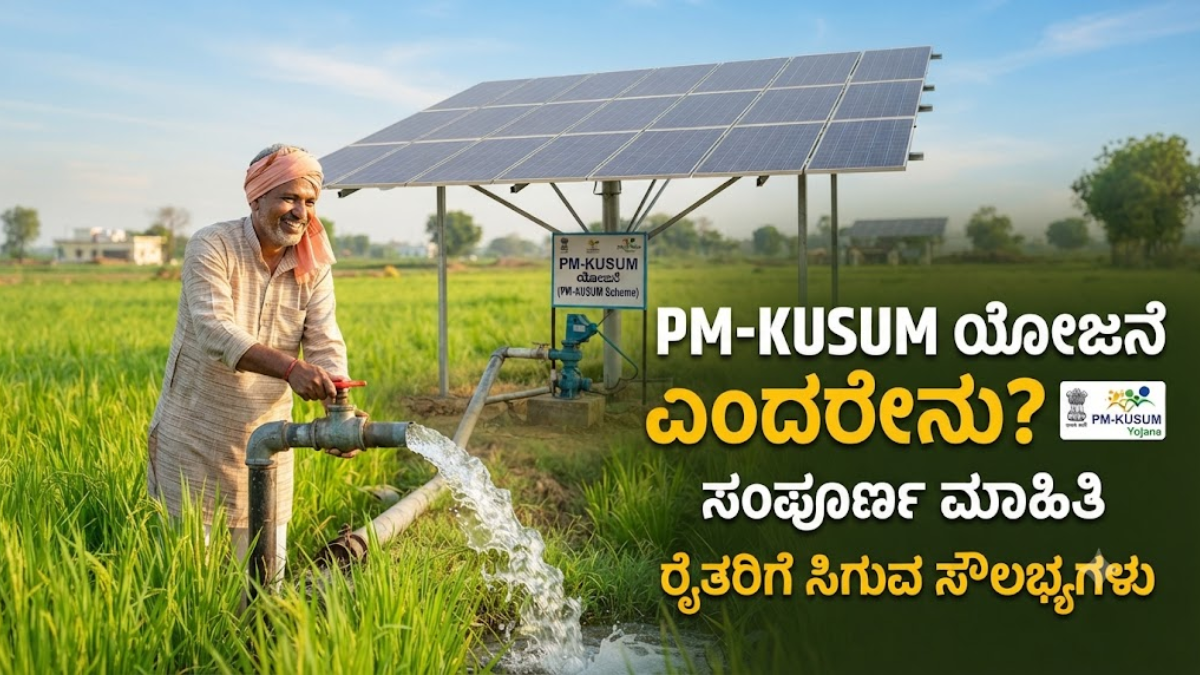
The Government of India is actively promoting renewable energy solutions in the agricultural sector through the PM-KUSUM scheme. In 2026, the National Portal for PM-KUSUM has become an important digital platform that enables farmers to apply for solar-powered agricultural pumps and access government subsidies with ease.
The Pradhan Mantri Kisan Urja Suraksha evam Utthaan Mahabhiyan (PM-KUSUM) scheme aims to reduce farmers’ dependence on conventional energy sources by encouraging the adoption of solar energy for irrigation and agricultural activities. The scheme not only supports sustainable farming but also helps reduce long-term irrigation costs for farmers across India.
What is the National Portal for PM-KUSUM?
The National Portal for PM-KUSUM is an online platform developed for the implementation and management of the PM-KUSUM scheme. It provides farmers and other eligible applicants with access to application services, subsidy information, scheme guidelines, and project updates.
Through the portal, users can:
- Apply for solar pump subsidies.
- Check eligibility criteria.
- Track application status.
- Access official scheme notifications.
- Learn about various PM-KUSUM components.
The digital platform simplifies the application process and promotes transparency in the distribution of government benefits.
Objectives of the PM-KUSUM Scheme
The primary objectives of the PM-KUSUM scheme are:
- Promoting solar energy in agriculture.
- Reducing farmers’ irrigation expenses.
- Encouraging clean and sustainable farming practices.
- Improving access to daytime electricity for agricultural use.
- Supporting renewable energy development in rural India.
- Increasing income opportunities for eligible farmers.
By adopting solar-powered irrigation systems, farmers can significantly reduce their dependence on diesel and conventional electricity sources.
Components of PM-KUSUM
The PM-KUSUM scheme consists of three major components designed to support different agricultural and renewable energy requirements.
Component A
Under this component, eligible applicants such as farmers, cooperatives, Farmer Producer Organizations (FPOs), and panchayats can establish decentralized solar power plants. These projects may range from 500 kW to 2 MW, depending on state-specific implementation policies and available land.
Component B
Component B focuses on the installation of stand-alone solar-powered agricultural pumps. Eligible farmers can receive financial assistance through government subsidies to reduce the overall cost of installation.
The subsidy structure may vary based on government guidelines and state-level implementation policies.
Component C
This component supports the solarization of existing grid-connected agricultural pumps. Farmers can use solar energy for irrigation purposes and may be able to export surplus electricity to the power grid where applicable.
Benefits of PM-KUSUM for Farmers
The PM-KUSUM scheme offers several advantages for India’s farming community, including:
- Reduced electricity and diesel expenses.
- Reliable daytime irrigation facilities.
- Environment-friendly farming practices.
- Lower operational costs over time.
- Improved access to renewable energy.
- Potential additional income opportunities through surplus power generation.
- Long-term financial savings.
Solar-powered irrigation systems are particularly beneficial for farmers operating in areas with unreliable electricity supply or high fuel costs.
Eligibility Criteria
The eligibility requirements may differ depending on the selected component and state guidelines. Generally, the following applicants may qualify:
- Individual farmers.
- Farmer groups.
- Agricultural cooperatives.
- Farmer Producer Organizations (FPOs).
- Panchayats.
- Water User Associations.
- Other entities approved under the scheme.
Applicants are advised to verify the latest eligibility requirements before submitting their applications.
Documents Required
The following documents are commonly required during the application process:
- Aadhaar Card.
- Identity proof.
- Agricultural land ownership documents.
- Bank account details.
- Passport-size photograph.
- Mobile number.
- Electricity connection details, if applicable.
- Additional documents specified by the implementing agency.
Having all required documents ready can help ensure a smooth application experience.
How to Apply Online
Farmers can apply for the PM-KUSUM scheme by following these simple steps:
- Visit the official National Portal for PM-KUSUM.
- Select the appropriate scheme component.
- Register with the required personal information.
- Complete the online application form.
- Upload the necessary documents.
- Submit the application.
- Track the status of the application through the portal.
Applicants should carefully review the information provided before final submission.
Conclusion
The National Portal for PM-KUSUM plays a significant role in promoting renewable energy adoption within India’s agricultural sector. By providing easy access to solar pump subsidies and scheme-related information, the portal has simplified the process for farmers seeking sustainable irrigation solutions.
The PM-KUSUM scheme offers multiple benefits, including reduced irrigation costs, reliable power availability, and environmentally friendly farming practices. Farmers interested in applying should always refer to the latest government guidelines and state-specific instructions to ensure eligibility and successful participation in the programme.
Adopting solar energy through PM-KUSUM can contribute to both agricultural growth and India’s broader clean energy goals.