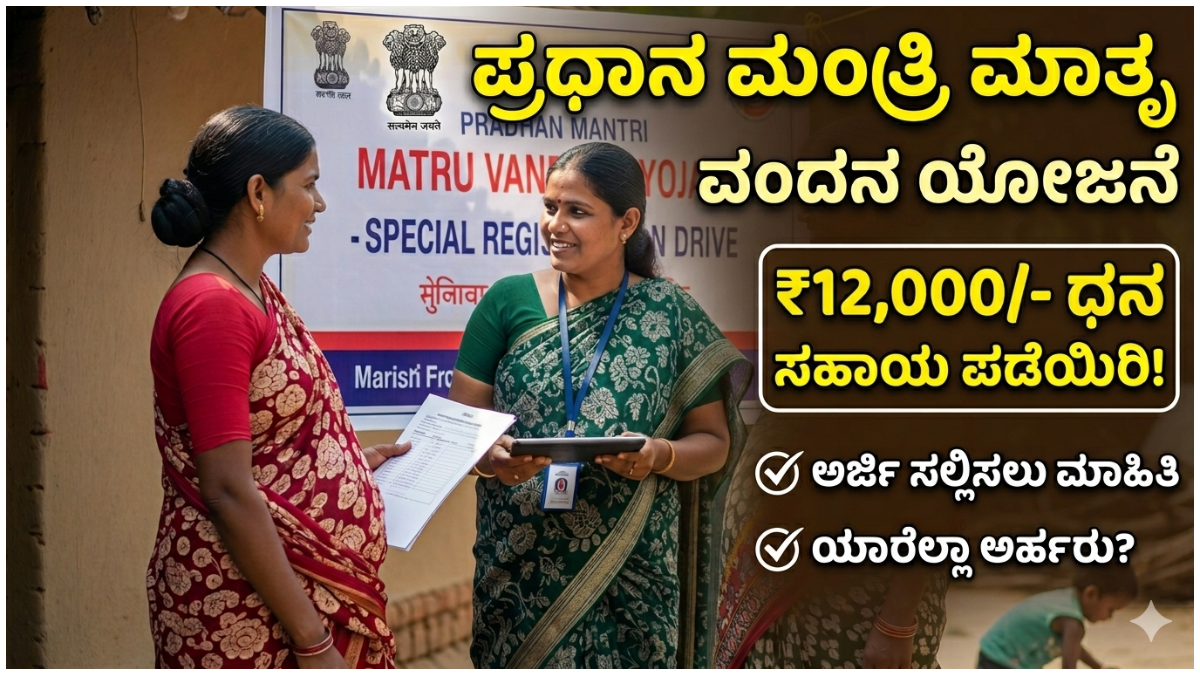
Motherhood is one of the most important and delicate stages in a woman’s life. During pregnancy and after childbirth, a woman’s body goes through numerous physical and emotional changes that demand special attention, care, and nutrition. Unfortunately, in many parts of India, particularly among low-income and rural families, women struggle to access proper healthcare, nutritious food, and rest during this crucial period. To address these issues, the Government of India introduced the Pradhan Mantri Matru Vandana Yojana (PMMVY) — a welfare initiative that supports expecting and new mothers through financial assistance and healthcare benefits.
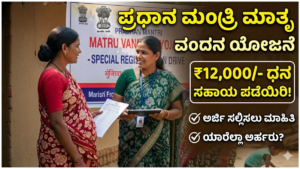
This flagship scheme, launched under the Ministry of Women and Child Development, aims to ensure that every woman in the country experiences safe pregnancy, receives adequate nourishment, and gives birth to a healthy child. Through this initiative, eligible women receive financial aid of up to ₹6,000, helping them cover essential needs during and after pregnancy. More importantly, the scheme seeks to reduce maternal and infant mortality rates by promoting proper healthcare and nutrition practices.
1. Understanding the Need for PMMVY
In India, a significant proportion of women work in informal sectors or within households where maternity benefits are unavailable. Many pregnant women continue working until late in their pregnancy due to financial necessity, which often affects both their own health and that of their unborn child. Inadequate nutrition, physical strain, and limited access to medical services lead to health complications, premature births, and low birth weights.
Recognizing these challenges, the Government launched PMMVY as part of the broader National Food Security Act (NFSA) of 2013, emphasizing the right of every woman to maternity benefits. The scheme not only provides monetary assistance but also aims to bring behavioral changes by encouraging women to seek timely medical care and rest.
2. Objectives of the Scheme
The PMMVY is designed with several key goals that focus on improving maternal and child health outcomes:
- Enhance maternal health:
By providing financial support, the scheme helps women afford nutritious food, supplements, and regular medical check-ups during pregnancy. - Promote institutional deliveries:
Financial incentives encourage women to deliver in hospitals or healthcare centers under the supervision of trained professionals, thereby reducing risks during childbirth. - Support postnatal care:
The scheme motivates mothers to attend postnatal check-ups and follow vaccination schedules for their infants. - Encourage rest and recovery:
It allows women to take time off from strenuous work before and after childbirth, ensuring their physical well-being and the baby’s healthy growth. - Reduce malnutrition:
By promoting awareness of dietary needs, the scheme contributes to lowering malnutrition rates among mothers and newborns. - Empower women through direct benefits:
The financial aid is directly transferred to beneficiaries’ bank accounts, ensuring transparency and empowerment.
3. Eligibility Criteria
The PMMVY specifically targets women who are experiencing their first live birth, ensuring support at the most critical time of motherhood. The eligibility conditions are as follows:
- The applicant must be a citizen of India.
- The benefit is applicable only for the first live birth.
- The woman must be pregnant or a lactating mother.
- Women who are employed by the Central or State Government or Public Sector Undertakings are not eligible, as they receive maternity benefits through their employment.
- The applicant must possess a valid Aadhaar card and a bank account in her name.
4. Financial Assistance Structure
Under the Pradhan Mantri Matru Vandana Yojana, a total of ₹5,000 is provided in three stages, linked to specific milestones in pregnancy and childbirth. An additional ₹1,000 may be received under the Janani Suraksha Yojana (JSY), bringing the total assistance to approximately ₹6,000.
Stage-wise Breakdown:
- First Installment – ₹1,000
- Given after early registration of pregnancy at the local Anganwadi Center (AWC) or approved health facility.
- This encourages women to report their pregnancy early and begin receiving medical care.
- Second Installment – ₹2,000
- Released after the woman completes six months of pregnancy and undergoes the recommended ante-natal check-ups (ANCs).
- This ensures that expectant mothers receive medical attention, nutritional supplements, and advice during mid-pregnancy.
- Third Installment – ₹2,000
- Provided after the birth of the child and upon completion of the first cycle of immunizations — including BCG, OPV, DPT, and Hepatitis B vaccines.
- This installment encourages mothers to get their newborns vaccinated on time.
5. Benefits and Impact on Mothers and Children
The PMMVY has been a transformative initiative for millions of women across India. Its benefits go far beyond the financial amount provided, as it also drives behavioral and health improvements.
Health and Nutrition Benefits
- Access to nutritious food: The financial aid allows mothers to purchase essential food items and supplements that are rich in proteins, iron, and vitamins.
- Improved maternal health: With better nutrition and rest, women experience fewer complications during delivery.
- Encouragement for regular health check-ups: More women are visiting healthcare centers for antenatal and postnatal care.
Economic and Social Benefits
- Reduced financial burden: Families facing economic hardship get crucial support during pregnancy.
- Empowerment of women: Direct transfers to the mother’s bank account enhance her control over the funds.
- Encouragement for safe deliveries: The scheme complements institutional delivery programs like Janani Suraksha Yojana, leading to safer childbirth experiences.
Child Health Benefits
- Lower infant mortality rate: Improved prenatal and postnatal care results in healthier babies and a decline in infant deaths.
- Promotion of immunization: Linking the final installment with vaccination ensures timely immunization coverage.
- Enhanced awareness: Mothers learn about early child care, breastfeeding, and nutrition, which benefits long-term child development.
6. Application Process
Women can apply for the PMMVY benefits through either the offline or online mode, making it accessible to rural and urban beneficiaries alike.
Offline Application
- Visit the nearest Anganwadi Center (AWC) or Health Sub-center.
- Obtain and fill out Form 1A, 1B, and 1C as required for each stage of benefit.
- Attach necessary documents, such as identity proof, bank account details, and medical certificates.
- Submit the forms to the local supervisor or health officer for verification.
- Once verified, the application is forwarded for payment approval.
Online Application
- Visit the PMMVY web portal (https://pmmvy.wcd.gov.in) or register through a Common Service Center (CSC).
- Fill in the online registration form and upload required documents.
- Track the status of your application through the portal.
- Approved funds are transferred directly into the applicant’s bank account via Direct Benefit Transfer (DBT).
7. Documents Required
Applicants must provide the following documents for verification and processing:
- Aadhaar card (mandatory identification proof)
- Recent photograph of the pregnant woman
- Bank passbook or account details (with IFSC code)
- Pregnancy certificate from an authorized medical institution
- Birth certificate of the newborn (for the third installment)
- Identity proof (Voter ID, PAN, or Ration Card)
- Health check-up card or ANC card for medical record verification
8. Disbursement of Funds
The fund disbursal process is completely transparent and technology-driven. After verification, payments are credited directly to the mother’s account using the Direct Benefit Transfer (DBT) mechanism. This method eliminates intermediaries, minimizes corruption, and ensures that the full benefit reaches the intended recipient without delay.
Beneficiaries receive SMS notifications on their registered mobile numbers regarding approval and disbursement details, promoting transparency at every stage.
9. Scheme Implementation and Monitoring
The PMMVY is implemented jointly by the Central and State Governments, with the Ministry of Women and Child Development (MWCD) as the nodal authority.
Implementation is carried out through:
- Anganwadi centers in rural and semi-urban areas.
- Health facilities in urban and metropolitan regions.
- PMMVY-Common Application Software (CAS), which monitors applications, progress, and disbursements in real-time.
District-level and state-level committees regularly review the program to ensure smooth functioning and to identify bottlenecks in service delivery.
10. Impact and Achievements
Since its launch, PMMVY has reached millions of beneficiaries across the country. The scheme has had a measurable impact on several key areas of maternal and child health.
- Increased early registration:
More women are registering their pregnancies in the first trimester, leading to timely healthcare interventions. - Better immunization coverage:
The link between payments and child immunization has motivated mothers to ensure that their children receive all essential vaccines. - Improved nutritional awareness:
Women have become more aware of the importance of balanced diets, iron supplements, and rest during pregnancy. - Decline in infant mortality rate:
Data from various states show a gradual decline in maternal and infant deaths, reflecting the success of the scheme. - Enhanced government outreach:
The scheme has improved coordination between health workers, Anganwadi staff, and local administrative bodies.
11. Challenges and Way Forward
While PMMVY has achieved commendable success, certain challenges remain in its effective implementation:
- Awareness gaps: Many eligible women, especially in remote areas, are still unaware of the scheme’s benefits.
- Documentation issues: Lack of proper identification or bank accounts can delay applications.
- Processing delays: Bureaucratic hurdles and data entry errors sometimes slow down fund disbursal.
- Limited scope: Currently, the scheme covers only the first live birth. Expanding it to second pregnancies could benefit more families.
Future Directions:
- Enhanced awareness campaigns through community health workers.
- Simplified digital application processes.
- Integration with mobile-based health tracking apps.
- Expansion to include high-risk or multiple pregnancies.
The government continues to refine and strengthen the scheme to ensure that no deserving mother is left behind.
12. Broader Significance of PMMVY
The Pradhan Mantri Matru Vandana Yojana is more than just a welfare program — it is a nation-building initiative. By ensuring that mothers are healthy and financially supported, the scheme lays the foundation for a stronger and healthier next generation. It directly contributes to Sustainable Development Goals (SDGs), particularly Goal 3: “Good Health and Well-being” and Goal 5: “Gender Equality.”
Furthermore, by empowering women through financial independence and health awareness, the PMMVY plays a crucial role in promoting gender equity, women’s empowerment, and social inclusion.
13. Conclusion
The Pradhan Mantri Matru Vandana Yojana (PMMVY) represents a compassionate and forward-thinking step by the Government of India to prioritize the well-being of mothers and children. Through financial assistance, nutritional awareness, and healthcare linkage, it has brought hope and stability to millions of families across the nation.
Healthy mothers are the cornerstone of a healthy society. When women are supported during pregnancy and after childbirth, their children are more likely to grow stronger, healthier, and more capable. PMMVY, therefore, is not merely an aid program—it is a commitment to India’s future generations.
Key Message:
“Healthy Mother, Healthy Child, Prosperous Nation.”
The Pradhan Mantri Matru Vandana Yojana continues to nurture the foundation of a sustainable, healthy, and empowered India.