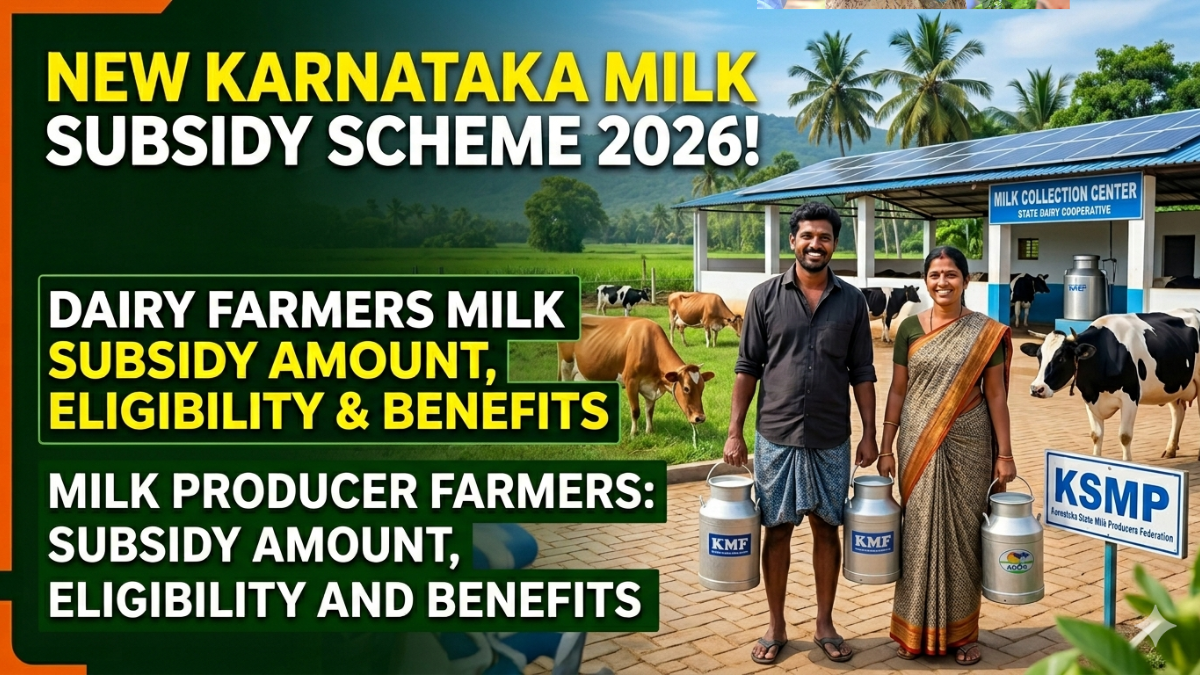
Dairy farming is one of the most important rural occupations in Karnataka. Thousands of families across the state depend on milk production for their daily income and financial stability. In many villages, dairy farming works as a regular source of earnings even when agriculture faces problems due to drought, poor rainfall, or market fluctuations. Because of its importance, the Karnataka government has introduced several welfare schemes for dairy farmers, including the milk subsidy program.

The milk subsidy scheme is designed to support farmers who supply milk to cooperative societies connected with the Karnataka Milk Federation (KMF). Through this program, dairy farmers receive additional payment for every litre of milk supplied. The subsidy helps farmers manage rising expenses related to cattle feed, veterinary care, transportation, labor, and dairy maintenance.
Over the years, the milk subsidy scheme has become one of the most beneficial programs for rural dairy farmers in Karnataka. It has improved farmer income, strengthened milk cooperatives, encouraged milk production, and supported rural economic development.
Importance of Dairy Farming in Karnataka
Karnataka is among the leading milk-producing states in India. Dairy farming is an important part of the agricultural economy and provides employment opportunities for lakhs of people. Many small and marginal farmers depend on dairy farming because it offers regular daily income unlike seasonal crop farming.
Milk production also plays a major role in improving nutrition and food security. Families involved in dairy farming often use milk and dairy products for household consumption while selling the remaining milk for income.
The dairy sector in Karnataka supports:
- Rural employment
- Women’s financial independence
- Agricultural growth
- Nutrition for families
- Village-level economic development
- Livestock-based income generation
Dairy farming is especially important for farmers with small land holdings because it requires less land compared to traditional agriculture. Many landless laborers and women also earn a living through milk production.
Karnataka Milk Federation and Dairy Cooperatives
The Karnataka Milk Federation is one of the largest dairy cooperative organizations in India. It manages milk procurement, processing, packaging, and marketing across Karnataka. The federation is widely recognized through the popular Nandini dairy brand.
Milk cooperative societies are established in villages and towns where farmers deliver milk every day. These societies collect milk from farmers and transport it to milk unions and dairy plants.
The cooperative system benefits farmers in many ways:
- Guaranteed milk collection
- Fair pricing system
- Direct bank payments
- Veterinary support
- Cattle feed supply
- Technical training
- Access to government schemes
This organized structure has helped Karnataka become a strong dairy-producing state.
Introduction of the Milk Subsidy Scheme
The Karnataka government introduced the milk subsidy incentive program to improve the financial condition of dairy farmers. Rising dairy farming costs were creating difficulties for farmers, especially small producers with only a few cattle.
To address these challenges, the government started providing incentives for milk supplied through cooperative societies. Initially, the subsidy amount was lower, but it was gradually increased over time to match increasing production costs.
The scheme mainly aims to:
- Increase farmer income
- Encourage milk production
- Reduce rural poverty
- Strengthen dairy cooperatives
- Improve livestock management
- Support sustainable dairy farming
The milk subsidy program has become an important source of additional income for many families.
Current Milk Subsidy Amount in Karnataka
At present, dairy farmers in Karnataka generally receive a milk incentive subsidy of ₹5 per litre for milk supplied through registered cooperative societies under the Karnataka Milk Federation system.
This subsidy amount is directly transferred to the bank accounts of eligible farmers. The payment is separate from the regular milk procurement price.
In addition to the subsidy, milk procurement prices are also revised periodically to support dairy farmers. Some district milk unions occasionally announce temporary additional incentives depending on local conditions such as fodder shortages or drought.
For many dairy farmers, the subsidy acts as a financial safety net and helps cover operational costs.
How the Milk Subsidy System Works
The milk subsidy process follows a structured system through dairy cooperative societies.
Step 1: Farmer Registration
Farmers first become members of a local milk cooperative society. They provide identification documents, bank account details, and cattle information.
Step 2: Daily Milk Supply
Farmers supply milk to the collection center every day. Milk is usually collected twice daily, during morning and evening sessions.
Step 3: Quality Testing
The cooperative checks the quality of milk based on:
- Fat content
- SNF (Solids-Not-Fat)
- Freshness
- Quantity supplied
Milk quality directly affects the payment amount.
Step 4: Procurement Payment
Farmers receive payment for milk supplied according to quantity and quality.
Step 5: Subsidy Transfer
The government subsidy amount is added separately and transferred directly into the farmer’s bank account.
This system improves transparency and reduces the chances of corruption or middlemen exploitation.
Eligibility Criteria for Milk Subsidy
To receive the milk subsidy, farmers must satisfy certain conditions.
Basic Requirements
- Must be a resident of Karnataka
- Must own dairy cattle
- Must be registered with a milk cooperative society
- Must supply milk regularly
- Must have a valid bank account
- Must follow cooperative guidelines
Both small-scale and large-scale dairy farmers can benefit if they supply milk through approved cooperative channels.
Benefits of the Milk Subsidy Scheme
The milk subsidy program provides several advantages for dairy farmers and rural communities.
Additional Income
Farmers receive extra earnings for every litre of milk supplied. This increases total monthly household income.
Encouragement for Dairy Expansion
Many farmers invest in better cattle breeds and expand dairy farming activities because of improved profitability.
Rural Employment Generation
Dairy farming creates jobs in villages through milk collection, transportation, processing, and marketing.
Women Empowerment
Women actively participate in dairy farming activities. Increased dairy income improves women’s financial contribution to families.
Reduction in Financial Stress
Subsidies help farmers manage expenses such as cattle feed, medicines, labor, and maintenance costs.
Strengthening Cooperative Societies
The scheme encourages more farmers to join milk cooperatives, strengthening the dairy network.
Economic Importance of Dairy Subsidies
Milk subsidies contribute significantly to Karnataka’s rural economy. Dairy farming generates continuous income, unlike seasonal farming that depends heavily on rainfall and crop cycles.
The dairy sector supports:
- Small and marginal farmers
- Agricultural laborers
- Rural women
- Self-help groups
- Village-based businesses
Increased dairy income also improves spending power in rural areas, supporting local markets and services.
Many research studies have shown that milk incentives improve milk production, encourage better cattle management, and increase profitability for dairy farmers.
Challenges Faced by Dairy Farmers
Although the milk subsidy scheme provides important support, dairy farmers continue to face several challenges.
Rising Cattle Feed Prices
Feed costs are one of the biggest expenses in dairy farming. Prices of fodder, cattle feed, and nutritional supplements have increased significantly.
Veterinary Expenses
Healthcare costs for cattle, including vaccinations, medicines, and emergency treatments, continue to rise.
Water and Fodder Shortages
Drought conditions in some regions affect green fodder availability and reduce milk production.
Delayed Payments
In some cases, farmers experience delays in subsidy payments due to administrative reasons.
Milk Price Fluctuations
Changes in milk procurement prices can affect farmer income and profitability.
Climate Change
Extreme weather conditions create stress for livestock and reduce productivity.
Additional Government Support for Dairy Farmers
The Karnataka government also provides several other schemes to support dairy development.
Pashu Bhagya Scheme
This scheme provides assistance for livestock farming activities including dairy cattle purchase and animal husbandry support.
Subsidy for Cattle Insurance
Farmers receive support for insuring dairy cattle against disease, accidents, and death.
Dairy Loans
Banks and financial institutions provide dairy farming loans with subsidized interest rates.
Dairy Infrastructure Support
Farmers can receive assistance for:
- Cattle shed construction
- Fodder cultivation
- Dairy machinery purchase
- Milk storage equipment
Veterinary Services
Government veterinary hospitals and mobile clinics provide healthcare support for livestock.
Women’s Role in Dairy Farming
Women play a vital role in Karnataka’s dairy industry. In many villages, women manage daily dairy activities such as:
- Feeding cattle
- Milking animals
- Cleaning sheds
- Maintaining hygiene
- Delivering milk to cooperatives
The milk subsidy scheme indirectly supports women’s empowerment by increasing household income and improving financial participation.
Women-led dairy self-help groups are becoming increasingly successful in many parts of Karnataka.
Technology and Modern Dairy Farming
Technology is gradually transforming dairy farming practices across Karnataka.
Modern dairy techniques include:
- Artificial insemination
- Scientific feeding systems
- Digital milk testing
- Mobile veterinary services
- Automated milking machines
- Online payment systems
Technology helps improve milk quality, increase productivity, and reduce operational costs.
Farmers are also receiving training on scientific cattle management and clean milk production practices.
Importance of Clean Milk Production
Clean milk production is essential for maintaining quality standards and consumer safety.
Farmers are encouraged to:
- Maintain hygienic cattle sheds
- Use clean utensils
- Store milk properly
- Ensure cattle health
- Follow vaccination schedules
Better milk quality improves farmer earnings and increases demand for dairy products.
Role of Nandini Brand
The Nandini brand has become a trusted dairy brand across Karnataka and neighboring states. Products include:
- Milk
- Butter
- Ghee
- Curd
- Ice cream
- Paneer
- Sweets
Strong demand for Nandini products supports milk procurement from farmers and strengthens the cooperative system.
Future of Dairy Farming in Karnataka
The future of dairy farming in Karnataka appears promising due to increasing milk demand and government support.
Several developments are expected in the coming years:
- Expansion of dairy infrastructure
- Improved cold storage facilities
- Better milk transportation systems
- Increased digitalization
- Modern processing plants
- Better veterinary services
The government may also revise subsidy amounts in the future depending on production costs and farmer demands.
With proper planning and continued support, Karnataka can further strengthen its dairy sector and improve rural livelihoods.
Suggestions for Improving the Milk Subsidy Program
Although the subsidy scheme is beneficial, certain improvements can make it even more effective.
Timely Payment Distribution
Subsidies should be transferred without delays to avoid financial difficulties for farmers.
Increased Incentive Amount
As production expenses continue rising, many farmers request higher subsidy rates.
Better Fodder Development
More support for fodder cultivation and storage can reduce feed shortages.
Improved Veterinary Infrastructure
Additional veterinary hospitals and mobile clinics can help farmers access quick healthcare services.
Farmer Awareness Programs
Training programs can educate farmers about scientific dairy farming practices and government schemes.
Social Impact of the Subsidy Scheme
The milk subsidy scheme has positively influenced rural life in Karnataka.
Benefits include:
- Improved household income
- Better education for children
- Increased savings
- Reduced migration to cities
- Improved nutrition
- Greater financial stability
Dairy farming has become a reliable livelihood option for many rural families.
Conclusion
The milk subsidy scheme in Karnataka has become one of the most important support programs for dairy farmers. By providing ₹5 per litre as an incentive for milk supplied through cooperative societies, the government has helped improve the economic condition of lakhs of rural families.
The scheme encourages milk production, strengthens cooperative systems, supports women farmers, and contributes to rural economic development. Even though challenges such as rising feed costs, veterinary expenses, and climate-related difficulties continue to affect dairy farmers, the subsidy system provides valuable financial assistance.
Karnataka’s dairy sector continues to grow with the support of government initiatives, cooperative societies, modern technology, and hardworking farmers. Dairy farming remains a dependable source of income for rural communities and plays a major role in the state’s agricultural economy.
With continued policy support, improved infrastructure, scientific farming practices, and stronger cooperative networks, Karnataka can further expand its dairy industry and ensure better opportunities for future generations of dairy farmers.