Karnataka is promoting low-cost, locally produced supplementary feed for livestock through a proposed initiative to establish 12,000 Azolla production units across the state. The programme aims to help dairy farmers improve the availability of nutritious green feed, particularly for milk-producing cattle, while reducing dependence on expensive commercial feed and conventional fodder sources.
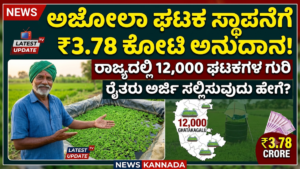
According to the scheme details provided, a total expenditure of ₹3.78 crore has been allocated for establishing these units across 31 districts and 240 taluks. The estimated cost of setting up an individual Azolla unit is ₹3,150, including the materials and labour required for construction and initial cultivation.
The initiative is intended to encourage farmers to grow Azolla near their homes, cattle sheds or farms using a relatively small area. Once established and properly maintained, Azolla can be harvested regularly and used as a supplementary feed ingredient for livestock.
Farmers interested in participating should contact their local Gram Panchayat or the veterinary hospital in their taluk to enquire about the application process, beneficiary selection, availability of assistance and implementation schedule.
What Is the Azolla Production Unit Scheme?
Azolla is a small aquatic fern that grows on the surface of water under suitable conditions. It is widely used in livestock farming as a supplementary feed because it contains protein and other nutrients that can complement a balanced animal diet.
The proposed Karnataka initiative focuses on encouraging livestock owners to produce Azolla locally rather than relying entirely on purchased feed ingredients. By creating small cultivation units close to cattle sheds, farmers can potentially reduce transportation requirements and make supplementary green feed more readily available.
The scheme is particularly relevant for dairy farmers who face difficulties maintaining a consistent supply of green fodder during dry periods, irregular rainfall or seasons when conventional fodder becomes scarce.
Under the reported programme, the state plans to establish 12,000 units at an estimated total cost of ₹3,78,00,000. The district-wise targets are intended to guide the distribution of units and expenditure across the state.
However, the allocation of a target to a district does not necessarily mean that every interested farmer will automatically receive a unit. The final selection of beneficiaries will depend on the applicable implementation guidelines, local requirements, available funds and the process followed by the responsible authorities.
Why Is Azolla Cultivation Important for Dairy Farmers?
The cost and availability of animal feed are major considerations for livestock owners. Farmers who depend on purchased feed, dry fodder and seasonal green fodder may experience higher production costs when local supplies become limited.
Azolla cultivation offers a possible supplementary feeding option that can be managed on a small scale.
1. A supplementary source of nutrients
Azolla contains protein and other nutrients that can complement the regular ration given to cattle. When introduced correctly, it may help improve the nutritional diversity of the feed offered to livestock.
Its nutritional composition varies according to the species, cultivation conditions, water quality and harvesting practices. Farmers should therefore follow veterinary or livestock nutrition advice when incorporating Azolla into their animals’ diets.
2. Cultivation in a limited space
An Azolla unit does not require a large agricultural field. The proposed design uses a shallow cultivation bed measuring approximately 10 feet in length and 4 feet in width.
This makes the system potentially suitable for farmers with small landholdings, provided they have access to an appropriate location, clean water and sufficient shade.
3. Potential savings on feed expenses
Producing supplementary feed on the farm may reduce the quantity of certain purchased feed ingredients required. The actual savings will depend on the cost of establishing and maintaining the unit, the amount of Azolla harvested and the farmer’s existing feeding practices.
Farmers should not assume that Azolla can completely replace balanced cattle feed, mineral mixtures or other essential components of the ration.
4. Better use of locally available resources
Azolla cultivation can make use of a small space near a cattle shed and requires comparatively simple infrastructure. With appropriate training and maintenance, farmers may be able to manage production as part of their regular livestock activities.
5. Support during fodder shortages
During periods of limited green fodder availability, regularly harvested Azolla can serve as one component of a supplementary feeding plan. Its usefulness will depend on consistent cultivation, adequate water quality and appropriate feeding management.
Karnataka Azolla Scheme 2026: Main Details
The following are the principal figures reported for the proposed initiative.
| Particular | Details |
|---|---|
| Scheme objective | Promotion of Azolla production for livestock feed |
| State | Karnataka |
| Number of districts | 31 |
| Number of taluks | 240 |
| Proposed number of units | 12,000 |
| Reported total expenditure | ₹3,78,00,000 |
| Estimated cost per unit | ₹3,150 |
| Intended beneficiaries | Eligible livestock owners and dairy farmers |
| Proposed application enquiry points | Gram Panchayats and taluk veterinary hospitals |
| Main requirement | Suitable space and access to clean water |
The figures above reflect the scheme information supplied for this article. Farmers should confirm the current application window, eligibility requirements and nature of financial assistance with the relevant department before making arrangements.
District-Wise Distribution of Azolla Production Units
The reported implementation plan distributes the proposed 12,000 units across Karnataka’s districts according to district-level targets.
The following table summarises the district-wise allocations and estimated expenditure stated in the programme details.
| District | Reported taluks | Target units | Estimated expenditure |
|---|---|---|---|
| Belagavi | 15 | 750 | ₹23,62,500 |
| Vijayapura | 13 | 650 | ₹20,47,500 |
| Uttara Kannada | 12 | 600 | ₹18,90,000 |
| Kalaburagi | 11 | 550 | ₹17,32,500 |
| Bagalkote | 10 | 500 | ₹15,75,000 |
| Tumakuru | 10 | 500 | ₹15,75,000 |
| Chikkamagaluru | 9 | 450 | ₹14,17,500 |
| Dakshina Kannada | 9 | 450 | ₹14,17,500 |
| Mysuru | 9 | 450 | ₹14,17,500 |
| Bidar | 8 | 400 | ₹12,60,000 |
| Chikkaballapura | 8 | 400 | ₹12,60,000 |
| Dharwad | 8 | 400 | ₹12,60,000 |
| Hassan | 8 | 400 | ₹12,60,000 |
| Haveri | 8 | 400 | ₹12,60,000 |
| Raichur | 8 | 400 | ₹12,60,000 |
| Gadag | 7 | 350 | ₹11,02,500 |
| Koppal | 7 | 350 | ₹11,02,500 |
| Mandya | 7 | 350 | ₹11,02,500 |
| Shivamogga | 7 | 350 | ₹11,02,500 |
| Udupi | 7 | 350 | ₹11,02,500 |
| Chitradurga | 6 | 300 | ₹9,45,000 |
| Davanagere | 6 | 300 | ₹9,45,000 |
| Kolar | 6 | 300 | ₹9,45,000 |
| Vijayanagara | 6 | 300 | ₹9,45,000 |
| Yadgir | 6 | 300 | ₹9,45,000 |
| Bengaluru Urban | 5 | 250 | ₹7,87,500 |
| Ballari | 5 | 250 | ₹7,87,500 |
| Chamarajanagara | 5 | 250 | ₹7,87,500 |
| Kodagu | 5 | 250 | ₹7,87,500 |
| Ramanagara | 5 | 250 | ₹7,87,500 |
| Bengaluru Rural | 4 | 200 | ₹6,30,000 |
These district targets are intended to help local authorities plan implementation and identify suitable beneficiaries.
Important verification note: The figures in the supplied district list should be checked against the official government order before publication or use in an application. In particular, the reported district allocations add up to 12,000 units, but the listed district expenditures add up to ₹3,78,00,000 only if the underlying figures are consistent. The official order should be treated as the final authority for district allocations and financial details.
Azolla Unit Construction: Size and Requirements
One of the advantages of Azolla cultivation is that a production bed can be established in a relatively small area. The unit described in the programme is approximately 10 feet long, 4 feet wide and 1 foot deep.
The equivalent dimensions are roughly 3.05 metres by 1.22 metres by 0.30 metres. The supplied scheme description also gives approximate metric dimensions of 2.60 metres by 1.60 metres, which do not precisely match the stated measurements in feet. Farmers and implementing officials should verify the approved design before construction.
The proposed unit uses a waterproof lining, a support frame and a shaded growing environment. These components help retain water and provide conditions suitable for Azolla growth.
A typical installation involves the following steps:
- Select a suitable location near the farm or cattle shed.
- Prepare and level the ground.
- Install the approved waterproof sheet.
- Arrange the required frame and shade net.
- Add the recommended growing medium and clean water.
- Introduce healthy Azolla starter culture.
- Maintain appropriate water levels, cleanliness and shade.
- Harvest the crop regularly according to technical guidance.
Farmers should avoid using contaminated water because pollutants and harmful microorganisms may affect the cultivation bed and create risks for animals consuming the harvested material.
Cost Breakdown of One Azolla Production Unit
The estimated establishment cost stated in the programme is ₹3,150 per unit, covering both materials and labour.
| Item | Estimated cost |
|---|---|
| UV-stabilised HDPE sheet, 450 GSM, approximately 10 × 6 feet | ₹1,350 |
| Shade net with approximately 80% shading and bamboo or GI frame | ₹650 |
| Fertile soil, cow dung and superphosphate mixture | ₹250 |
| Azolla starter culture or inoculum, approximately 2 kg | ₹200 |
| Total materials cost | ₹2,450 |
| Labour for two person-days at ₹350 per day | ₹700 |
| Total estimated unit cost | ₹3,150 |
The listed costs are indicative estimates from the supplied programme information. Actual expenditure may vary according to local material prices, transport costs, construction requirements and the approved procurement procedure.
The material and labour estimates together form the reported unit cost. However, the exact amount a farmer must contribute, if anything, cannot be determined from the total unit cost alone.
A crucial distinction is that a scheme expenditure allocation is not automatically equivalent to a direct cash subsidy paid into a farmer’s bank account. The implementing department should confirm whether support is provided through materials, reimbursement, direct financial assistance or another approved arrangement.
Who May Benefit from the Scheme?
The proposed initiative is aimed primarily at livestock owners who can establish and maintain an Azolla unit.
Based on the supplied implementation details, local authorities are expected to prioritise applicants with a suitable location and access to clean water.
Farmers who keep dairy cattle may find the initiative especially useful if they have difficulty obtaining green fodder throughout the year. Small-scale livestock owners may also consider the system where adequate space and water are available.
Nevertheless, the complete eligibility conditions have not been established by the information provided here. Farmers should ask the Gram Panchayat or the local veterinary department to clarify:
- Whether the scheme is open to all livestock owners or only specified categories.
- Whether applicants must own land or may use an approved space near a cattle shed.
- Whether a minimum number of cattle is required.
- Whether priority is given to small and marginal farmers.
- Whether any beneficiary contribution is required.
- Whether applications are being accepted in their village or taluk.
- Whether units are supplied directly or established through an approved implementing agency.
Meeting the practical requirements does not guarantee selection, as the number of units available in each area may be limited.
How to Apply for an Azolla Unit in Karnataka
Farmers interested in establishing an Azolla production unit should begin by contacting the local authorities responsible for the programme.
Step 1: Visit the nearest Gram Panchayat
Approach the Gram Panchayat office in your village and enquire whether the Azolla unit programme has been taken up in your area.
Ask about the village-level target, application availability, eligibility rules and the official procedure for submitting an application.
Step 2: Contact the taluk veterinary hospital
Farmers can also visit their nearest government veterinary hospital or contact the relevant livestock development officer.
The veterinary department is an appropriate place to enquire about the technical suitability of the proposed unit, livestock feeding guidance and the current beneficiary selection process.
Step 3: Confirm the required documents
The supplied programme description indicates that beneficiary details and Aadhaar information are to be recorded during implementation. It also refers to GPS-based location records and photographs taken before and after the unit is established.
However, these monitoring requirements should not be confused with a confirmed list of documents every applicant must submit at the initial application stage.
Ask the implementing office for the official document checklist. Depending on the approved procedure, applicants may be asked to provide identification, contact information, address or residence details, livestock ownership information, bank details where relevant, and information about the proposed installation site.
Submit sensitive personal information only through authorised government channels and avoid sharing Aadhaar details with unverified websites or agents.
Step 4: Provide details of the proposed site
Explain where the Azolla unit could be established and whether clean water is available throughout the intended cultivation period.
The department may assess whether the location is suitable and whether the farmer can maintain the unit safely.
Step 5: Complete the official application procedure
If applications are open, obtain the prescribed form or follow the application method specified by the department.
Complete the requested information accurately and submit the application to the designated office. Request an acknowledgement or application reference if one is available.
Step 6: Wait for verification and selection
The responsible officials may review applications against the village, Gram Panchayat and taluk targets. Site suitability and other official eligibility criteria may be considered before a beneficiary is selected.
Farmers should wait for confirmation from the authorised office before purchasing materials or paying anyone for installation.
Step 7: Attend training and maintain the unit
The programme details indicate that beneficiaries are expected to receive technical guidance on Azolla cultivation, harvesting, cleaning, processing and feeding.
Follow the training provided by the veterinary or livestock department to ensure that the harvested Azolla is handled correctly and introduced into the animal’s diet appropriately.
How Will the Scheme Be Implemented and Monitored?
The reported implementation approach involves distributing district-level targets among taluks and Gram Panchayats.
Local officials are expected to identify suitable livestock owners and coordinate the establishment of the production units. The availability of clean water and an appropriate cultivation location is an important consideration.
The supplied information also states that the programme will be implemented in accordance with VB-G RAM G guidelines and Gram Panchayat Development Plans. The exact administrative and funding provisions should be verified from the applicable official order.
For monitoring purposes, the described system includes beneficiary records, Aadhaar-related information, GPS coordinates and photographs taken before and after installation. District-level officials are also expected to monitor implementation and submit progress reports to the state office, with the supplied instructions referring to a monthly reporting deadline of the fifth day of each month.
These arrangements are intended to help authorities track the installation of units, document expenditure and review progress against the approved targets.
Farmers should consult their local officials for the applicable implementation schedule, approved documentation requirements and current status of the programme in their area.
Important Precautions When Growing and Feeding Azolla
Although Azolla can be a useful supplementary feed, successful production requires regular attention.
Use clean water: Avoid polluted or contaminated water sources. Water quality can affect the health and suitability of the crop.
Maintain suitable shade: Follow the recommended shade requirements so the crop receives appropriate growing conditions.
Keep the unit clean: Remove unwanted material and follow the recommended procedures for maintaining the cultivation bed.
Harvest correctly: Use the harvesting frequency and handling methods recommended by trained personnel.
Introduce Azolla gradually: Consult a veterinary professional or livestock nutrition expert about the appropriate quantity for your cattle.
Do not treat Azolla as a complete feed: Cattle still require a balanced ration containing suitable roughage, energy, protein, minerals and clean drinking water.
Follow technical guidance: The quality of the crop depends on growing conditions, starter culture, water management and hygiene.
These precautions can help farmers make better use of the cultivation unit while reducing avoidable risks.
Frequently Asked Questions
1. How many Azolla units are planned in Karnataka?
The supplied scheme information reports a target of 12,000 units across 31 districts and 240 taluks.
2. What is the estimated cost of one unit?
The reported establishment cost is ₹3,150, including approximately ₹2,450 for materials and ₹700 for labour.
3. Will every farmer receive ₹3,150 as a cash subsidy?
Not necessarily. The stated amount is the estimated cost of establishing a unit. The actual assistance mechanism and any beneficiary contribution must be confirmed with the implementing department.
4. Where can farmers apply?
Farmers should enquire at their nearest Gram Panchayat or government veterinary hospital in their taluk.
5. Is a large farm required?
No large field is necessarily required. The described unit is relatively compact, but applicants need an appropriate site and access to clean water.
6. Can Azolla replace all other cattle feed?
No. Azolla is a supplementary feed and should be included as part of a balanced ration under appropriate technical guidance.
7. Is online registration available?
The supplied information does not identify a verified online application portal or official application link. Farmers should confirm the accepted application method with the local authorities rather than relying on unofficial links.
Conclusion
The proposed Karnataka Azolla production initiative aims to encourage dairy and livestock farmers to grow supplementary feed close to their farms. With 12,000 units planned and an estimated establishment cost of ₹3,150 per unit, the programme could offer farmers an additional way to manage feed availability, particularly when conventional green fodder is scarce.
The reported district-wise targets provide a framework for local implementation, while the proposed training and monitoring arrangements are intended to support proper cultivation and use.
Farmers who wish to benefit should contact their nearest Gram Panchayat or taluk veterinary hospital to verify whether the scheme is active in their area, check the official eligibility conditions, obtain the prescribed application form and confirm the nature of the assistance available.
Before applying, applicants should verify the latest government order and approved district allocations. The final beneficiary list, application dates, document requirements and subsidy mechanism should be confirmed through authorised government sources.