Introduction
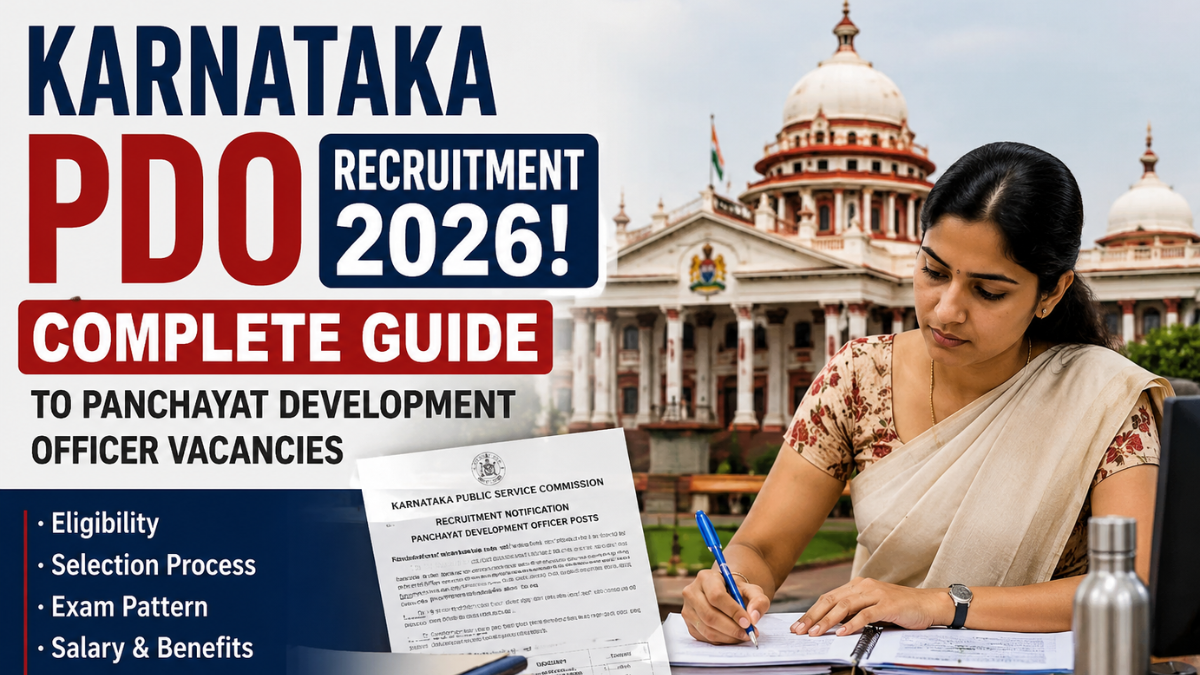
The Karnataka Panchayat Development Officer (PDO) Recruitment 2026 was one of the most important government job opportunities announced for candidates seeking employment in the rural development sector. The recruitment was conducted to fill Panchayat Development Officer positions under the Rural Development and Panchayat Raj Department of Karnataka. These officers play a vital role in implementing government schemes, improving rural infrastructure, and ensuring effective administration at the village level.
The PDO post is considered a prestigious government position because it offers job security, attractive salary benefits, career growth opportunities, and the chance to contribute directly to rural development. Thousands of candidates across Karnataka applied for this recruitment drive due to the importance and popularity of the position.
This article provides complete information about Karnataka PDO Recruitment 2026, including vacancy details, eligibility criteria, age limits, salary structure, selection process, job responsibilities, preparation strategies, and career prospects.
Overview of Karnataka PDO Recruitment 2026
The Karnataka Public Service Commission (KPSC) announced the recruitment of Panchayat Development Officers for various districts across Karnataka. The recruitment process aimed to strengthen local governance and improve the administration of Gram Panchayats.
Recruitment Highlights
- Organization: Karnataka Public Service Commission (KPSC)
- Department: Rural Development and Panchayat Raj Department
- Post Name: Panchayat Development Officer (PDO)
- Total Vacancies: 247
- Job Location: Karnataka
- Application Mode: Online
- Category: Government Job
- Salary Range: ₹37,900 to ₹70,850 per month
The recruitment attracted a large number of applicants due to the excellent salary package and the opportunity to work in grassroots administration.
Importance of the PDO Position
The Panchayat Development Officer serves as an essential link between the government and rural communities. The officer is responsible for implementing welfare programs, monitoring development projects, and ensuring proper utilization of public funds.
PDOs work closely with Gram Panchayat members, local authorities, and government departments to improve living standards in rural areas. Their contribution is critical in achieving sustainable development and effective governance.
Vacancy Details
The recruitment notification announced vacancies under different categories and regions. The distribution ensured representation across various parts of Karnataka.
The vacancies were allocated according to government reservation policies and regional requirements. This helped provide equal employment opportunities to candidates from different social and economic backgrounds.
Eligibility Criteria
Candidates applying for the PDO post had to satisfy specific educational and eligibility requirements prescribed by the recruiting authority.
Educational Qualification
Applicants were required to possess a bachelor’s degree from a recognized university. Candidates from any academic discipline could apply, provided their degree was recognized by the relevant educational authorities.
Graduates from arts, commerce, science, engineering, management, and other streams were eligible to participate in the recruitment process.
Nationality
Applicants had to be Indian citizens and satisfy all conditions specified in the official recruitment notification.
Age Limit
Age criteria are an important part of government recruitment processes. The PDO recruitment also specified minimum and maximum age limits.
Minimum Age
Candidates were required to be at least 18 years old.
Maximum Age
The general upper age limit was 35 years.
Age relaxations were available for candidates belonging to reserved categories according to Karnataka Government rules. Such relaxations provided equal opportunities for socially and economically disadvantaged groups.
Salary Structure
One of the most attractive aspects of the PDO position is its salary package.
The salary range for Panchayat Development Officers was approximately ₹37,900 to ₹70,850 per month. In addition to the basic salary, employees were eligible for various allowances and benefits.
Additional Benefits
- Dearness Allowance (DA)
- House Rent Allowance (HRA)
- Medical benefits
- Pension benefits as per applicable rules
- Leave benefits
- Travel allowances
- Career advancement opportunities
These benefits make the PDO position highly desirable among government job aspirants.
Roles and Responsibilities of a PDO
The Panchayat Development Officer performs multiple administrative and developmental functions.
Rural Development
PDOs are responsible for planning and executing development projects aimed at improving rural infrastructure and public services.
Implementation of Government Schemes
The officer supervises the implementation of various central and state government welfare schemes designed to support rural communities.
Financial Management
PDOs maintain records of funds received and spent by Gram Panchayats. They ensure transparency and accountability in financial matters.
Administrative Functions
The officer manages daily administrative activities and coordinates with higher authorities and local representatives.
Public Welfare Activities
PDOs help identify local issues and implement solutions that improve the quality of life for villagers.
Selection Process
The recruitment process generally includes multiple stages designed to identify the most qualified candidates.
Written Examination
Candidates are required to appear for a competitive written examination that tests their knowledge, aptitude, and understanding of relevant subjects.
Document Verification
Candidates who qualify in the examination are called for document verification. Educational certificates, identity proofs, and other relevant documents are checked during this stage.
Final Merit List
The final selection is based on performance in the examination and successful verification of documents.
Examination Pattern
The PDO examination typically evaluates candidates in multiple areas.
General Knowledge
Questions cover current affairs, history, geography, polity, economics, and general awareness.
Karnataka-Specific Knowledge
Candidates must have knowledge of Karnataka’s culture, administration, economy, and governance.
Rural Development
Questions related to Panchayat Raj institutions, rural governance, and development programs are included.
Language Skills
Language proficiency is often assessed to ensure effective communication abilities.
Reasoning and Aptitude
Logical reasoning and analytical skills are tested to evaluate problem-solving capabilities.
Preparation Strategy for PDO Aspirants
Success in the PDO examination requires proper planning and disciplined preparation.
Understand the Syllabus
Candidates should thoroughly study the official syllabus before starting preparation.
Develop a Study Schedule
Creating a realistic timetable helps ensure balanced preparation across all subjects.
Read Newspapers Regularly
Current affairs play a significant role in competitive examinations. Reading newspapers daily improves awareness of national and international events.
Practice Previous Papers
Solving previous years’ question papers helps candidates understand exam patterns and improve time management.
Focus on Karnataka Topics
State-specific knowledge is extremely important for Karnataka government examinations.
Take Mock Tests
Mock tests help identify strengths and weaknesses while improving examination confidence.
Career Growth Opportunities
The PDO position offers excellent career advancement prospects.
Employees can receive promotions based on performance, experience, and departmental requirements. Over time, officers may advance to higher administrative roles within the Rural Development and Panchayat Raj Department.
Continuous learning, dedication, and effective performance contribute significantly to career progression.
Why PDO Is a Popular Government Job
Several factors contribute to the popularity of the Panchayat Development Officer position.
Job Security
Government jobs are known for providing long-term employment stability.
Attractive Salary
The salary package and additional allowances make the position financially rewarding.
Social Impact
PDOs directly contribute to the welfare and development of rural communities.
Career Development
The role offers opportunities for promotions and professional growth.
Respect in Society
Government officers generally enjoy a high level of respect and recognition in society.
Challenges Faced by PDOs
Although the position offers many benefits, it also involves responsibilities and challenges.
PDOs often handle multiple projects simultaneously. They must coordinate with different stakeholders and ensure timely implementation of development programs. Effective communication, leadership, and problem-solving skills are essential for success in the role.
Contribution to Rural Development
PDOs play a crucial role in transforming rural areas through effective governance and development planning.
Their efforts help improve roads, sanitation facilities, water supply systems, education programs, healthcare services, and livelihood opportunities. Through efficient administration, they support the government’s vision of inclusive and sustainable rural development.
Conclusion
The Karnataka PDO Recruitment 2026 provided a valuable opportunity for graduates aspiring to build a career in public administration and rural development. The Panchayat Development Officer position offers an attractive salary, strong job security, career growth opportunities, and the chance to make a meaningful impact on society.
Candidates who prepare systematically and understand the examination requirements can improve their chances of success. The role of a PDO extends beyond administrative duties, as these officers contribute significantly to the development and progress of rural Karnataka.
For individuals seeking a stable and respected government career while serving society, the Panchayat Development Officer position remains one of the most rewarding opportunities available in Karnataka.