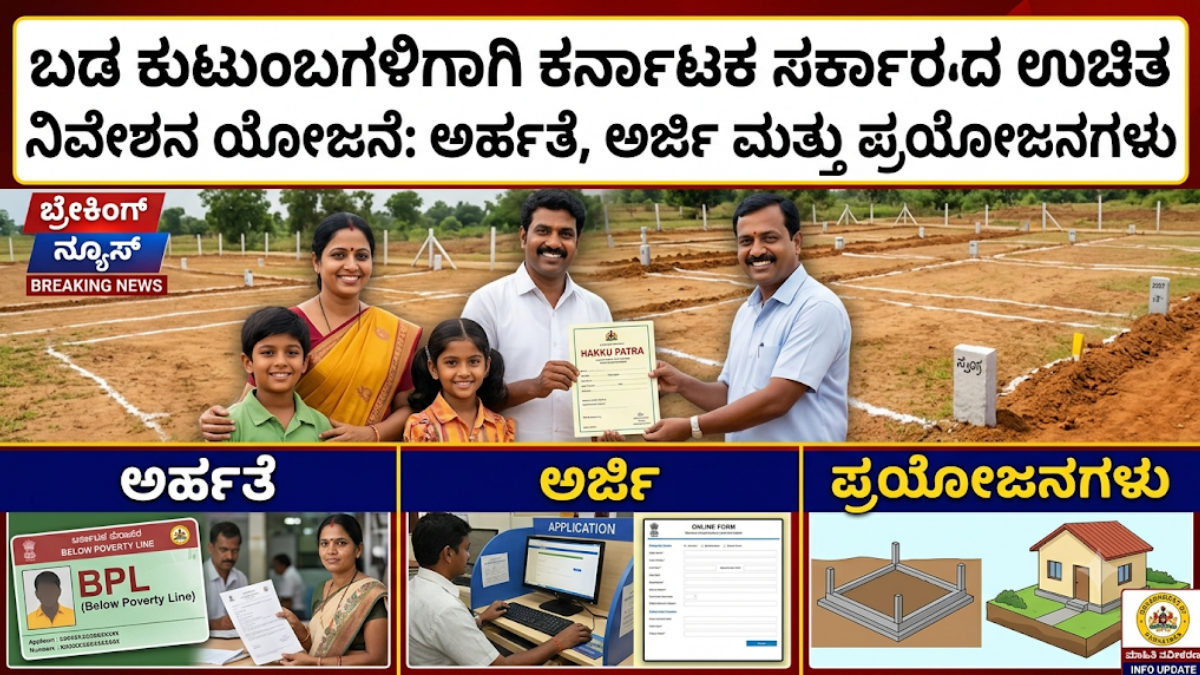
For many poor and low-income families in Karnataka, owning a house is a long-term dream. Rising land prices and construction costs make it difficult for families with limited income to purchase a residential site. To help such families, the Karnataka government and local authorities implement different housing and residential-site welfare programmes.
These programmes aim to provide support to eligible people who do not have a proper house or residential land. Depending on the scheme, beneficiaries may receive a residential site, housing assistance or support for constructing a permanent home.
What Is a Government Residential Site?
A government residential site is land allotted to an eligible person or family under a government-approved welfare or housing programme. The purpose is generally to help people who cannot afford to purchase residential land in the private market.
The site may be provided under specific conditions. Beneficiaries must follow the rules related to construction, use and transfer of the property. Therefore, people should carefully read the official allotment documents before taking any further action.
Why Karnataka Provides Sites to Poor Families
Land and housing are basic needs. A family without a permanent home may face several difficulties, including insecurity, high rental expenses and poor living conditions.
Government-supported site distribution can help eligible families move toward permanent housing. It can also provide a sense of ownership and financial security.
For many rural and urban families, getting a residential site is the first step toward constructing a proper house.
Eligibility for Government Site Schemes
The eligibility criteria are not identical for every scheme. However, government housing and site programmes commonly focus on families with limited financial resources and people who do not own suitable residential property.
Depending on the programme, applicants may need to satisfy conditions relating to:
- Income level
- Permanent or local residence
- Ownership of land or a house
- Family status
- Social or economic category
- Age and other scheme-specific requirements
Certain programmes may give preference to vulnerable groups or particular categories of beneficiaries.
It is important to check the latest official notification because eligibility rules may be revised by the government.
Documents Needed for Application
Before applying, applicants should collect all necessary documents. The requirements depend on the programme, but applicants may commonly be asked to provide identity proof, address proof and income-related documents.
Possible documents include an Aadhaar card, residence certificate, income certificate, ration card, caste certificate where applicable, photographs, bank details and other family records.
Applicants should ensure that their names, addresses and other information are consistent across their documents. Errors can create problems during verification.
Application Process
The application procedure can differ depending on whether the scheme is operated by a rural local authority, urban authority or another government department.
In general, the process may involve the following steps:
Step 1: Find the correct scheme
Applicants should first identify the government housing or residential-site programme for which they may qualify.
Step 2: Check eligibility
The applicant should carefully read the current eligibility conditions.
Step 3: Submit the application
The application may need to be submitted through an authorised government office or official online service.
Step 4: Document verification
Government officials may verify the applicant’s identity, residence, income and property details.
Step 5: Beneficiary selection
After verification, eligible applicants may be included in a beneficiary or provisional list according to the applicable selection process.
Step 6: Final approval
After the required procedures are completed, selected beneficiaries may receive an allotment order or other official documentation.
Applicants should keep copies of all submitted forms and receipts.
How to Check Application or Beneficiary Status
People who have applied for a government site or housing programme should check information through the official department, local authority or authorised service portal associated with their particular scheme.
Beneficiary lists may sometimes be published by the responsible authority. If an applicant believes that their information has been incorrectly excluded, they should use the official grievance or appeal process, if available.
Applicants should not depend entirely on information received through WhatsApp groups, YouTube videos or unofficial websites because old information can remain online even after government rules have changed.
Be Careful About Fake Offers
Government residential sites are highly sought after, and this can create opportunities for fraud.
Some people may falsely claim that they can arrange a government site in exchange for money. Others may create fake application websites or request personal information.
Applicants should never share an OTP, password or sensitive banking information with strangers. They should also avoid paying money to private individuals who claim to be government representatives without proper verification.
If there is any doubt, the safest approach is to contact the relevant government office directly.
What Happens After Site Allotment?
Beneficiaries should understand all conditions attached to their site. In some programmes, the beneficiary may be required to construct a house within a specified period or comply with restrictions on transferring the property.
If separate housing assistance is available, the beneficiary may be able to apply for construction support under an applicable housing programme.
The allotment order and property-related documents should be stored safely because they may be required for future official procedures.
Benefits for Economically Weaker Families
A residential site can significantly improve the future of a low-income family. Instead of spending a large portion of income on rent, a family with an approved site may eventually be able to construct its own home.
A permanent house can provide better living conditions, greater security and a stable environment for children. It can also help families build an asset for the future.
Final Words
Karnataka’s government housing and residential-site programmes can provide valuable support to eligible poor and economically weaker families. However, there is no guarantee that every applicant will receive a site, because selection depends on the eligibility rules, availability of land, verification process and other conditions of the particular programme.
People interested in these benefits should always check the latest official information before applying. They should prepare genuine documents, provide accurate details and use only authorised government channels.
Most importantly, applicants should be cautious about agents and websites promising guaranteed government sites for money. Proper verification and awareness can help families avoid fraud and successfully access the welfare programmes for which they are eligible.