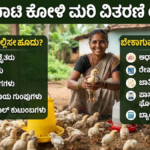
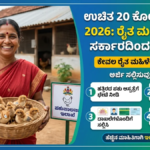
The Karnataka Animal Husbandry and Veterinary Services Department has introduced various initiatives to support rural families, encourage self-employment, and improve income opportunities for women. One such initiative is the Free Native Chicken Distribution Scheme, which aims to help eligible rural women start small-scale poultry farming without requiring a large initial investment.
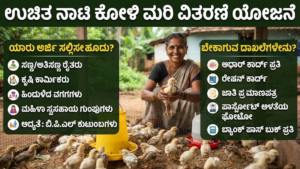
Under this scheme, eligible women beneficiaries may receive 20 native chicken chicks, approximately four weeks old, free of cost. The initiative is designed to encourage backyard poultry farming, create additional income opportunities, and strengthen the economic condition of rural households.
Applications are reportedly being accepted in different districts depending on the availability of funds and the department’s local schedule. Women interested in benefiting from this initiative are advised to contact their nearest government veterinary hospital or animal husbandry office to obtain the latest information about applications, eligibility conditions, and distribution dates.
Overview of the Free Native Chicken Scheme
The free chicken distribution initiative is intended to promote poultry farming among rural women and farmers. Native chicken breeds are commonly preferred in village households because they can be raised in backyard environments with suitable care and management.
By providing chicks at no cost, the government aims to reduce the initial financial burden on women who wish to start poultry farming on a small scale. Even a modest poultry unit can potentially contribute to household food requirements and provide an additional source of income through the sale of eggs and grown birds.
The scheme may be particularly useful for women who are already involved in farming, agricultural activities, livestock care, or other rural occupations.
Scheme Details at a Glance
- Scheme Name: Free Native Chicken Distribution Scheme
- Implementing Department: Karnataka Animal Husbandry and Veterinary Services Department
- Beneficiaries: Eligible rural women
- Benefit Provided: 20 native chicken chicks
- Age of Chicks: Approximately four weeks
- Cost to Beneficiary: Free, subject to scheme eligibility and official selection
- Application Location: Government veterinary hospital or veterinary office
- Selection Process: Based on eligibility, verification, availability of funds, and departmental guidelines
- Availability: District-wise and subject to local allocation
Applicants should confirm all the above details with their local veterinary department before submitting an application, as implementation and distribution arrangements may differ between districts.
Objectives of the Scheme
The primary goal of the free native chicken distribution programme is to help rural women develop small-scale poultry farming activities and improve their economic independence.
The initiative focuses on supporting women who may not have the financial resources to purchase poultry chicks and establish a small poultry unit on their own.
The major objectives include:
1. Promoting Self-Employment Among Rural Women
Poultry farming can be started on a relatively small scale compared with many other agricultural businesses. By providing chicks free of cost, the programme may help women begin a productive activity from their homes or farms.
2. Increasing Household Income
Native chicken farming can offer an additional source of income through the sale of eggs, mature birds, or surplus chicks, depending on the type of poultry management and market demand.
The income earned may help families meet everyday expenses, support children’s education, or contribute to agricultural investments.
3. Encouraging Backyard Poultry Farming
Backyard poultry farming is a traditional activity in many rural communities. This programme aims to encourage women to continue or restart poultry rearing by providing an initial group of birds.
4. Supporting Rural Livelihoods
Small livestock activities can help rural families diversify their income sources instead of depending entirely on seasonal agricultural work.
5. Improving Women’s Financial Independence
When women manage poultry activities and make decisions about selling eggs or birds, they may gain greater financial participation in their households and develop confidence in managing small businesses.
What Benefits Are Available Under the Scheme?
Eligible and selected beneficiaries may receive the following assistance under the programme.
Free Distribution of 20 Native Chicken Chicks
The main benefit is the distribution of 20 native chicken chicks to selected women beneficiaries. These chicks are reportedly around four weeks old at the time of distribution.
Starting with a group of 20 birds can help a beneficiary gradually develop a backyard poultry unit without having to purchase the initial stock.
Reduced Initial Investment
Purchasing poultry chicks, arranging feed, and setting up basic facilities can require money. Free distribution of chicks may reduce the initial investment needed to begin poultry farming.
Beneficiaries should remember that free chicks do not necessarily mean all other poultry-related expenses are covered. Feed, water containers, shelter, vaccination, medicines, and maintenance may need to be arranged independently unless the department confirms additional assistance.
Opportunity to Earn Additional Income
With proper care, feeding, sanitation, and management, native chicken farming can become a supplementary income-generating activity.
Beneficiaries may explore selling eggs or birds to nearby households, local markets, or customers in their villages. Actual income depends on survival rates, breed characteristics, production, local prices, and the cost of raising the birds.
Encouragement for Home-Based Activities
Backyard poultry farming may be suitable for women who wish to undertake a small income-generating activity while continuing their household responsibilities or agricultural work.
However, poultry farming requires daily attention, clean water, suitable feed, protection from predators, and regular health monitoring.
Who Is Eligible to Apply?
The scheme is intended primarily for eligible rural women in Karnataka who are interested in poultry farming and can take responsibility for raising the chicks.
Based on the information available in the scheme description, the following categories may be considered for eligibility.
1. Rural Women Applicants
Women residing in eligible rural areas may apply for assistance, subject to the guidelines issued by the local animal husbandry department.
2. Women Engaged in Agriculture
Women involved in farming or agricultural activities may receive priority, depending on the beneficiary selection criteria followed by the department.
Agricultural workers and women from farming households who are interested in raising native chickens may contact their local veterinary office to check whether they qualify.
3. Applicants Interested in Poultry Farming
Applicants should be willing and capable of maintaining the chickens, providing proper feeding, and arranging suitable housing and care.
The purpose of the programme is to encourage productive poultry rearing rather than simply distributing birds without proper maintenance.
4. Previous Beneficiaries
According to the information provided, women who received chicken chicks under the same scheme during the previous year are not eligible to apply again this year.
This restriction is intended to allow the benefits to reach new eligible households. Applicants should confirm the previous-beneficiary rule with the concerned veterinary office before submitting their application.
5. Eligible Residents of Karnataka
Applicants should generally be residents of Karnataka and meet the local eligibility requirements prescribed by the implementing department.
Additional conditions relating to income, rural residence, farmer status, category, or beneficiary priority may apply in certain districts. It is advisable to verify these requirements directly with the concerned officials.
Documents Required to Apply
Women who wish to apply for the free native chicken distribution scheme should keep the necessary documents ready before visiting the veterinary department.
The documents mentioned for the application process include the following:
Aadhaar Card
A copy of the Aadhaar card may be required to verify the applicant’s identity and personal details.
Applicants should ensure that their name and other details are clearly readable.
Passport-Size Photograph
A recent passport-size photograph may be required for the application form and beneficiary records.
Bank Passbook
The bank passbook may be requested to verify the applicant’s banking details. Applicants should carry a copy of the relevant page showing their name and account information.
Land Record or RTC (Pahani)
Applicants involved in agricultural activities may be asked to provide their land record or RTC document as proof of agricultural land details.
Whether this document is mandatory for every applicant should be confirmed with the local veterinary office.
Mobile Phone Number
A valid mobile number is important for receiving application-related information, verification calls, beneficiary updates, or notifications about the distribution of chicks.
Applicants are advised to carry photocopies of their documents and keep the originals available for verification if required.
How to Apply for the Free Chicken Scheme
The application process is expected to be handled through the local Animal Husbandry and Veterinary Services Department offices.
Applicants can follow these steps to enquire about the programme and submit their application.
Step 1: Visit Your Nearest Government Veterinary Hospital
Visit the government veterinary hospital, veterinary dispensary, or animal husbandry office in your taluk during working hours.
Ask the officials whether applications for the free native chicken distribution programme are currently being accepted in your area.
Step 2: Confirm the Availability of Applications
The scheme may not be open for applications in every district at the same time.
Ask the veterinary staff whether the application process is active, whether funds are available, and whether there is a specific deadline for submitting the application.
Step 3: Collect the Application Form
If applications are being accepted, obtain the prescribed application form from the concerned office.
If the department uses a different procedure in your district, follow the instructions provided by the local officials.
Step 4: Fill in the Application Details
Enter the requested information carefully, including:
- Applicant’s full name
- Address and village details
- Mobile number
- Aadhaar-related identification details, if requested
- Agricultural or land information, if applicable
- Bank details, if required
- Other information requested in the form
Make sure that the information provided is accurate and matches your supporting documents.
Step 5: Attach the Required Documents
Attach copies of the documents requested by the department, such as Aadhaar card, photograph, bank passbook, RTC, and other applicable certificates.
Avoid submitting unnecessary sensitive documents unless the department specifically asks for them.
Step 6: Submit the Application
Submit the completed application and document copies to the designated veterinary office or department official.
If possible, ask for an acknowledgement, application number, or other confirmation that your application has been received.
Step 7: Wait for Verification and Beneficiary Selection
After submission, officials may review the application and verify the applicant’s eligibility.
The distribution of chicks may depend on the number of applications received, available funds, beneficiary priority, and the department’s selection procedure.
Submitting an application does not automatically guarantee selection.
Step 8: Follow the Distribution Instructions
Selected beneficiaries will be informed about the distribution process according to the local department’s arrangements.
Follow the instructions regarding the date, place of collection, transportation, and care of the chicks.
Applicants should ensure they have appropriate arrangements to keep the chicks safe after receiving them.
Is There an Online Application Facility?
Applicants may come across websites, social media posts, or online articles claiming to provide an online application link for the free chicken distribution scheme.
However, the information provided for this programme indicates that applications are generally submitted through the local veterinary department.
An online application facility, if available in a particular district or for a particular phase, should be confirmed through an official government source.
Applicants should be cautious before entering personal details, Aadhaar information, bank details, or uploading documents to unofficial websites.
Do not pay any registration fee or processing charge through an unofficial website or person claiming to guarantee selection.
For the safest application process, contact the government veterinary hospital in your taluk and ask for the official application procedure.
Is There an Application Fee?
The chicken chicks are described as being distributed free of cost to selected beneficiaries under the programme.
Applicants should confirm whether any legitimate application-related formalities apply. Do not assume that a fee is required simply because someone asks for money.
If anyone demands payment in exchange for guaranteed selection or early distribution of chicks, verify the claim with the official animal husbandry department before making any payment.
Last Date to Apply
There may not be a single application deadline applicable to the entire state.
Application dates and distribution schedules may differ from one district or taluk to another because the programme is implemented based on local allocations, departmental planning, and fund availability.
Some offices may accept applications during a specific period, while others may notify beneficiaries when distribution is planned.
Therefore, interested women are advised to contact their nearest veterinary hospital as early as possible to find out:
- Whether applications are currently open
- The last date for submitting applications
- Whether the scheme is available in their village or taluk
- The number of beneficiaries proposed for selection
- Whether additional documents are required
- The expected date of chick distribution
Do not rely solely on social media posts for deadlines, as dates may change or may not apply to every district.
How to Take Care of the 20 Chicken Chicks
Receiving free chicks is only the first step. Proper care is essential to ensure that the birds remain healthy and grow well.
Beneficiaries should make basic arrangements before bringing the chicks home.
1. Prepare a Safe Shelter
The chicks need a clean, dry, and protected place to stay.
The shelter should protect them from heavy rain, excessive cold, direct heat, and predators such as dogs, cats, rats, and other animals.
Proper ventilation is important, but the housing area should not expose young birds to strong drafts.
2. Provide Clean Drinking Water
Fresh and clean water should be available throughout the day.
Water containers should be cleaned regularly to prevent contamination. The containers should also be suitable for young birds to reduce the risk of accidental drowning or wetting.
3. Give Suitable Feed
Young chickens require balanced feed for healthy growth.
Beneficiaries should consult a veterinarian or poultry expert regarding suitable feed for four-week-old chicks and the feeding schedule as the birds grow.
Avoid depending entirely on leftover household food, as it may not provide all the nutrients required.
4. Maintain Hygiene
Regularly clean the poultry shelter and remove wet bedding, accumulated waste, and leftover feed.
Good hygiene helps reduce the risk of disease and improves the overall condition of the birds.
5. Follow Vaccination and Veterinary Advice
Chickens may be vulnerable to infectious diseases.
Beneficiaries should consult the local veterinary hospital regarding vaccination schedules, deworming, disease prevention, and treatment.
Early identification of illness can help prevent losses in the flock.
6. Protect the Birds From Predators
Ensure that the shelter is secure, especially at night.
A protected enclosure can reduce the risk of birds being attacked by predators or wandering away.
7. Monitor Growth and Health
Observe the birds regularly for signs such as reduced feeding, unusual movement, weakness, breathing difficulties, or sudden illness.
If a bird appears sick, seek veterinary guidance instead of relying on unverified treatments.
How Can Native Chicken Farming Help Rural Families?
Backyard poultry farming may provide several practical benefits to rural households when managed properly.
Additional Household Income
Selling eggs or mature birds may create an additional source of income for the family.
The amount earned will depend on production, breed, mortality, feed expenses, market demand, and selling price.
Better Use of Household Resources
In suitable rural environments, poultry can be raised alongside other farming activities using available space, provided the birds receive proper shelter, feed, and care.
Opportunity to Expand Gradually
Women who successfully manage an initial group of chickens may choose to expand their poultry activity over time.
Expansion should be planned based on available space, expenses, market demand, and the ability to care for more birds.
Development of Entrepreneurial Skills
Managing chickens can help beneficiaries learn about animal care, recordkeeping, cost management, local marketing, and small-business planning.
These skills may be useful for developing other income-generating activities in the future.
Important Things Applicants Should Remember
Before applying for the free native chicken distribution programme, applicants should keep the following points in mind:
- The scheme is intended for eligible women beneficiaries.
- The distribution of 20 chicks is subject to official eligibility conditions and selection.
- The chicks are described as approximately four weeks old.
- Women who benefited from the same scheme during the previous year may not be eligible to apply again.
- Applications may depend on district-wise fund availability.
- Agricultural women may receive priority, depending on the department’s rules.
- Required documents should be submitted accurately.
- Application submission does not guarantee the distribution of chicks.
- The current application schedule should be confirmed with the local veterinary office.
- Applicants should avoid unofficial websites or individuals demanding money for guaranteed benefits.
Where to Get More Information?
For accurate information about the free native chicken distribution scheme, applicants should contact the following offices:
- Government veterinary hospital in their village or nearby area
- Taluk Animal Husbandry and Veterinary Services office
- Local veterinary dispensary
- District Animal Husbandry Department office
These offices can provide information about application availability, beneficiary eligibility, document requirements, deadlines, selection procedures, and chick distribution arrangements.
Applicants should rely on official department information rather than unverified messages circulated on social media.
Conclusion
The Free Native Chicken Distribution Scheme is an initiative aimed at encouraging rural women in Karnataka to take up small-scale poultry farming and improve their household income.
By providing 20 native chicken chicks free of cost to selected beneficiaries, the programme may help women begin backyard poultry farming with a lower initial investment. It can also encourage self-employment, promote rural livelihood activities, and create opportunities for women to participate more actively in income generation.
Women interested in this programme should prepare their basic documents, visit their nearest government veterinary hospital, and enquire about the current application process in their area.
Since application dates, beneficiary selection, and distribution schedules may vary according to local arrangements and fund availability, it is important to verify all details directly with the Animal Husbandry and Veterinary Services Department before applying.
Eligible applicants are encouraged to enquire early, submit accurate information, and prepare suitable arrangements for caring for the chicks if they are selected.
Disclaimer: This article is intended for informational purposes only. Scheme availability, eligibility requirements, benefits, application dates, and distribution procedures may change depending on official government decisions and district-level implementation. Please verify the latest details with the concerned Karnataka Animal Husbandry and Veterinary Services Department office before applying.