Anganwadi workers have an important place in India’s social welfare system. They work at the grassroots level to support young children, pregnant women, nursing mothers and economically disadvantaged families. Through Anganwadi centres, they help provide supplementary nutrition, preschool education, health awareness and essential community services. Their contribution plays a significant role in improving child development, reducing malnutrition and strengthening rural and urban communities.
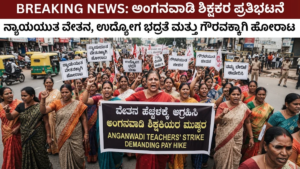
Despite their important responsibilities, Anganwadi teachers, workers and helpers have been raising concerns about low monthly remuneration, increasing workloads, delayed payments and a lack of adequate social security. Their demand for a salary hike has become an important issue in discussions about women’s employment, workers’ rights and government welfare policies.
The strike organised by Anganwadi workers reflects their long-standing demand for financial security and professional recognition. They argue that their responsibilities have increased considerably, but their remuneration has not kept pace with the rising cost of living. They want the government to recognise their contribution and provide better wages, retirement benefits and improved working conditions.
This protest is not simply about increasing monthly payments. It represents a larger struggle for dignity, equality and recognition of the work performed by thousands of women who contribute to the development of future generations.
Background of the Anganwadi Programme
The Anganwadi system was introduced under India’s Integrated Child Development Services programme, launched in 1975. Its primary objective was to improve the health, nutrition and educational development of children below six years of age, along with supporting pregnant women and nursing mothers.
Anganwadi centres were established to make essential welfare services accessible to families, particularly those living in rural villages, economically weaker communities and urban settlements.
Over the years, these centres have become important institutions within local communities. They provide supplementary nutrition, preschool learning activities, health-related awareness and support for maternal and child welfare programmes.
Anganwadi workers are responsible for delivering many of these services. They interact with families, monitor children’s development, maintain beneficiary records, coordinate with healthcare personnel and participate in government awareness campaigns.
Their responsibilities require considerable dedication, patience and organisational ability. However, many workers believe that the importance of their work has not been adequately reflected in their wages and employment benefits.
Why Are Anganwadi Workers Demanding Higher Salaries?
The main reason behind the strike is the demand for an increase in monthly honorarium. Workers argue that their present earnings are insufficient to meet everyday household expenses.
The prices of groceries, cooking gas, transportation, electricity, education, healthcare and housing have increased over time. Families dependent on a limited monthly income find it increasingly difficult to manage these expenses.
Many Anganwadi workers are women who contribute significantly to their household income. Some are responsible for supporting children, elderly family members and other dependants. When their monthly remuneration is low or delayed, maintaining financial stability becomes difficult.
Another important concern is the expansion of their duties. Apart from their traditional responsibilities, workers are often expected to participate in surveys, maintain digital records, upload information, attend official meetings and support additional government programmes.
Workers believe that an increase in responsibilities should be accompanied by an appropriate increase in remuneration.
They are therefore demanding a fair payment structure that considers their working hours, duties, experience and the rising cost of living.
Major Demands of Anganwadi Teachers and Workers
The demands raised by Anganwadi workers may vary across states and organisations. However, several common issues form the foundation of their protests.
1. Substantial Increase in Monthly Remuneration
The most important demand is a meaningful increase in monthly honorarium.
Workers want the government to revise their payments according to present economic conditions. They argue that the existing remuneration does not adequately compensate them for their responsibilities.
They believe that workers performing essential public services should receive an income that allows them to maintain a reasonable standard of living.
2. Recognition as Government Employees
Another major demand concerns employment status.
Anganwadi workers and helpers are generally classified as honorary workers under the programme rather than regular government employees. This classification has implications for their wages, employment conditions and access to certain benefits.
Worker organisations have repeatedly demanded better employment protection and recognition of their contribution.
They believe that their long years of service and regular responsibilities should be recognised through a more secure employment framework.
3. Pension and Retirement Benefits
Retirement security is another important concern.
Many Anganwadi workers spend several decades serving their communities. However, after completing their service, they may face financial difficulties if adequate retirement benefits are unavailable.
Workers are demanding gratuity, pension-related support and other suitable retirement provisions.
They believe that years of dedication should be rewarded with financial protection during old age.
4. Timely Monthly Payments
Regular payment is a basic requirement for financial stability.
Some workers have raised concerns about delays in receiving their remuneration and other eligible benefits. Such delays can create difficulties for families that depend on a fixed monthly income.
They want the administration to establish a reliable payment system that ensures money reaches workers on time.
5. Better Infrastructure at Anganwadi Centres
Many centres require improvements in basic facilities.
Workers have raised concerns about the availability of drinking water, toilets, furniture, electricity, educational materials, storage facilities and safe spaces for children.
They want properly maintained centres where children can learn and receive nutritional support in a healthy environment.
6. Reduction in Additional Administrative Duties
The introduction of digital reporting and monitoring systems has increased administrative responsibilities.
Workers are often expected to maintain records, collect information and submit reports through digital platforms.
Although technology can improve programme monitoring, workers argue that excessive paperwork reduces the time available for children and beneficiaries.
They want adequate training, technical support, functional devices and a reasonable distribution of responsibilities.
The Important Role of Anganwadi Workers in Society
The contribution of Anganwadi workers extends far beyond the daily activities conducted inside their centres.
They are among the important frontline contributors to India’s child development and community welfare programmes.
Child Nutrition and Development
Anganwadi workers help implement supplementary nutrition programmes and monitor the nutritional development of young children.
They encourage families to follow healthy feeding practices and provide information about the importance of balanced nutrition.
They also help identify children who may require additional attention and connect families with appropriate health services.
Early Childhood Education
Preschool education is another important responsibility.
Through songs, storytelling, games, drawing and basic learning activities, Anganwadi workers introduce young children to early educational experiences.
These activities help children develop communication skills, creativity, confidence and social interaction.
For children from financially weaker families, Anganwadi centres can provide an important foundation before entering formal schooling.
Maternal Health Awareness
Anganwadi workers also support pregnant women and nursing mothers through awareness programmes.
They provide information about maternal nutrition, breastfeeding, childcare, hygiene and the importance of health check-ups.
They may coordinate with healthcare workers to help women access relevant government services.
Community Awareness
Anganwadi workers participate in awareness campaigns related to nutrition, sanitation, immunisation and child welfare.
Their regular interaction with families allows them to communicate important information at the community level.
Their contribution helps strengthen the relationship between government welfare programmes and the people who depend on them.
Financial Difficulties Faced by Anganwadi Workers
Low remuneration creates several challenges in the everyday lives of workers.
Many workers have personal responsibilities, including paying household expenses, supporting children’s education, managing healthcare costs and caring for elderly family members.
When their income is limited, even ordinary expenses can become difficult to manage.
Some workers may have to depend on loans or financial assistance from relatives to meet unexpected expenses.
The situation becomes more challenging when payments are delayed or when workers have to spend their own money on transportation and work-related activities.
Financial insecurity can also affect motivation and job satisfaction.
Workers argue that their contribution to public welfare should be matched by fair compensation and adequate financial protection.
Why Have Anganwadi Workers Chosen to Strike?
A strike is generally organised when workers believe that their concerns have not received sufficient attention through regular discussions and representations.
Anganwadi workers’ associations use collective protests to communicate their demands to government authorities.
Rallies, demonstrations, memorandums, sit-in protests and strikes are some of the methods used to bring attention to their concerns.
Collective action gives workers an opportunity to express their difficulties as a united group.
Their protests also highlight the importance of frontline workers in delivering essential public services.
Workers believe that repeated appeals alone may not be sufficient to bring meaningful changes. Therefore, they use organised demonstrations to seek government intervention.
However, participating in a strike can also create financial uncertainty for workers. Some may lose income during the protest, while others may experience pressure to return to their duties.
Despite these difficulties, many continue their movement because they believe that improvements in wages and employment conditions are necessary.
Impact of the Strike on Children and Families
Anganwadi centres provide important services to children and mothers, particularly in communities with limited access to alternative facilities.
When workers participate in a strike, some services may experience interruptions depending on the duration and extent of the protest.
Preschool activities may be affected, and families may face difficulties accessing nutritional support and other services.
Working parents who depend on Anganwadi centres may also experience childcare-related challenges.
Pregnant women and nursing mothers may need to seek information or assistance through alternative healthcare facilities.
These disruptions highlight the importance of finding an early and peaceful solution to the dispute.
At the same time, workers’ demands should not be ignored because their protest affects essential services.
Improving the working conditions of Anganwadi staff can strengthen the quality and continuity of the services they provide.
The government must therefore balance the needs of beneficiaries with the legitimate concerns of workers.
Government Responsibility and the Need for Action
The government has a significant responsibility to strengthen the Anganwadi system and ensure that workers receive appropriate support.
Anganwadi workers are responsible for implementing important welfare activities at the community level. Their financial and professional well-being should therefore be considered an essential part of programme development.
The government should conduct a detailed review of existing remuneration structures and consider the economic challenges faced by workers.
A constructive approach could include the following measures:
- Reviewing monthly honorariums in accordance with inflation and living expenses.
- Holding regular discussions with workers’ associations.
- Establishing a clear timeline for addressing salary-related demands.
- Ensuring timely release of monthly payments.
- Providing appropriate retirement and social security benefits.
- Improving infrastructure and facilities at Anganwadi centres.
- Reducing unnecessary administrative responsibilities.
- Providing digital equipment and technical training.
- Establishing an effective grievance-redressal system.
The Union government and state governments also need to coordinate their efforts because remuneration arrangements and additional benefits can involve different levels of administration.
Regular communication between government officials and worker representatives can help prevent disputes from becoming prolonged movements.
Women’s Empowerment and Economic Independence
The Anganwadi workers’ movement is also connected with the larger issue of women’s economic empowerment.
A significant proportion of Anganwadi workers and helpers are women. They perform important community responsibilities while also managing household and family duties.
Fair wages can improve their economic independence and help them make better decisions about household finances, education, healthcare and savings.
Financial security can also reduce their dependence on others and provide greater confidence in managing personal and family responsibilities.
Social protection is equally important.
Health insurance, accident protection, maternity-related support and retirement benefits can help workers manage unexpected financial challenges.
Recognising their contribution would also send a positive message about the importance of women’s labour in public welfare and community development.
Public Support for Anganwadi Workers
Public awareness and community support can contribute positively to resolving the dispute.
Parents, teachers, women’s organisations, community groups and social activists can participate in constructive discussions about the importance of fair wages and better working conditions.
People should understand that Anganwadi workers and beneficiaries share a common interest in maintaining strong and effective centres.
Parents want their children to receive proper nutrition and preschool education. Workers want the financial security and facilities required to provide those services effectively.
These demands are not necessarily opposed to each other.
A stronger workforce can help deliver better services to families.
Public discussion should therefore focus on peaceful solutions, fair treatment and the long-term improvement of the Anganwadi system.
Possible Solutions to End the Strike
Ending the strike requires meaningful action rather than temporary assurances.
The government should develop a practical framework that addresses both immediate demands and long-term employment concerns.
First, monthly honorariums should be reviewed periodically so that workers do not have to repeatedly organise protests to seek revisions.
Second, payment systems should be made transparent and reliable.
Third, retirement protection should be strengthened so that workers who have served for many years do not face financial insecurity after leaving their jobs.
Fourth, Anganwadi centres should receive adequate infrastructure and educational materials.
Finally, worker representatives should be included in policy discussions involving changes to their responsibilities, working conditions and benefits.
A fair agreement can help restore confidence between the government and workers while ensuring that essential community services continue.
The Way Forward
The future of the Anganwadi system depends not only on government funding but also on the welfare of the people who operate it.
Workers who receive fair remuneration, appropriate facilities and social security are more likely to experience financial stability and professional satisfaction.
The government should treat their demands as an opportunity to improve the overall functioning of child development and nutrition programmes.
A well-planned settlement can benefit workers, children, mothers and the wider community.
Rather than allowing disputes to continue for extended periods, both sides should work towards a solution through discussion, transparency and mutual understanding.
Conclusion
The Anganwadi teachers’ and workers’ strike for a salary hike represents an important struggle for fair wages, dignity, social security and professional recognition.
These workers perform responsibilities that contribute directly to children’s education, maternal health, nutrition and community development. Their work supports some of the most vulnerable sections of society.
However, increasing responsibilities combined with financial insecurity have created serious concerns among workers.
Their demands for higher remuneration, timely payments, retirement benefits, better infrastructure and improved working conditions deserve careful consideration.
The government should take meaningful steps to address these concerns through constructive dialogue and practical policy decisions.
Strengthening the Anganwadi system requires recognising the people who make it function. Better working conditions for Anganwadi workers can contribute to better services for children and families.
Ultimately, respecting Anganwadi workers means respecting the future of India’s children. Fair wages and social security for these frontline women workers are not merely employment benefits; they are an investment in a healthier, stronger and more equitable society.