Introduction
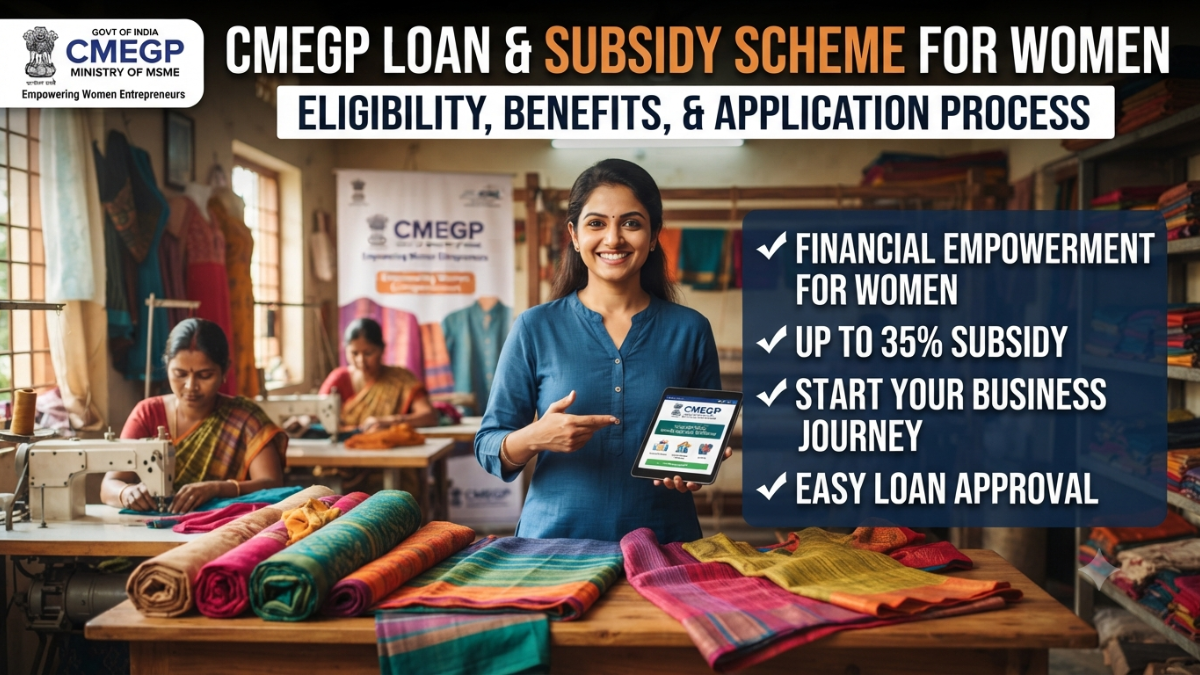
Women entrepreneurship is playing a major role in India’s economic growth. To encourage self-employment and support small business creation, various government schemes provide financial assistance to aspiring entrepreneurs. One such important initiative is the Chief Minister’s Employment Generation Programme (CMEGP). The scheme aims to help unemployed youth, women, and aspiring business owners establish micro and small enterprises through financial support and subsidy benefits.
For women entrepreneurs, the CMEGP scheme offers an excellent opportunity to start a business with reduced financial burden. Under eligible categories and project limits, women can receive substantial subsidy support, which may reach up to ₹8 lakh, depending on the project cost and applicable subsidy percentage. This assistance can significantly reduce the loan repayment burden and make entrepreneurship more accessible.
This article provides a complete overview of the CMEGP scheme, including its objectives, benefits, eligibility criteria, subsidy structure, application process, required documents, and tips for successful approval.
What is the CMEGP Scheme?
The Chief Minister’s Employment Generation Programme (CMEGP) is a government-supported self-employment scheme designed to generate employment opportunities by promoting new micro-enterprises. The scheme encourages individuals to start manufacturing, service, and business ventures by providing financial assistance through banks and subsidy support from the government.
The primary objective of CMEGP is to reduce unemployment by helping eligible individuals become job creators rather than job seekers. Through this initiative, beneficiaries can establish businesses in various sectors, including manufacturing, retail trade, food processing, tailoring, beauty services, handicrafts, repair services, and many other industries.
Women entrepreneurs are among the key beneficiaries of this scheme because governments recognize the importance of increasing women’s participation in business and economic activities.
Objectives of the CMEGP Scheme
The scheme has several important objectives:
- Promote self-employment among unemployed individuals.
- Encourage women to become entrepreneurs.
- Generate sustainable employment opportunities.
- Support the growth of micro and small enterprises.
- Reduce migration from rural areas by creating local employment.
- Improve economic conditions of families through entrepreneurship.
- Develop business skills and entrepreneurial confidence.
- Strengthen local industries and economic development.
By providing financial assistance and subsidy support, the scheme helps individuals overcome one of the biggest barriers to entrepreneurship—lack of capital.
Why the CMEGP Scheme is Important for Women
Women often face challenges in accessing business finance, securing collateral, and obtaining investment for new ventures. The CMEGP scheme helps address these challenges by offering subsidy support that reduces the overall cost of starting a business.
Some major advantages for women include:
- Lower financial burden.
- Increased access to institutional finance.
- Opportunity to become financially independent.
- Support for first-time entrepreneurs.
- Ability to create jobs within local communities.
- Encouragement to establish home-based and small-scale businesses.
The scheme empowers women to transform their skills, talents, and ideas into profitable enterprises.
Subsidy Benefits for Women
One of the most attractive features of the CMEGP scheme is the subsidy component.
Depending on eligibility conditions, project category, and government guidelines, women entrepreneurs can receive significant subsidy support. In many cases, the subsidy amount can go up to ₹8 lakh, helping reduce the effective project cost.
The subsidy is generally linked to:
- Project cost.
- Beneficiary category.
- Type of enterprise.
- Government-approved subsidy percentage.
The subsidy amount is credited according to scheme guidelines and helps lower the loan liability of the entrepreneur.
For women planning to start a business, this support can make a major difference in project viability and long-term profitability.
Types of Businesses Eligible Under CMEGP
The scheme supports a wide variety of business activities. Women entrepreneurs can choose from numerous sectors based on their interests, skills, and local market demand.
Some popular business ideas include:
Manufacturing Units
- Garment manufacturing
- Food processing
- Bakery products
- Paper products
- Agarbatti manufacturing
- Soap production
- Candle making
- Packaging units
- Handmade products
- Furniture manufacturing
Service-Based Businesses
- Beauty parlors
- Tailoring centers
- Computer training institutes
- Repair shops
- Digital service centers
- Mobile repair services
- Printing services
- Photography studios
- Event management services
Trading Businesses
- Retail shops
- Grocery stores
- Stationery stores
- Gift shops
- Agricultural input shops
- Household products business
Women can select a business based on their skills, investment capacity, and market opportunities.
Eligibility Criteria
To benefit from the CMEGP scheme, applicants must satisfy certain eligibility conditions.
Common eligibility requirements may include:
Age Requirement
Applicants should generally be adults and meet the minimum age requirement specified under the scheme guidelines.
Educational Qualification
For larger projects, certain educational qualifications may be required. However, requirements can vary depending on the project size and category.
New Enterprise Requirement
The scheme is generally intended for new enterprises rather than existing businesses.
Residency Requirement
Applicants should meet the residency conditions specified by the implementing authority.
Entrepreneurial Interest
The applicant must demonstrate a genuine intention to establish and operate the proposed business.
Women from various backgrounds can apply if they satisfy the applicable conditions.
Project Cost Limits
The project cost varies depending on the type of enterprise.
Generally, different limits may apply for:
- Manufacturing sector projects.
- Service sector projects.
- Small business ventures.
- Micro-enterprise activities.
The project report should clearly explain:
- Nature of business.
- Investment requirements.
- Expected revenue.
- Employment generation.
- Business sustainability.
A well-prepared project report increases the chances of approval.
Financial Assistance Structure
Under the scheme, project financing is usually arranged through participating banks.
The financial structure often includes:
Beneficiary Contribution
The entrepreneur contributes a small portion of the project cost.
Bank Loan
The bank finances the major share of the project through a loan.
Government Subsidy
Eligible subsidy is provided under the scheme and adjusted according to approved guidelines.
This combination allows entrepreneurs to start businesses with relatively lower personal investment.
Documents Required
Women applying under the CMEGP scheme may need to submit the following documents:
- Aadhaar Card
- Identity proof
- Address proof
- Passport-size photographs
- Educational certificates
- Caste certificate (if applicable)
- Income certificate (if required)
- Project report
- Bank account details
- Business-related documents
- Residence certificate
- Any additional documents requested by authorities
Applicants should ensure all documents are accurate and updated before submission.
Step-by-Step Application Process
Step 1: Business Idea Selection
Choose a suitable business idea that matches your skills and market demand.
Step 2: Prepare a Project Report
Develop a detailed project report including:
- Business objectives
- Investment requirements
- Machinery details
- Revenue projections
- Employment potential
Step 3: Gather Documents
Collect all required documents before starting the application process.
Step 4: Submit Application
Submit the application through the designated channel as prescribed under the scheme.
Step 5: Verification Process
Authorities verify the documents and assess eligibility.
Step 6: Bank Evaluation
The project proposal is forwarded to the bank for financial appraisal.
Step 7: Approval
Upon successful evaluation, the project receives approval.
Step 8: Loan Sanction
The bank sanctions the loan according to the approved project.
Step 9: Subsidy Processing
The subsidy component is processed according to scheme rules.
Step 10: Business Establishment
The entrepreneur can begin setting up the business and commence operations.
Best Business Ideas for Women Under CMEGP
Women can leverage the scheme to start profitable ventures such as:
Boutique and Fashion Design
Growing demand for customized clothing creates excellent opportunities.
Beauty and Wellness Services
Beauty salons, skincare centers, and wellness services continue to experience strong demand.
Food Processing
Pickles, snacks, bakery products, and packaged foods can generate stable income.
Digital Services
Online marketing, content creation, and digital support services require relatively low investment.
Handicrafts
Handmade products enjoy strong demand in local and online markets.
Tailoring and Embroidery
These businesses can start on a small scale and expand gradually.
Home-Based Manufacturing
Women can produce products from home while managing family responsibilities.
Advantages of Receiving an ₹8 Lakh Subsidy
A substantial subsidy can provide several benefits:
Reduced Loan Burden
Lower repayment obligations improve financial stability.
Faster Business Growth
Additional funds help entrepreneurs purchase better equipment and infrastructure.
Improved Profitability
Reduced financial pressure allows businesses to achieve profitability sooner.
Greater Confidence
Financial support encourages women to pursue larger and more ambitious projects.
Employment Generation
Businesses can hire additional workers and contribute to local economic development.
Tips for Successful Approval
To improve the chances of obtaining approval under the scheme:
- Prepare a professional project report.
- Choose a viable business idea.
- Submit complete documentation.
- Maintain a good banking record.
- Clearly explain business objectives.
- Demonstrate market demand.
- Attend entrepreneurship training if available.
- Follow all application guidelines carefully.
- Respond promptly to verification requests.
- Ensure accuracy in all submitted information.
Proper planning significantly increases approval chances.
Common Mistakes to Avoid
Many applicants face delays because of avoidable errors.
Common mistakes include:
- Incomplete application forms.
- Incorrect information.
- Weak project reports.
- Missing documents.
- Unrealistic financial projections.
- Delayed response to bank queries.
Avoiding these issues can make the approval process smoother.
Economic Impact of Women Entrepreneurship
When women start businesses, the benefits extend beyond individual income generation.
Positive impacts include:
- Increased household income.
- Better education opportunities for children.
- Community development.
- Local employment generation.
- Economic empowerment.
- Reduction in unemployment.
Women-led enterprises contribute significantly to inclusive and sustainable growth.
Future Opportunities for Women Entrepreneurs
The future of women entrepreneurship in India is promising. Rising digital adoption, growing consumer markets, and government support programs are creating new opportunities.
Women can explore:
- E-commerce businesses.
- Digital marketing services.
- Food brands.
- Health and wellness ventures.
- Sustainable products.
- Agricultural value-added businesses.
- Skill-based service enterprises.
Government schemes such as CMEGP can serve as a launching platform for long-term entrepreneurial success.
Conclusion
The CMEGP scheme is an important initiative that encourages self-employment and entrepreneurship by providing financial assistance to eligible individuals. For women entrepreneurs, the scheme offers a valuable opportunity to establish new businesses with government-backed support. With subsidy benefits that can reach up to ₹8 lakh under eligible conditions, women can significantly reduce their startup costs and focus on building sustainable enterprises.
Whether the goal is to start a manufacturing unit, service business, retail venture, or home-based enterprise, the CMEGP scheme can provide the financial foundation needed to transform an idea into a successful business. By preparing a strong project report, meeting eligibility requirements, and following the application process carefully, women entrepreneurs can take advantage of this scheme and move toward financial independence, business ownership, and long-term economic success.