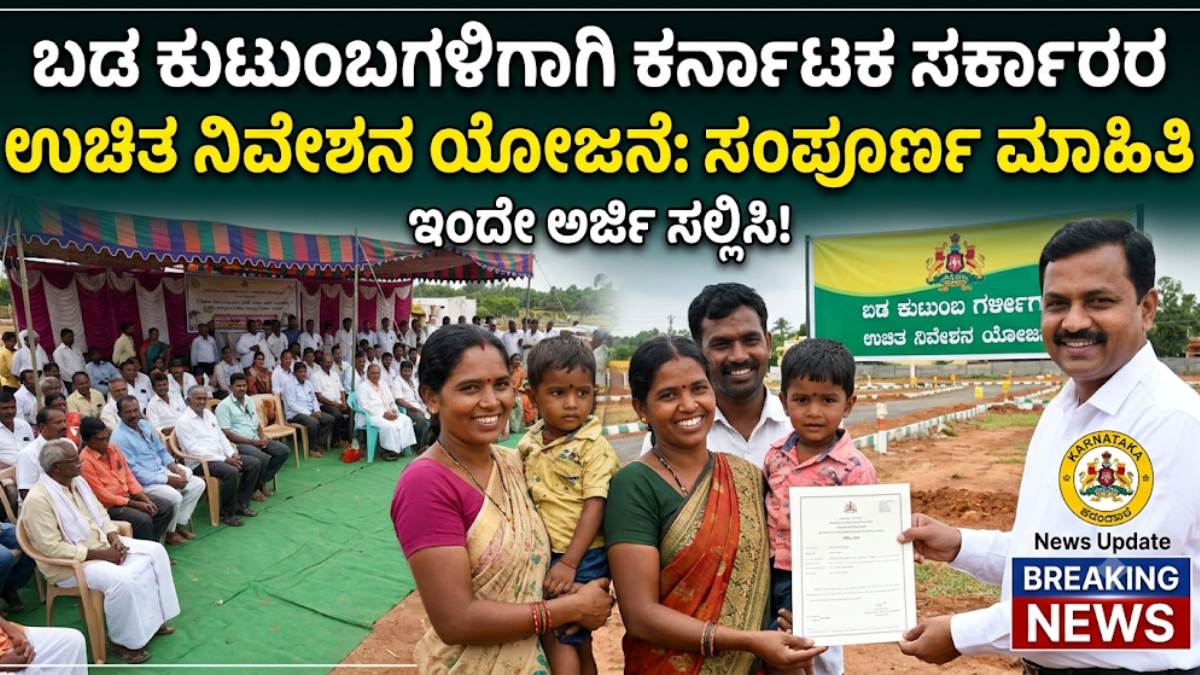
Karnataka is one of India’s rapidly developing states, but many families in rural and urban areas still face difficulties in owning a house or residential site. For low-income families, land prices can be too high, making it difficult to purchase a suitable site with their own money. To address this problem, the Karnataka government has introduced various housing and land-related welfare programmes aimed at helping economically weaker families obtain residential sites and housing support.

The distribution of residential sites to poor and deserving families is an important part of Karnataka’s social welfare and housing policies. These programmes are designed to provide support to families who do not own a house or suitable residential land and who meet the eligibility conditions prescribed by the government.
Why Residential Sites Are Important for Poor Families
Owning a residential site gives a family more than just a piece of land. It provides security, stability and an opportunity to build a permanent home. For families living in rented houses, temporary shelters or overcrowded conditions, government-supported housing programmes can provide a path toward better living conditions.
A residential site can also become a valuable family asset. Once an eligible beneficiary receives a site through an approved government scheme, the family may be able to construct a house according to the applicable rules and financial assistance available under housing programmes.
Who May Be Eligible?
Eligibility differs depending on the particular government scheme, local authority and type of land or housing programme. Generally, preference may be given to economically weaker families, homeless households, low-income families and people who do not already own a suitable residential property.
Other factors may also be considered, such as the applicant’s income, place of residence, family circumstances and social or economic status. Some schemes may provide special consideration to certain vulnerable groups, including women-headed households, persons with disabilities, scheduled communities and other eligible categories.
Applicants should therefore check the latest rules issued by the relevant Karnataka government department or local authority before submitting an application.
How the Site Distribution Process Generally Works
The process normally begins with the identification of eligible applicants. Applications may be collected through the appropriate government office or online service, depending on the scheme.
After an application is submitted, officials may verify the information provided by the applicant. This can include checking residence details, income information, family records, property ownership and other eligibility conditions.
Following verification, a list of eligible or selected beneficiaries may be prepared. In some cases, the list may be displayed publicly so that applicants can check their status and raise objections if there is an error.
After final approval, eligible beneficiaries may receive an official allotment document or another form of confirmation. The exact procedure depends on the particular scheme and authority responsible for distributing the sites.
Documents Commonly Required
Applicants should keep their documents ready before applying. The exact list varies by programme, but commonly requested documents can include:
- Aadhaar or another approved identity document
- Proof of residence
- Income certificate, where applicable
- Caste certificate, where applicable
- Family or ration card
- Recent photographs
- Bank account details
- Documents relating to existing property ownership, if required
- Mobile phone number
- Application or registration documents
Applicants should provide accurate information. Incorrect or misleading information can result in rejection or cancellation of an application.
Role of Local Authorities
The implementation of residential-site programmes may involve different government bodies depending on the location. Rural applicants may need to approach the relevant local administration, while applicants in towns and cities may need to contact the concerned municipal or development authority.
Local officials can provide information about available land, application procedures, beneficiary lists, required documents and deadlines.
Because government schemes can change over time, applicants should rely on current official announcements rather than old social-media posts or unofficial websites.
What Beneficiaries Should Do After Receiving a Site
Receiving a residential site is an important opportunity, but beneficiaries should carefully follow the conditions attached to the allotment.
They should preserve the allotment documents and other official records safely. They should also understand whether there are restrictions on transferring, selling, leasing or otherwise using the property.
If housing assistance is available separately, beneficiaries should find out whether they can apply for construction support. Depending on the programme, financial assistance may be available through state or central housing initiatives.
Beneficiaries should never pay money to an unknown person who promises to provide a government site. Genuine government procedures should be verified through the appropriate official authority.
Avoiding Fraud and Fake Government Schemes
As interest in free or subsidised residential sites is high, fraudulent websites and individuals sometimes make false promises. People may be asked to pay registration fees, processing charges or deposits through unofficial channels.
Applicants should be careful when sharing Aadhaar details, bank information, OTPs or other personal information. They should verify whether a website, application form or message actually belongs to a government department or authorised service provider.
If someone claims that a government site can be guaranteed in exchange for money, applicants should treat the claim with caution and contact the relevant government office for verification.
Importance of Government Housing Programmes
Housing and residential-site programmes can play an important role in reducing housing insecurity. For low-income families, access to land can make it easier to build a permanent home and improve their overall quality of life.
A secure home can also support children’s education, family health, employment opportunities and long-term financial stability. For this reason, transparent identification of beneficiaries and proper implementation of welfare programmes are extremely important.
Conclusion
Karnataka’s residential-site and housing welfare programmes are intended to support eligible families who cannot easily afford land or housing on their own. Poor and economically weaker families may benefit from these initiatives if they meet the conditions of the relevant scheme.
However, applicants should remember that there is no single eligibility rule for every site-distribution programme. Conditions, documents, application methods and deadlines can vary according to the scheme and local authority.
Anyone interested in obtaining a government residential site should therefore check the latest official notification, submit correct documents and complete the process through authorised government channels. By staying informed and avoiding unofficial agents, eligible families can protect themselves from fraud and make better use of Karnataka’s housing and welfare opportunities.