In today’s digital world, access to a computer has become increasingly important for students. Online classes, digital textbooks, educational videos, coding courses, competitive-exam preparation, research, assignments, and skill-development programmes often require a reliable device. For students from financially weaker families, purchasing a laptop can be difficult. This is why several governments and educational institutions have introduced programmes that provide laptops, tablets, or financial assistance for digital devices to eligible students.
However, students should understand an important point before applying for any “free laptop scheme.” There is no single nationwide Government of India scheme called the “National Student Laptop Scheme 2026” that provides a free laptop to every student. In 2026, the Press Information Bureau (PIB) Fact Check Unit specifically warned that viral WhatsApp messages claiming that the Central Government was accepting applications for such a scheme were fake. Students should therefore verify any offer through official government websites before providing personal information.
What Is Free Laptop Distribution for Students?
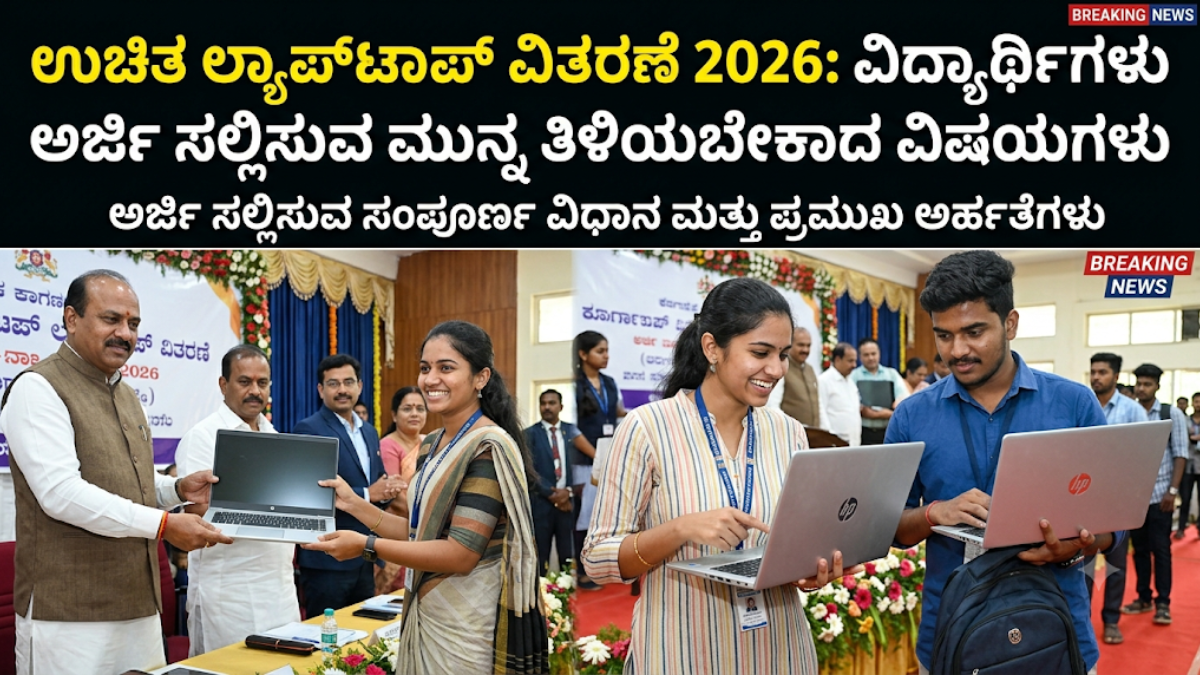
Free laptop distribution refers to government or institutional programmes through which eligible students receive a laptop or financial support for purchasing a digital device. These programmes are generally designed to reduce the digital divide and help students continue their education with access to modern technology.
Such initiatives may be operated by state governments rather than the Central Government. Eligibility can therefore differ considerably from one state to another. Some programmes focus on academically meritorious students, while others may give preference to students from economically weaker families, particular social categories, government schools, government colleges, or specific educational levels.
For example, the National Government Services Portal lists a Madhya Pradesh programme under which meritorious Class 12 students receive financial assistance for laptops. Goa has also implemented a free-laptop programme for meritorious students from SC and ST communities. In 2025, the Goa government reported that 232 students received laptops under its programme for academic years 2023–24 and 2024–25.
Why Are Laptops Important for Students?
A laptop can provide students with opportunities that are difficult to access without a computer. Students can attend online classes, prepare presentations, write assignments, access e-books, conduct research, learn programming, develop digital skills, and participate in online certification courses.
A personal device can also encourage independent learning. Instead of depending entirely on school or college computer laboratories, students can study at home according to their own schedules.
Digital access is particularly important for students entering higher education. Many college courses require students to prepare documents, create presentations, use educational software, communicate through online platforms, and submit assignments electronically.
Government education programmes have also recognised the importance of digital infrastructure. Under Samagra Shiksha, provisions exist for ICT laboratories and smart classrooms, including equipment such as laptops, tablets, computers and related digital-learning infrastructure.
Who May Be Eligible?
There is no universal eligibility rule because each laptop or device-distribution programme can have its own conditions. Common eligibility requirements may include:
- Being a student of a particular class, college, university, or technical institution.
- Achieving a specified academic performance.
- Studying in a government or government-aided institution.
- Belonging to a specified category where the programme is category-specific.
- Meeting income or economic criteria where applicable.
- Being a resident of the state operating the scheme.
- Providing valid educational and identity documents.
- Meeting the age or course requirements specified by the programme.
Students should never assume that a programme advertised on social media applies to everyone. The official notification should always be checked for the exact eligibility conditions.
Examples of State-Level Laptop Programmes
India has a history of state-level initiatives supporting students with computers and other digital devices. Tamil Nadu, for instance, has previously operated a large-scale laptop distribution programme for students in government and government-aided schools and colleges. Official Tamil Nadu documents record substantial laptop distribution under the programme.
Other states have also operated programmes aimed at meritorious or disadvantaged students. An official government resource, for example, describes a Gujarat programme providing tablets to eligible Class 12 science students from socially and educationally backward classes who meet the specified academic requirement.
These examples demonstrate why students should search for programmes operated by their own state’s education, higher-education, information-technology, or social-welfare department rather than relying on a generic “free laptop scheme” message.
How to Apply for a Free Laptop Scheme
The application process depends on the particular programme. In general, students should follow these steps:
1. Find the Official Announcement
Start by checking the official website of your state government, education department, university, or other authorised institution. Government services may also be listed on official government portals.
2. Check Eligibility
Read the official notification carefully. Check academic requirements, income limits, residence requirements, course details, category requirements, and application deadlines.
3. Prepare Documents
Depending on the scheme, applicants may be asked for documents such as proof of identity, educational certificates, admission documents, residence certificates, income certificates, category certificates, bank-account information, or other records.
4. Complete the Application
If online applications are available, use only the official application portal. Enter information carefully and check all details before submitting the form.
5. Track the Application
After submission, keep the application or registration number safely. If the scheme provides an official application-status facility, use it to check updates.
6. Receive the Benefit
Depending on the programme, the benefit may be a physical laptop, tablet, or direct financial assistance transferred to an eligible student’s bank account.
Beware of Fake Free Laptop Messages
Students should be especially careful about social-media posts promising guaranteed free laptops. In 2026, PIB Fact Check warned about fake messages claiming that students could apply for laptops under a supposed “National Student Laptop Scheme 2026.” The government clarified that no such Central Government scheme had been announced.
Scammers may create attractive websites that imitate government portals and ask students to submit names, phone numbers, identity details, bank information, or other sensitive data.
A genuine-looking logo does not prove that a website is official. Students should check the domain, government notification, contact information, and announcement on an authentic government website.
Never pay an unofficial “registration fee” simply because a message promises a free laptop. Also avoid clicking unknown links received through WhatsApp, Telegram, SMS, email, or social media.
Benefits of Laptop Distribution Programmes
Well-designed laptop programmes can provide several benefits. First, they help reduce the digital divide between students who can afford personal computers and those who cannot. Second, they can improve access to online educational resources. Third, they encourage digital literacy and practical technology skills.
Students can use laptops to learn programming, graphic design, data analysis, communication tools, office applications, and other skills that may be useful in higher education and employment.
These programmes can also support students during periods when traditional classroom learning is disrupted. India’s PM eVIDYA initiative, for example, has brought together multiple forms of digital and remote education, including DIKSHA, educational television channels, radio and specialised digital content.
Conclusion
Free laptop distribution programmes can play an important role in making digital education more accessible to students. A laptop is not merely an electronic device; when used properly, it can become a powerful tool for learning, research, communication, creativity, and career development.
At the same time, students should remember that free laptop programmes are not automatically available to every student across India. Eligibility, benefits, application procedures, and availability vary by government department and state. Most importantly, students should not trust viral messages that claim to offer a universal Central Government laptop scheme.
Before applying, always verify the programme through an official government or educational institution website. Avoid suspicious links, never share sensitive information with unverified websites, and do not pay money to unknown individuals promising guaranteed selection.
With careful verification and responsible use, genuine laptop and digital-device programmes can help students gain better access to education and prepare for an increasingly digital future.