1. Introduction to the Yamaha RX 100
When Yamaha launched the RX 100 in India in 1985, the market was filled with motorcycles that were built more for utility than excitement. Bikes were generally heavy, underpowered, and far from sporty. The RX 100 arrived like a breath of fresh air. It was compact, agile, impressively quick, and featured a peppy 98cc 2-stroke engine that produced an exhilarating response the moment you twisted the throttle.
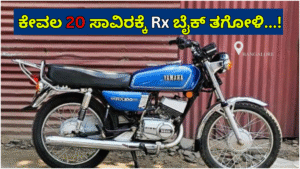
Young riders, in particular, found the RX 100 irresistible. It was stylish without being overly flashy, fast without being unpredictable, and reliable enough to be a daily companion. The motorcycle quickly gained popularity among college students, commuters, and biking enthusiasts alike. Its dominance was so strong that competitors struggled to create anything that could challenge its swift acceleration and light handling.
Yamaha eventually ended production in 1996 due to changing emission regulations, but the motorcycle never really disappeared from Indian roads or from people’s hearts. Decades later, it still commands respect and a massive fan base—a rare achievement in the ever-evolving two-wheeler industry.
2. Engine and Performance: The Heart of the Legend
The RX 100’s most celebrated feature has always been its engine. Yamaha equipped it with a 98cc, single-cylinder, air-cooled, 2-stroke powerhouse that delivered around 11 bhp, an impressive figure for its category and era. But the real magic wasn’t just in the numbers—it was in the way the engine delivered power.
Engine Specifications
- Engine type: 2-stroke, single-cylinder
- Displacement: 98cc
- Power output: ~11 bhp
- Torque: 10.39 Nm
- Transmission: 4-speed gearbox
- Top speed: Approximately 100 km/h
The moment you opened the throttle, the RX 100 responded with instant acceleration. The powerband was sharp and engaging, making it feel far quicker than most motorcycles in its segment even today. Its lightweight body amplified this sensation—at just around 98 kg, the power-to-weight ratio was phenomenal by 80s and 90s standards.
Why Riders Still Love the Performance
- Instant Pickup: Unlike modern 4-stroke engines, the RX 100 delivered explosive initial acceleration.
- Smooth Gear Shifts: The 4-speed gearbox was refined, responsive, and offered a satisfying mechanical feel.
- Iconic Exhaust Note: The raspy 2-stroke exhaust sound became the signature of the RX series.
- Responsiveness: A mere twist of the throttle was enough to bring the bike to life, making it a thrill to ride in both city and highway conditions.
Even today, riders who experience the RX 100 for the first time are often surprised at how alive and spirited the bike feels despite its small displacement. That’s the magic Yamaha infused into this machine.
3. Mileage and Fuel Efficiency
2-stroke engines are known for their performance, not fuel economy. Yet, the Yamaha RX 100 offered a respectable mileage figure considering its class and power delivery.
Average Mileage
- 35–45 km/l (approx.)
Riding style plays a major role here. Enthusiasts who push the bike to higher RPMs usually get mileage on the lower side. But those who maintain a steady pace report around 40 km/l in real-world usage. For a bike of its generation, this was considered excellent.
However, because 2-stroke engines burn oil along with fuel, they naturally consume more than modern 4-stroke engines. Still, riders willingly accepted this because the thrill and satisfaction of riding an RX 100 was well worth the extra fuel cost.
4. Design and Build Quality: Simple, Elegant, and Evergreen
The Yamaha RX 100 has a design that’s both minimalist and captivating. Unlike modern motorcycles overloaded with graphics and bulky bodywork, the RX 100 embraced simplicity and function. This clean design became one of its greatest strengths, making it an evergreen classic that looks stylish even in today’s era.
Design Highlights
- Classic round headlamp that complements its retro appeal
- Chrome-finished mudguards that add shine and character
- A beautifully sculpted fuel tank with subtle curves
- Long, flat seat offering comfort for both rider and pillion
- Lightweight steel frame ensuring agility and stability
The RX 100’s stripped-down aesthetics make it incredibly easy to modify. Custom builders across India transform RX models into café racers, scramblers, drag bikes, and even completely restored vintage showpieces. Its frame and proportions adapt well to almost any customization style.
Yamaha’s build quality also deserves applause. Despite being decades old, well-maintained RX 100s still operate smoothly, demonstrating the superior engineering and durable materials used in its construction.
5. Brakes, Handling, and Ride Experience
At just 98 kg, the RX 100 is one of the lightest motorcycles ever made for the Indian market. This lightweight nature gives it exceptional maneuverability, making it incredibly fun and easy to ride.
Brakes
- Front: Drum brake
- Rear: Drum brake
While drum brakes were standard for the time, they don’t offer the sharp stopping power of modern disc brakes. Riders must be cautious when riding at high speeds because the bike’s strong engine coupled with drum braking requires skillful handling.
Handling
- Perfect for weaving through city traffic
- Smooth cornering thanks to its balanced chassis
- Easy for beginners to learn on
- Light clutch and effortless gear shifts
The RX 100’s ride comfort is decent for short and medium distances. Its suspension is simple but effective, making city rides enjoyable. However, high-speed stability is limited compared to modern motorcycles with advanced frames and suspension systems.
6. Price in India’s Second-Hand Market
Since Yamaha discontinued the RX 100 in 1996, owning one today means turning to the second-hand market. The demand is exceptionally high, especially for models that retain original parts.
Typical Price Range
- ₹45,000 – ₹1,50,000: Standard used models
- ₹2,00,000 – ₹3,50,000: Fully restored, showroom-condition models
Prices depend on several factors:
- Engine condition
- Authenticity of parts
- Maintenance history
- Model year
- Degree of restoration or modification
Finding an RX 100 with factory-original parts is becoming increasingly rare. As scarcity rises, prices continue to climb each year. For collectors, owning a well-restored RX 100 is seen as both a passion and an investment.
7. Why Was the Yamaha RX 100 Discontinued?
The RX 100 was discontinued primarily due to stricter emission regulations introduced in the mid-90s. Two-stroke engines produce more smoke and pollutants, making them unsuitable for evolving environmental norms. Yamaha had no choice but to halt production to comply with these rules.
The move marked the end of an era. Yamaha later shifted toward four-stroke engines, which were cleaner and more fuel-efficient but lacked the raw excitement and crisp sound of the iconic 2-stroke machines.
8. RX 100 Relaunch Rumors — Fact or Fiction?
For years, speculation has circulated about Yamaha relaunching the RX 100. Social media posts, modified replicas, and fan-made concepts often revive the excitement. However, Yamaha has not officially confirmed any relaunch.
Even if Yamaha were to bring back a model carrying the “RX 100” name, it would necessarily feature a modern 4-stroke engine to meet current BS6 emission standards. Such an engine would be cleaner but would not deliver the same signature performance, pickup, or 2-stroke sound that made the original RX 100 legendary.
Thus, while the dream of seeing a new RX 100 on showroom floors remains alive among fans, it’s unlikely that a modern version could truly replicate the original’s soul.
9. Pros and Cons of the Yamaha RX 100
Pros
- Instant and exhilarating pickup
- Extremely lightweight and fun to ride
- Legendary 2-stroke exhaust sound
- Strong fan following and cult status
- Excellent resale value
- Great for modifications and custom builds
Cons
- 2-stroke engine is not environmentally friendly
- Drum brakes require cautious riding at higher speeds
- High maintenance if not cared for properly
- Difficult to find genuine spare parts today
10. Conclusion
The Yamaha RX 100 remains one of the most cherished motorcycles in Indian automotive history. Its explosive performance, simple yet stylish design, and charismatic 2-stroke sound created a legacy that continues to inspire new generations. Even decades after production stopped, the RX 100 enjoys a passionate fan base that restores, preserves, and celebrates this remarkable machine.
In a world of modern motorcycles filled with electronics and complex engineering, the RX 100 stands as a timeless reminder that simplicity, raw power, and pure riding joy never go out of style. For millions of Indians, the Yamaha RX 100 is not merely a bike—it is an emotion, a memory, and a legend that lives forever.