Introduction
Education is one of the most important tools for social and economic development. However, many students in rural and remote areas face difficulties in reaching schools due to long travel distances and inadequate transportation facilities. To address this challenge, the Government of Karnataka introduced the Free Bicycle Scheme for school students. The scheme was designed to help students travel to school more easily, reduce dropout rates, and encourage higher enrollment in secondary education.
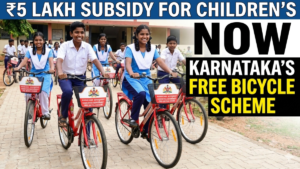
The Free Bicycle Scheme has become one of the most appreciated educational welfare initiatives in Karnataka. By providing bicycles to eligible students, the government has helped thousands of children, especially those from economically weaker sections, continue their education without transportation barriers.
This article explores the objectives, benefits, implementation, impact, and significance of the Karnataka Government’s Free Bicycle Scheme for school students.
Background of the Scheme
Many villages in Karnataka are located far from government and aided schools. Students often have to walk several kilometers every day to attend classes. This daily struggle can lead to absenteeism, poor academic performance, and even school dropouts.
Recognizing these challenges, the Karnataka Government launched the Free Bicycle Scheme with the aim of improving access to education. The scheme was introduced primarily for students studying in higher classes who needed to travel long distances to reach school.
The initiative reflects the government’s commitment to ensuring that every child has equal opportunities to receive quality education regardless of geographical or economic limitations.
Objectives of the Free Bicycle Scheme
The Free Bicycle Scheme was introduced with several important objectives:
1. Improve Access to Education
One of the main goals is to make education more accessible for students living in rural and remote areas. A bicycle reduces travel time and helps students reach school comfortably.
2. Reduce School Dropout Rates
Long distances often discourage students from continuing their studies. By providing bicycles, the government aims to reduce dropout rates, particularly at the secondary school level.
3. Encourage Enrollment
The scheme motivates parents to send their children to school by reducing transportation-related difficulties and expenses.
4. Promote Gender Equality
Girls often face greater challenges in traveling long distances for education. Providing bicycles helps increase girls’ school attendance and supports gender equality in education.
5. Improve Attendance
Students with bicycles can travel more efficiently, leading to better attendance and punctuality.
6. Support Rural Development
The scheme contributes to rural development by encouraging education among children in villages and remote communities.
Eligibility Criteria
The Karnataka Government established specific eligibility conditions for students to benefit from the scheme. While guidelines may vary over time, beneficiaries generally include:
- Students studying in government schools.
- Students studying in government-aided schools.
- Students enrolled in higher primary or secondary classes.
- Students residing at a considerable distance from their schools.
- Students from rural and economically disadvantaged backgrounds.
The government identifies eligible students through school records and local educational authorities.
Implementation Process
The successful implementation of the Free Bicycle Scheme requires coordination among several government departments and educational institutions.
Identification of Beneficiaries
Schools prepare lists of eligible students based on government guidelines. These lists are verified by education department officials.
Procurement of Bicycles
The government purchases bicycles through approved suppliers while ensuring quality standards and cost efficiency.
Distribution
Bicycles are distributed to students through schools. Distribution events are often organized in the presence of local officials, teachers, and community representatives.
Monitoring
Authorities monitor the implementation process to ensure that bicycles reach the intended beneficiaries and are used effectively.
Benefits of the Free Bicycle Scheme
The scheme offers numerous benefits to students, families, schools, and society.
Easier Transportation
Students can travel longer distances in less time. This reduces physical fatigue and allows them to focus better on their studies.
Improved Attendance
Regular attendance is crucial for academic success. Students with bicycles are more likely to attend school consistently.
Increased Enrollment
The availability of transportation support encourages more children to enroll in schools.
Reduced Financial Burden
Many families cannot afford private transportation. Free bicycles eliminate this expense and provide significant financial relief.
Enhanced Academic Performance
When students spend less time and energy commuting, they can devote more attention to learning and homework.
Greater Independence
Bicycles give students a sense of independence and responsibility. They can manage their travel without depending on others.
Better Time Management
Students can reach school on time and return home earlier, allowing more time for studies, sports, and family activities.
Impact on Rural Education
The Free Bicycle Scheme has had a positive impact on rural education across Karnataka.
Increased School Attendance
Many schools have reported improved attendance after students received bicycles. Reduced travel difficulties encourage regular participation in classes.
Reduced Dropouts
The scheme has played an important role in reducing dropout rates among students who previously faced transportation challenges.
Better Continuation of Education
Students are more likely to continue their studies beyond primary school when transportation becomes easier.
Educational Inclusion
Children from remote villages gain access to educational opportunities that were previously difficult to utilize.
Empowerment of Girl Students
One of the most significant achievements of the scheme is the empowerment of girls.
Improved Access to Secondary Education
Girls often discontinue education due to travel difficulties. Bicycles make secondary education more accessible.
Increased Confidence
Owning and using a bicycle helps girls become more confident and independent.
Higher Retention Rates
The scheme contributes to better retention rates among girl students.
Support for Gender Equality
By ensuring equal access to transportation, the government promotes gender equality in education.
Social and Economic Benefits
The benefits of the Free Bicycle Scheme extend beyond education.
Community Development
Educated children contribute to the development of their communities and the state as a whole.
Poverty Reduction
Education improves future employment opportunities and helps break the cycle of poverty.
Health Benefits
Cycling is a form of physical exercise that promotes fitness and healthy lifestyles.
Environmental Benefits
Bicycles are eco-friendly and produce no pollution, making them a sustainable mode of transportation.
Challenges Faced
Like any large-scale welfare program, the Free Bicycle Scheme faces certain challenges.
Maintenance Issues
Some students may find it difficult to maintain bicycles due to repair costs or lack of service facilities.
Distribution Delays
Occasional delays in procurement and distribution can affect implementation.
Infrastructure Limitations
Poor road conditions in some rural areas can make cycling difficult.
Monitoring Requirements
Continuous monitoring is necessary to ensure effective utilization of the bicycles.
Government Efforts to Improve the Scheme
The Karnataka Government has taken various measures to strengthen the effectiveness of the program.
These include:
- Improving distribution mechanisms.
- Ensuring quality bicycles.
- Enhancing monitoring systems.
- Coordinating with schools and local authorities.
- Reviewing implementation procedures regularly.
Such efforts help maximize the benefits received by students.
Role of Teachers and Schools
Teachers and school administrators play a crucial role in the success of the scheme.
They help by:
- Identifying eligible students.
- Maintaining beneficiary records.
- Educating students about bicycle safety.
- Monitoring attendance and performance.
- Encouraging proper maintenance of bicycles.
Their involvement ensures that the objectives of the scheme are achieved effectively.
Success Stories
Across Karnataka, many students have benefited from the Free Bicycle Scheme. Numerous beneficiaries report that bicycles have reduced travel time significantly and enabled them to continue their education.
Many girls who once struggled to attend school regularly have been able to complete secondary education because of the support provided through this initiative. Such success stories demonstrate the transformative impact of a simple yet powerful intervention.
Importance of Transportation in Education
Transportation is often overlooked when discussing educational development. However, the ability to reach school safely and conveniently is essential for learning.
The Karnataka Free Bicycle Scheme highlights how transportation support can improve educational outcomes. By addressing practical barriers, the government helps students focus on their academic goals and future aspirations.
Future Prospects
The continued success of the scheme offers opportunities for further improvements.
Future enhancements may include:
- Expansion of coverage to more students.
- Bicycle maintenance support programs.
- Road safety awareness initiatives.
- Integration with other educational welfare schemes.
- Enhanced monitoring through digital systems.
Such measures can further strengthen educational access and student welfare.
Conclusion
The Karnataka Government’s Free Bicycle Scheme for school students is an important educational welfare initiative that has transformed the lives of thousands of children across the state. By providing bicycles to eligible students, the government has reduced transportation barriers, improved school attendance, lowered dropout rates, and promoted educational equality.
The scheme has been especially beneficial for rural students and girls, helping them pursue education with greater confidence and convenience. Beyond education, it has contributed to social development, economic progress, environmental sustainability, and community empowerment.
The success of the Free Bicycle Scheme demonstrates that simple and practical interventions can create meaningful changes in the lives of students. As Karnataka continues to invest in education and student welfare, initiatives like this remain vital for building a more educated, inclusive, and prosperous society.