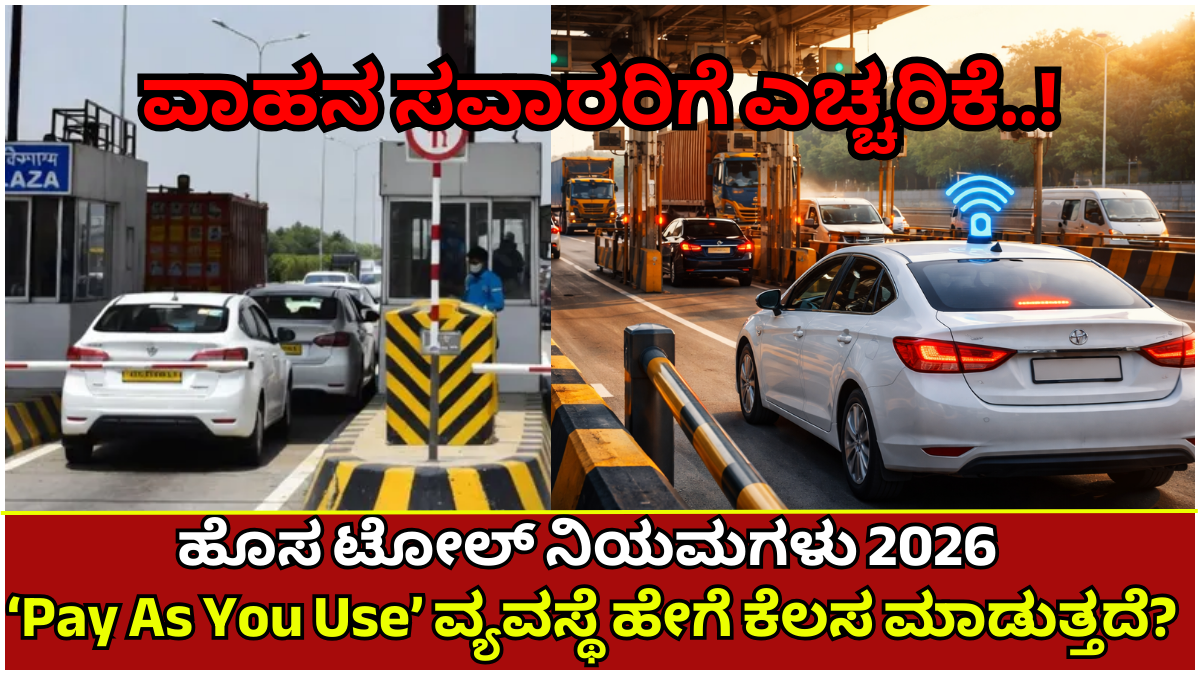
The Government of India is preparing to introduce major changes in the country’s highway toll collection system starting April 1. The new rules aim to make highway travel faster, more transparent, and completely digital for vehicle owners. The initiative is being implemented by the Ministry of Road Transport and Highways along with the National Highways Authority of India (NHAI).
These reforms are designed to solve long-standing problems such as heavy traffic congestion at toll plazas, delays in payment, and fuel wastage caused by vehicles waiting in long queues. By integrating modern technologies like GPS-based tolling and strengthening the existing FASTag system, the government hopes to create a smoother and more efficient highway travel experience.
The upcoming system focuses on digital payments, automated toll deductions, and stricter rules for vehicle owners who do not follow the guidelines. Understanding these new changes is important for anyone who frequently travels on national highways in India.
Why the Government Is Changing the Toll System
Over the years, the number of vehicles on India’s highways has increased dramatically. As a result, toll plazas often become bottlenecks, especially during peak hours or holidays. Long queues of vehicles waiting to pay toll fees cause several issues, including delays in travel, unnecessary fuel consumption, and increased pollution.
To tackle these challenges, authorities have decided to modernize the toll collection process. The new rules aim to remove the need for vehicles to stop at toll plazas and instead use automated technologies to calculate toll charges based on the distance travelled.
This new approach is expected to significantly reduce congestion on highways and improve the overall travel experience for commuters and transporters alike.
Major Changes in the New Toll System
The new guidelines introduce several important changes that vehicle owners must be aware of. These changes focus on technology, digital payments, and stricter compliance rules.
1. GPS-Based Toll Collection (GNSS Technology)
One of the most significant developments is the introduction of GPS-based tolling using Global Navigation Satellite System (GNSS) technology.
Under this system, vehicles will no longer need to stop at toll plazas to pay fees. Instead, the toll amount will be automatically calculated based on the distance travelled by the vehicle on national highways.
A GPS device installed in the vehicle will track the distance covered on tolled roads. The corresponding toll amount will then be automatically deducted from the linked bank account or digital wallet.
This “Pay As You Use” model means drivers will only pay for the exact distance they travel rather than a fixed toll amount for crossing a plaza. As a result, many travelers may find the system more fair and economical.
2. Mandatory FASTag Usage
The FASTag system, already widely used across India, will remain a key part of the new toll framework.
FASTag is a radio-frequency identification (RFID) sticker placed on a vehicle’s windshield. It enables automatic toll payments when a vehicle passes through a toll lane.
The government has made FASTag mandatory for all vehicles travelling on national highways. If a vehicle enters a toll plaza without a valid FASTag or if the tag is not working properly, the driver may be required to pay a penalty.
This measure ensures faster transactions and helps authorities maintain a fully digital toll collection system.
3. “One Vehicle, One FASTag” Policy
Another important rule being strictly enforced is the “One Vehicle, One FASTag” policy.
Under this rule:
- Each vehicle must have its own unique FASTag.
- A single FASTag cannot be used across multiple vehicles.
- Old or duplicate tags must be deactivated.
The policy aims to eliminate misuse of the system and ensure accurate toll collection.
Vehicle owners are also required to complete the Know Your Customer (KYC) process for their FASTag accounts. Tags that do not have proper KYC verification may be deactivated by the issuing bank or authority.
4. Gradual Elimination of Cash Payments
The government is also working toward completely eliminating cash payments at toll plazas.
Digital payments provide greater transparency and reduce the chances of financial discrepancies. By shifting entirely to electronic transactions, authorities can track every toll payment and ensure proper accounting.
Although cash payments may still be allowed in certain cases initially, the long-term goal is to make the toll system fully digital.
Benefits of the New Toll Rules
The updated toll collection system is expected to bring several advantages for both drivers and the transportation sector.
1. Reduced Travel Time
One of the biggest benefits will be faster travel on highways.
Drivers will no longer need to slow down or stop at toll booths, which means smoother traffic flow and shorter travel times. Long queues at toll plazas could become a thing of the past once the GPS-based system becomes widely implemented.
2. Fuel Savings
Vehicles waiting in toll lines often keep their engines running, which leads to unnecessary fuel consumption.
By eliminating long waiting times, the new system will help drivers save fuel. This will be especially beneficial for commercial vehicles that frequently travel long distances.
3. Greater Transparency
Digital toll payments ensure that every transaction is properly recorded.
Drivers will receive digital receipts for each toll payment, allowing them to track their travel expenses. This transparency also reduces the possibility of corruption or manual errors in toll collection.
4. Environmental Benefits
Reducing traffic congestion at toll plazas will also have a positive environmental impact.
When vehicles spend less time idling in queues, fuel consumption decreases, leading to lower carbon emissions. In addition, digital receipts will reduce the need for paper tickets, further helping environmental conservation.
5. Fair Payment System
The “Pay As You Use” model is considered more equitable compared to traditional toll systems.
Instead of paying a fixed toll fee regardless of distance travelled, drivers will pay only for the exact distance they drive on tolled highways. This ensures that users are charged fairly based on their actual usage.
Important Guidelines for Vehicle Owners
With the implementation of these new rules, vehicle owners must follow certain guidelines to avoid penalties and ensure smooth travel.
Maintain Minimum Balance in FASTag
Drivers should ensure that their FASTag account always has sufficient balance. If the account balance is too low, toll deductions may fail, which could lead to penalties.
Keeping a minimum balance ensures uninterrupted travel through toll points.
Purchase FASTag from Authorized Sources
Vehicle owners should obtain FASTag only from authorized banks or official NHAI centers.
Buying tags from unauthorized sellers can lead to fraud or technical issues. Authorized providers ensure that the tag is properly registered and linked to the vehicle.
Install the FASTag Correctly
FASTag stickers must be placed correctly on the windshield of the vehicle.
Improper placement may prevent scanners from detecting the tag, which could result in payment failures or additional charges. If the sticker becomes damaged or unreadable, it should be replaced immediately.
Avoid Using Multiple Tags
Using multiple FASTags for a single vehicle or sharing a tag between vehicles is not allowed under the new rules.
Drivers must ensure that the tag linked to their vehicle is active, verified through KYC, and functioning properly.
Possible Challenges During Implementation
While the new toll rules offer several benefits, there may also be some challenges during the early stages of implementation.
For example, installing GPS-based tolling devices in vehicles and integrating them with banking systems may take time. Some drivers may also need to update their FASTag accounts or complete KYC verification.
In addition, awareness about the new system will be important to ensure that all vehicle owners understand how it works.
However, once the system is fully operational, it is expected to greatly improve the efficiency of India’s highway network.
The Future of Toll Collection in India
India has been gradually moving toward digital infrastructure in transportation, and these new toll rules are part of that broader transformation.
The government aims to create a fully automated toll collection system that relies on advanced technologies rather than manual operations. By doing so, authorities hope to reduce congestion, improve road safety, and enhance the overall efficiency of highway travel.
As GPS-based tolling and FASTag integration expand across the country, the experience of travelling on national highways is expected to become faster, more convenient, and more transparent.
Final Thoughts
The new toll rules scheduled to take effect from April 1 represent a major step toward modernizing India’s highway infrastructure. With the introduction of GPS-based tolling, stricter FASTag regulations, and a push for fully digital payments, the government is working to create a smarter and more efficient transportation system.
For vehicle owners, understanding these changes and preparing in advance will be essential. Ensuring that your FASTag is active, properly linked to your vehicle, and has sufficient balance will help avoid penalties and ensure a smooth travel experience.
As these reforms take shape, highway travel in India could become significantly faster, cleaner, and more technologically advanced in the years ahead.