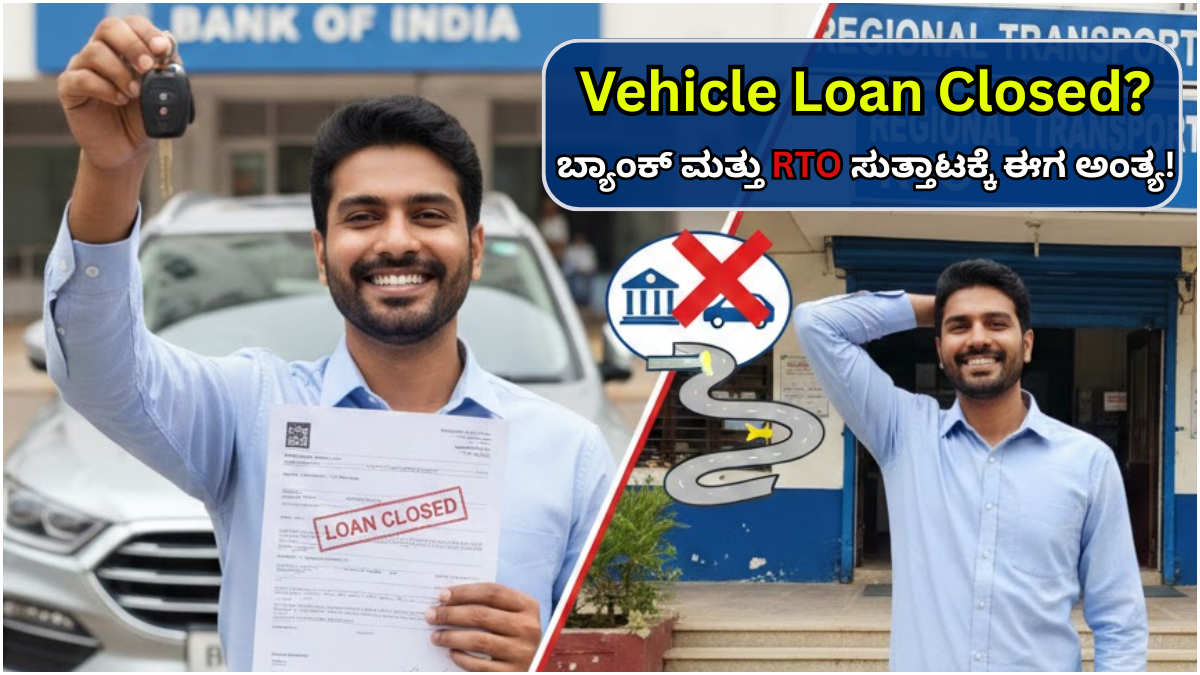
In a major relief for vehicle owners across India, the Central Government has introduced a simplified and fully digital system for updating vehicle records after loan repayment. This new system eliminates the lengthy and frustrating procedures that vehicle owners previously had to undergo after clearing their vehicle loans.
Until recently, once a vehicle loan was fully repaid, owners were required to visit both the bank and the Regional Transport Office (RTO) multiple times to obtain a No Objection Certificate (NOC) and remove the hypothecation (bank lien) from the Registration Certificate (RC). The process often involved paperwork, long queues, delays, and sometimes additional unofficial charges.
However, with the implementation of the new digital system through the Ministry of Road Transport and Highways, the entire procedure has been streamlined, automated, and made available online. The updated system ensures that once the loan is cleared, the hypothecation removal process begins automatically without requiring the vehicle owner to physically visit any office.
This reform marks a significant step toward digital governance, transparency, and citizen convenience.
Understanding Hypothecation in Vehicle Loans
When a person purchases a vehicle through a bank loan, the vehicle is registered under the owner’s name, but the financing bank’s name is added to the RC under the “hypothecation” section. This indicates that the vehicle is pledged as security until the loan is fully repaid.
Only after complete repayment can the bank’s name be officially removed from the RC. Previously, this required a manual process involving multiple approvals and physical documentation. Now, the new system removes this burden from vehicle owners.
Problems Faced Under the Old System
Before the digital reform, vehicle owners encountered several challenges:
1. Mandatory Bank Visit for NOC
After loan closure, the borrower had to visit the bank branch to request a No Objection Certificate (NOC). This often required repeated follow-ups.
2. Physical Submission at RTO
The NOC, along with other documents such as Form 35, had to be submitted physically at the RTO office.
3. Long Waiting Time
Vehicle owners often spent hours waiting at RTO offices for document verification and processing.
4. Manual Paperwork
Forms had to be filled manually, increasing the risk of errors and rejection.
5. Additional Charges and Middlemen
In many cases, agents or intermediaries charged extra money to “speed up” the process.
6. Delayed RC Update
Even after submission, it could take several weeks for the updated RC to be issued.
Overall, the process was time-consuming, inconvenient, and sometimes costly.
What Has Changed in the New System?
The newly introduced digital system eliminates almost all of these difficulties. The process is now automated, transparent, and much faster.
The changes are being implemented through the Parivahan Portal, which integrates banks and RTO databases into a single digital framework.
Under the new rules:
- No physical visit to the bank is required.
- No physical submission at the RTO is required.
- No manual paperwork is needed.
- The process is completed within 7 days.
- There are no additional service charges.
- The updated RC is delivered directly to the registered address.
Comparison: Old System vs New System
| Old Process (Challenges) | New Process (Benefits) |
|---|---|
| Mandatory visit to bank for NOC | No bank visit required |
| Long waiting at RTO office | No RTO appointment needed |
| Manual form filling | Fully digital and automated |
| Extra charges and agent involvement | Zero extra fees, transparent system |
| Processing delays | Completion within 7 days |
The new system represents a major step forward in digital public services.
How the New Digital System Works
Let us understand how the updated process functions step by step.
Step 1: Complete Loan Repayment
The vehicle owner must first repay the entire loan amount to the bank, including any outstanding interest or charges.
Once the final installment is paid and confirmed, the loan account is marked as “closed” in the bank’s system.
Step 2: Digital Update by the Bank
After loan closure, the bank digitally updates the loan status in the centralized transport database. This removes the need for issuing a physical NOC in most cases.
The bank communicates directly with the transport authority’s digital system.
Step 3: Automatic Hypothecation Removal
Once the loan closure status is digitally updated, the hypothecation entry in the RC is automatically removed.
This happens electronically through the integrated system without requiring action from the vehicle owner.
Step 4: RC Update and Processing
The RTO system processes the request digitally. There is no requirement to upload or submit physical documents.
The system verifies:
- Loan closure confirmation
- Vehicle registration details
- Owner identification details
Step 5: Delivery of Updated RC
The updated Registration Certificate (without the bank’s name) is generated and dispatched to the vehicle owner’s registered address.
The entire process is expected to be completed within 7 days.
Key Benefits of the New System
1. Time-Saving
Vehicle owners no longer need to spend days visiting offices and waiting in queues.
2. Transparency
Digital processing reduces human intervention and the possibility of corruption.
3. Cost-Effective
There are no extra fees or hidden charges involved in the process.
4. Convenience
Everything is handled automatically after loan repayment.
5. Reduced Errors
Since the system is digital, the chances of document errors and rejections are minimal.
6. Faster Vehicle Resale
Once hypothecation is removed quickly, the vehicle can be sold or transferred without delay.
Why This Reform Is Important
India has seen rapid growth in vehicle ownership, especially with increasing access to vehicle financing. A large percentage of cars and two-wheelers are purchased through bank loans.
As loan-based purchases increased, the number of hypothecation removal cases also rose. The old system became inefficient and burdensome.
With this digital reform:
- Government services are more citizen-friendly.
- Administrative workload is reduced.
- Digital India initiatives are strengthened.
- Public trust in governance increases.
This initiative aligns with the broader goal of promoting e-governance and reducing bureaucratic hurdles.
Role of Technology in the Reform
The reform is part of India’s ongoing digital transformation efforts. By integrating banking systems with RTO databases:
- Data transfer is instant.
- Manual verification is minimized.
- Record updates happen in real time.
This integration ensures accuracy and faster service delivery.
The centralized digital framework ensures uniformity across states and reduces regional inconsistencies in processing.
Frequently Asked Questions
1. Do I need to visit the bank after repaying my loan?
No. Once the loan is fully repaid, the bank will update the status digitally.
2. Do I need to submit Form 35 physically?
In most cases, no. The process is digital and automated.
3. How long does it take to receive the updated RC?
The updated RC should reach your registered address within 7 days.
4. Is there any service charge?
No additional charges are applicable under the new digital system.
5. What if my RC is not updated?
You may check your vehicle status online through the Parivahan portal or contact your nearest RTO for clarification.
Impact on Vehicle Owners
This new system brings significant relief, particularly for:
- Working professionals who cannot visit offices during working hours.
- Senior citizens who face difficulty in physical travel.
- Residents of rural areas who live far from RTO offices.
The simplified system ensures that all vehicle owners receive equal and easy access to services.
What Vehicle Owners Should Ensure
Although the process is automated, vehicle owners should:
- Confirm full loan closure with the bank.
- Ensure their mobile number and address are updated in RTO records.
- Keep track of SMS or email notifications from the bank or transport department.
- Check the RC status online if needed.
Being proactive helps avoid delays.
Future of Digital Vehicle Services
The success of this initiative may pave the way for further digital reforms in transport services, such as:
- Online vehicle transfer
- Digital driving license renewals
- Automated permit approvals
- Fully paperless vehicle registration
As more services become digital, citizens can expect faster and more efficient governance.
Conclusion
The new digital system for vehicle loan closure and hypothecation removal is a landmark reform that greatly benefits vehicle owners. By eliminating the need for physical visits, reducing paperwork, and automating the process, the government has made vehicle ownership management much easier.
The integration of banks with the transport database through the Parivahan portal ensures that once a loan is repaid, the RC is updated automatically and delivered within a week.
This initiative not only saves time and money but also strengthens transparency and reduces corruption. It reflects a broader commitment to digital governance and citizen-friendly reforms.
Vehicle owners who have recently completed their loan repayments can now enjoy a smooth, hassle-free process without unnecessary stress or inconvenience.
For more information or clarification, vehicle owners may contact their nearest Regional Transport Office (RTO) or visit the official Parivahan portal.