Agriculture has always been the foundation of India’s economy, providing livelihood to a large section of the population. However, one of the biggest challenges faced by Indian farmers is the availability and efficient use of water. Uneven rainfall, groundwater depletion, and outdated irrigation practices often lead to low productivity and financial stress.
To address these issues, the Government of India launched the Pradhan Mantri Krishi Sinchayee Yojana (PMKSY). One of the most impactful components of this mission is the Sprinkler Irrigation Scheme, which promotes modern irrigation techniques to help farmers save water, improve crop yield, and increase income.
This article provides a complete and easy-to-understand explanation of the PMKSY Sprinkler Irrigation Scheme, including its objectives, features, benefits, eligibility conditions, subsidy details, application process, challenges, and long-term impact on Indian agriculture.
1. Overview of Pradhan Mantri Krishi Sinchayee Yojana (PMKSY)
The Pradhan Mantri Krishi Sinchayee Yojana was launched with the vision of ensuring that every farm receives adequate water supply. The scheme focuses not only on expanding irrigation coverage but also on using water efficiently.
The central philosophy of PMKSY is “Per Drop More Crop”, which means producing higher agricultural output using less water. Under this vision, modern irrigation methods such as sprinkler and drip irrigation are promoted instead of traditional flood irrigation.
PMKSY is implemented jointly by the central and state governments and covers planning, execution, funding, and monitoring of irrigation projects across India.
2. Understanding Sprinkler Irrigation
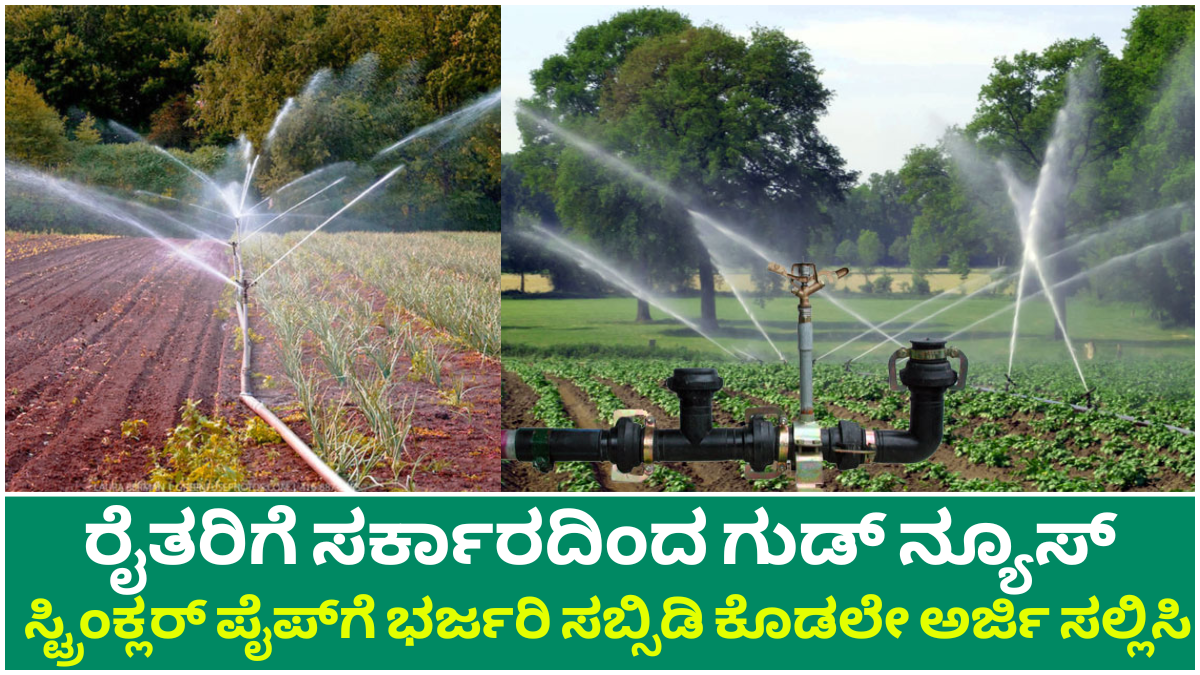
Sprinkler irrigation is a modern method of watering crops where water is sprayed over fields through pipes and rotating nozzles, similar to natural rainfall.
Unlike flood irrigation, where water flows freely over the field, sprinkler systems apply water in a controlled and uniform manner, ensuring that crops receive the required moisture without wastage.
Key Components of a Sprinkler System
- Main pipeline
- Lateral pipes
- Sprinkler heads or nozzles
- Pump (where required)
- Filters to prevent clogging
This method is suitable for field crops, vegetables, fruits, oilseeds, pulses, fodder crops, and plantations.
3. Objectives of the PMKSY Sprinkler Irrigation Scheme
The sprinkler irrigation component of PMKSY has been designed with multiple goals:
Water Conservation
Sprinkler irrigation reduces water usage by minimizing evaporation, runoff, and deep percolation losses. This is especially important in drought-prone regions.
Increased Agricultural Productivity
Uniform watering leads to better crop growth, healthier plants, and higher yields compared to traditional irrigation methods.
Reduction in Input Costs
Efficient water use reduces electricity, diesel, and labor expenses, making farming more cost-effective.
Sustainable Agriculture
The scheme promotes environmentally friendly farming by preventing soil erosion, waterlogging, and salinity problems.
Support for Small and Marginal Farmers
Through subsidies, the scheme makes modern irrigation affordable even for farmers with limited resources.
4. Types of Sprinkler Systems Supported Under PMKSY
The scheme supports different sprinkler systems based on farm size, crop type, and water availability.
Mini or Micro Sprinklers
These are lightweight, portable systems suitable for small landholdings and horticultural crops.
Fixed Sprinkler Systems
Installed permanently, these systems are ideal for large farms and regular irrigation needs.
Portable Sprinklers and Rain Guns
These systems can be moved between fields and are suitable for large open areas and field crops.
Each system type is eligible for subsidy as per government norms and state-specific guidelines.
5. Subsidy Benefits Under the Scheme
One of the biggest attractions of the PMKSY Sprinkler Irrigation Scheme is the financial assistance provided to farmers.
Subsidy Structure
- Subsidy is provided as a percentage of the total system cost.
- The amount varies depending on:
- Farmer category
- Landholding size
- Type of sprinkler system
- State government policy
Farmer Categories
- Small and Marginal Farmers usually receive higher subsidies.
- Other Farmers receive moderate subsidy support.
- Special categories such as women farmers, SC/ST farmers, and farmers in water-scarce regions may receive additional benefits.
The subsidy amount is transferred directly to the farmer’s bank account through the Direct Benefit Transfer (DBT) system.
6. Eligibility Criteria
To apply for the PMKSY Sprinkler Irrigation Scheme, farmers must meet certain eligibility conditions:
Land Ownership or Cultivation Rights
The applicant must own agricultural land or have valid cultivation rights.
Availability of Water Source
A functional water source such as a borewell, open well, pond, or canal must be available.
Age Requirement
The applicant must be at least 18 years old.
Previous Subsidy Condition
Farmers who have already availed irrigation subsidies in recent years may need to wait for the specified period before applying again.
Suitable Crops
The crops grown should be compatible with sprinkler irrigation.
7. Documents Required for Application
Farmers need to submit basic documents to verify eligibility:
- Aadhaar card
- Land ownership records
- Bank account details
- Passport-size photographs
- Water source proof
- Electricity connection details (if applicable)
- Caste or income certificate (if required by the state)
Having correct and updated documents helps in faster approval.
8. Application Process
Farmers can apply for the PMKSY Sprinkler Irrigation Scheme through multiple channels:
Online Application
Many states offer online portals where farmers can register, fill application forms, and upload documents.
Offline Application
Applications can also be submitted at:
- District Agriculture Offices
- Horticulture Department Offices
- Krishi Vigyan Kendras (KVKs)
Through Approved Vendors
In some states, applications are processed through government-approved irrigation equipment suppliers.
9. Approval and Installation Process
Once the application is submitted:
- Verification of documents and land details is conducted.
- Field inspection may be carried out by officials.
- Approval letter is issued.
- The farmer installs the sprinkler system using approved equipment.
- Subsidy amount is released to the farmer’s bank account after verification.
10. Benefits of Sprinkler Irrigation for Farmers
Water Savings
Sprinkler irrigation can reduce water usage by up to 50% compared to flood irrigation.
Improved Crop Yield
Even distribution of water leads to healthier plants and increased production.
Lower Labor Requirement
Automated irrigation reduces dependency on manual labor.
Energy Efficiency
Reduced pumping time saves electricity and fuel costs.
Soil Protection
Prevents erosion, nutrient loss, and soil degradation.
11. Impact on Indian Agriculture
The adoption of sprinkler irrigation under PMKSY has brought noticeable improvements:
- Increased irrigation coverage in rain-fed areas
- Improved farmer income
- Reduced dependency on monsoon rainfall
- Promotion of climate-resilient agriculture
- Encouragement of water-efficient farming practices
Many farmers have successfully shifted from traditional irrigation to modern systems, resulting in long-term benefits.
12. Challenges Faced in Implementation
Despite its success, the scheme faces some challenges:
Lack of Awareness
Many farmers are still unaware of subsidy availability and application procedures.
Infrastructure Constraints
Electricity shortages and limited water sources can restrict adoption.
Complex Procedures
Documentation and approval delays may discourage farmers.
State-Wise Variations
Different subsidy rules across states sometimes cause confusion.
Addressing these challenges through awareness programs and simplified procedures can enhance the scheme’s reach.
13. Future Scope and Improvements
The PMKSY Sprinkler Irrigation Scheme has strong potential for expansion. With better digital platforms, farmer training, and infrastructure development, the scheme can cover more regions and farmers.
Integration with solar pumps, smart irrigation systems, and real-time monitoring can further improve water efficiency and productivity.
14. Conclusion
The Pradhan Mantri Krishi Sinchayee Yojana Sprinkler Irrigation Scheme is a powerful step toward sustainable and modern agriculture in India. By supporting farmers with subsidies and promoting efficient water use, the scheme addresses one of the most critical challenges in farming.
For farmers facing water scarcity, rising costs, and uncertain rainfall, sprinkler irrigation offers a reliable solution. With proper implementation and awareness, this scheme can significantly improve agricultural productivity, conserve water resources, and strengthen rural livelihoods.
Farmers are encouraged to take advantage of this initiative and adopt sprinkler irrigation to secure a better and more sustainable future for their farms.