Agriculture has always been the foundation of India’s economy and rural livelihood. A large percentage of India’s population depends directly or indirectly on farming for income and food security. However, agricultural productivity in India has long been affected by unreliable electricity supply, rising diesel prices, and environmental degradation. Irrigation, one of the most critical inputs for farming, often becomes expensive and uncertain due to power shortages and fuel dependency.

To address these long-standing challenges, the Central Government of India introduced the Solar Pump Set Scheme, mainly implemented under the Pradhan Mantri Kisan Urja Suraksha evam Utthaan Mahabhiyan (PM-KUSUM). This landmark initiative aims to provide farmers with affordable, reliable, and eco-friendly irrigation by promoting solar-powered pump sets. The scheme not only reduces the cost of cultivation but also supports India’s transition toward renewable energy and climate-friendly development.
This article provides a complete and detailed overview of the Solar Pump Set Scheme, including its objectives, structure, financial assistance, eligibility, benefits, challenges, and future potential.
1. Importance of Solar Energy in Agriculture
Irrigation plays a vital role in increasing crop yields, stabilizing farm income, and ensuring food security. Traditionally, Indian farmers have relied on diesel pumps or grid electricity to draw water from borewells, canals, and rivers. Both options present serious challenges. Diesel pumps are expensive to operate and contribute to air pollution, while grid electricity in rural areas is often unreliable, delayed, or unavailable during peak agricultural seasons.
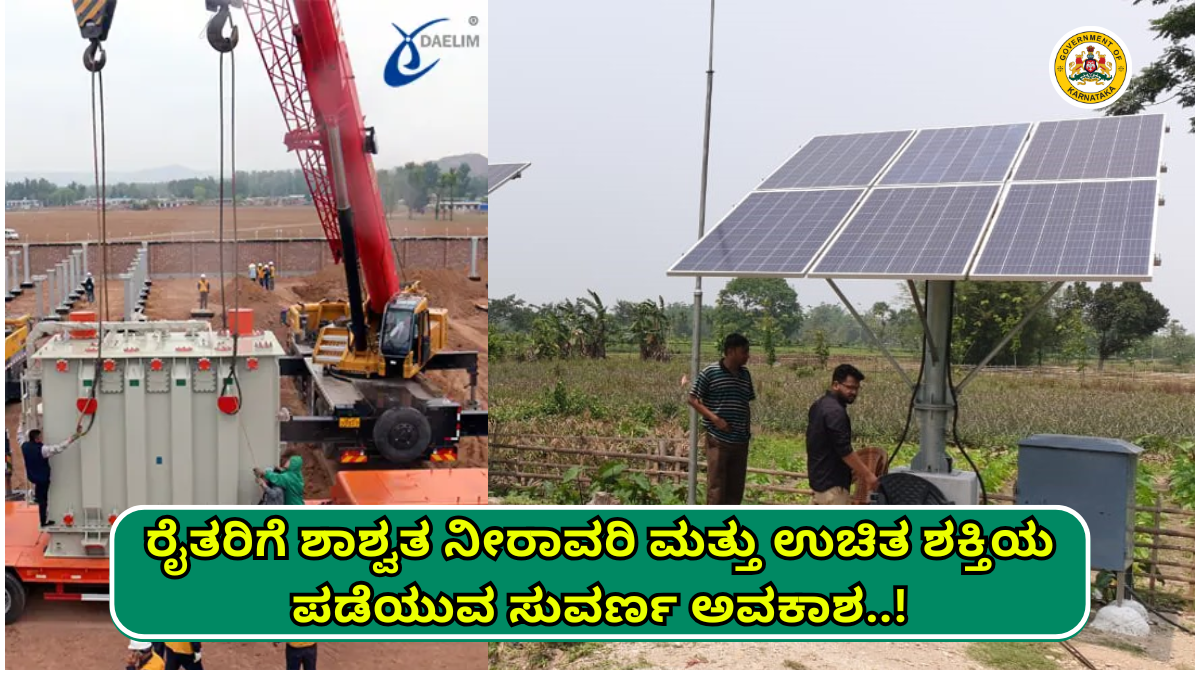
Solar energy offers a practical and sustainable solution. Solar pump sets use photovoltaic panels to convert sunlight into electricity, which powers water pumps. These systems operate independently of fuel supply and grid power, making them particularly suitable for rural and remote areas. Once installed, solar pumps require minimal operational costs and can function efficiently for many years.
Recognizing these advantages, the Government of India integrated solar irrigation into its broader renewable energy and agricultural development strategy through the Solar Pump Set Scheme.
2. Overview of PM-KUSUM Scheme
The Solar Pump Set Scheme is implemented under PM-KUSUM, launched by the Ministry of New and Renewable Energy (MNRE). PM-KUSUM is designed to promote decentralized solar power generation, reduce the financial burden of electricity subsidies on states, and provide farmers with additional income opportunities.
Key Objectives of PM-KUSUM
The main objectives of the scheme include:
- Encouraging the use of renewable energy in agriculture
- Reducing farmers’ dependence on diesel and grid electricity
- Ensuring reliable power supply for irrigation
- Increasing farmers’ income through power generation and sale
- Contributing to India’s renewable energy and climate goals
PM-KUSUM represents a shift from subsidy-driven energy consumption to income-generating clean energy use in rural India.
3. Components of the Solar Pump Set Scheme
The scheme is divided into three major components, each addressing different agricultural and energy needs.
3.1 Component A: Decentralized Solar Power Plants
Component A focuses on setting up small solar power plants ranging from 500 kW to 2 MW. These plants can be installed on barren land, agricultural land (with elevated structures), or unused areas.
Eligible participants include individual farmers, farmer groups, cooperatives, panchayats, and Farmer Producer Organizations (FPOs). The electricity generated is sold to local electricity distribution companies (DISCOMs) at a fixed rate.
This component provides farmers with a stable source of long-term income and encourages rural participation in renewable energy production.
3.2 Component B: Standalone Solar Pump Sets
Component B is the most farmer-centric part of the scheme. It supports the installation of standalone solar pump sets with capacities up to 7.5 horsepower in areas where grid electricity is unavailable or unreliable.
These pumps operate entirely on solar power and are ideal for remote villages and off-grid agricultural regions. Farmers gain full control over irrigation schedules without worrying about power cuts or fuel availability.
3.3 Component C: Solarisation of Grid-Connected Pumps
Component C focuses on converting existing grid-connected agricultural pumps into solar-powered systems. Solar panels are installed to meet daytime irrigation needs, reducing dependence on grid electricity.
A unique feature of this component is that farmers can sell surplus electricity generated during non-irrigation hours back to the grid. This creates an additional and regular income source for farmers while helping DISCOMs meet renewable energy targets.
4. Financial Assistance and Subsidy Structure
The high initial cost of solar pump systems can discourage farmers from adoption. To overcome this barrier, the Solar Pump Set Scheme offers significant financial support through subsidies and loans.
4.1 Subsidy Pattern
For most states in India:
- Central Government Subsidy: 30% of the benchmark cost
- State Government Subsidy: Minimum 30%
- Farmer’s Contribution: Remaining 40%
For special category states and regions such as North-Eastern states, Himalayan states, and island territories:
- Central Subsidy: Up to 50%
- State Subsidy: At least 30%
- Farmer’s Share: As low as 20% or less
In many cases, farmers can finance their contribution through bank loans, reducing upfront expenses significantly.
4.2 Loan and Credit Support
Banks and financial institutions provide loans to cover the farmer’s share of the cost. Flexible repayment options make solar pump systems affordable even for small and marginal farmers.
5. Benefits of the Solar Pump Set Scheme
The scheme offers wide-ranging benefits that go beyond irrigation.
5.1 Reduction in Irrigation Costs
Solar pumps eliminate recurring fuel and electricity expenses. After installation, operational costs are minimal, leading to substantial long-term savings for farmers.
5.2 Reliable and Timely Irrigation
With solar pumps, farmers are no longer dependent on erratic power supply. Reliable irrigation improves crop quality, yield, and cropping intensity.
5.3 Additional Income Opportunities
Under grid-connected solarisation, surplus electricity can be sold to DISCOMs. This turns farmers into energy producers and provides a steady supplementary income.
5.4 Environmental Protection
Solar pumps reduce carbon emissions, air pollution, and groundwater over-extraction associated with free electricity. The scheme promotes sustainable water and energy use.
5.5 Rural Empowerment and Employment
The scheme creates local employment in solar manufacturing, installation, servicing, and maintenance. It also empowers rural communities through energy independence.
6. Eligibility Criteria
Eligibility varies slightly by component but generally includes:
- Indian farmers owning or cultivating agricultural land
- Existing pump owners for solarisation
- Farmer groups, cooperatives, and FPOs for larger projects
- Beneficiaries not already receiving similar subsidies
Priority is often given to small, marginal, and socially disadvantaged farmers.
7. Application Process
Although the process may differ slightly across states, the general steps include:
- Online registration on state or central portals
- Submission of required documents
- Technical feasibility assessment
- Approval and subsidy sanction
- Installation by empanelled vendors
- Inspection and commissioning
- Direct transfer of subsidy to bank account
The process is designed to be transparent and digitally monitored.
8. Challenges in Implementation
Despite its success, the scheme faces certain challenges:
- Limited awareness among farmers
- Delays in approvals and subsidy disbursement
- Maintenance and after-sales service issues
- Risk of misinformation and fraudulent agents
Strengthening awareness programs and digital systems can address many of these concerns.
9. Impact and Achievements
The Solar Pump Set Scheme has already made a significant impact:
- Large-scale adoption of solar pumps across multiple states
- Reduction in diesel consumption and electricity subsidy burden
- Improved farm incomes and productivity
- Growth of rural renewable energy infrastructure
The scheme has proven to be a strong link between agriculture, energy, and sustainability.
10. Future Scope and Outlook
In the coming years, the scheme is expected to expand further with:
- Integration of battery storage systems
- Greater focus on feeder-level solarisation
- Improved financing models
- Stronger local manufacturing and supply chains
With continuous policy support, solar irrigation can become the backbone of India’s climate-resilient agriculture.
Conclusion
The Solar Pump Set Scheme represents a transformative step toward sustainable agriculture and clean energy in India. By reducing irrigation costs, ensuring reliable power, generating additional income, and protecting the environment, the scheme addresses multiple challenges faced by Indian farmers.
As India moves toward a greener and more inclusive growth model, solar-powered irrigation stands out as a practical and impactful solution. The Solar Pump Set Scheme is not just an energy initiative—it is a powerful tool for rural development, farmer empowerment, and environmental protection.