Introduction
Energy plays a vital role in shaping the economic and social development of any nation. In India, access to clean and efficient cooking fuel is essential for improving the quality of life of millions of households. For decades, Liquefied Petroleum Gas (LPG) has been the primary cooking fuel used across urban and rural areas. However, with changing energy needs and environmental concerns, the Government of India has begun promoting Piped Natural Gas (PNG) as a modern alternative.
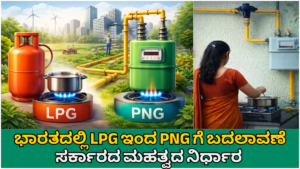
The transition from LPG to PNG is not merely a shift in fuel type but a significant step toward achieving energy security, sustainability, and efficiency. This transition is being guided by government policies, infrastructure development, and long-term planning. This article provides a detailed understanding of LPG and PNG, the reasons behind the transition, policy initiatives, benefits, challenges, and the future outlook of this transformation in India.
Understanding LPG and PNG
What is LPG?
Liquefied Petroleum Gas (LPG) is a widely used fuel composed mainly of propane and butane. It is produced during the refining of crude oil and the processing of natural gas. LPG is stored in pressurized cylinders and supplied to households for cooking and heating purposes.
In India, LPG has become popular due to its convenience, efficiency, and relatively clean combustion compared to traditional fuels like firewood and coal. Government initiatives such as the Pradhan Mantri Ujjwala Yojana (PMUY) have played a crucial role in expanding LPG access to rural and economically weaker sections of society.
Despite its advantages, LPG has certain drawbacks. A large portion of LPG is imported, making the country dependent on global markets. The distribution system relies heavily on transportation and logistics, and users must manage cylinder refills and storage.
What is PNG?
Piped Natural Gas (PNG) is a form of natural gas, primarily composed of methane, delivered directly to homes through underground pipelines. Unlike LPG, PNG does not require cylinders or storage units.
PNG is part of a broader gas-based energy system that includes Compressed Natural Gas (CNG) for vehicles and Liquefied Natural Gas (LNG) for industrial use. With PNG, consumers receive a continuous supply of gas and are billed based on actual usage through metering systems.
PNG is gaining popularity in urban areas due to its convenience, safety, and cost-effectiveness.
Key Differences Between LPG and PNG
Although both LPG and PNG are used for similar purposes, they differ significantly in terms of supply, safety, and usability.
- LPG is supplied in cylinders, whereas PNG is delivered through pipelines.
- LPG requires storage space, while PNG does not.
- LPG supply is periodic and depends on booking and delivery, whereas PNG offers uninterrupted supply.
- LPG is heavier than air and can accumulate in case of leakage, while PNG is lighter than air and disperses quickly.
- PNG is generally more economical and environmentally friendly compared to LPG.
These differences make PNG a more efficient and modern fuel option, especially for urban households.
Government Policy Supporting the Transition
Policy Vision
The Government of India aims to increase the share of natural gas in the country’s energy mix. This is part of a broader strategy to promote cleaner fuels, reduce pollution, and enhance energy security.
The shift from LPG to PNG is aligned with national goals such as reducing carbon emissions, improving air quality, and minimizing dependence on imported fuels.
Expansion of City Gas Distribution (CGD)
One of the key initiatives driving the transition is the expansion of the City Gas Distribution (CGD) network. Under this program, pipelines are being laid across cities to supply PNG to households, industries, and commercial establishments.
The government has authorized multiple rounds of CGD bidding to expand coverage across different regions. As a result, more cities and towns are being connected to the natural gas pipeline network.
Encouraging Household Adoption
In areas where PNG infrastructure is available, the government encourages households to switch from LPG to PNG. This includes:
- Providing new PNG connections
- Simplifying installation procedures
- Promoting awareness about benefits
In some cases, households with PNG access may be advised or required to discontinue LPG usage to ensure efficient resource allocation.
“One Nation, One Gas Grid”
The government is also working toward creating an integrated gas pipeline network across the country, often referred to as “One Nation, One Gas Grid.” This initiative aims to ensure the seamless distribution of natural gas across states.
Such infrastructure development is essential for the widespread adoption of PNG.
Reasons for Promoting PNG
Reducing Import Dependence
India imports a significant portion of its LPG requirement. This creates vulnerability to international price fluctuations and supply disruptions. By increasing the use of PNG, the country can reduce its reliance on imports.
Enhancing Energy Security
Natural gas pipelines provide a more stable and reliable supply compared to LPG cylinders, which depend on transportation and distribution networks. This improves overall energy security.
Environmental Benefits
PNG is a cleaner fuel compared to LPG. It produces fewer emissions, which helps in reducing air pollution and greenhouse gases. This supports India’s commitments to global climate goals.
Efficient Resource Management
By shifting urban households to PNG, LPG cylinders can be redirected to rural and remote areas where pipeline infrastructure is not feasible. This ensures better utilization of resources.
Advantages of PNG Over LPG
Continuous Supply
One of the biggest advantages of PNG is its uninterrupted supply. Consumers do not need to worry about booking cylinders or running out of gas.
Cost Effectiveness
PNG is generally more economical than LPG. Since users are billed based on actual consumption, there is better control over expenses.
Convenience
PNG eliminates the need for handling heavy cylinders, storing them, or scheduling deliveries. This makes it especially convenient for urban households.
Safety
PNG is lighter than air, so in case of leakage, it disperses quickly, reducing the risk of accidents. LPG, on the other hand, can accumulate and pose a greater hazard.
Environmentally Friendly
PNG burns more cleanly, producing fewer pollutants. This makes it a more sustainable option for the environment.
Challenges in the Transition
Infrastructure Development
Building pipeline networks requires significant investment and time. Many areas, especially rural regions, still lack PNG infrastructure.
Initial Costs
Installing a PNG connection involves upfront costs, including security deposits and installation charges. This can discourage some consumers from switching.
Limited Reach
PNG is currently available mainly in urban and semi-urban areas. A large portion of the population still depends on LPG.
Consumer Awareness
Some consumers are hesitant to switch due to lack of awareness or familiarity with LPG systems. Education and outreach are necessary to promote adoption.
Dependence on Pipeline Network
PNG supply depends entirely on pipeline infrastructure. Any disruption in the network can affect supply.
Economic and Social Impact
Impact on Households
Urban households benefit from lower costs, convenience, and continuous supply. Rural households continue to rely on LPG, which remains an essential fuel.
Industrial Growth
The expansion of PNG infrastructure supports industrial growth by providing a reliable and cleaner energy source.
Employment Opportunities
Infrastructure development creates jobs in construction, maintenance, and gas distribution sectors.
Reduction in Government Subsidy
The government spends heavily on LPG subsidies. Increasing PNG usage can reduce this financial burden.
Environmental Impact
The shift to PNG contributes to environmental sustainability in several ways:
- Reduces carbon emissions
- Improves air quality
- Minimizes reliance on polluting fuels
This transition supports India’s efforts to combat climate change and promote clean energy.
Recent Trends
India is witnessing a steady increase in PNG adoption, especially in urban areas. Governments and gas distribution companies are actively expanding networks and encouraging new connections.
Institutions such as hospitals, hotels, and educational facilities are also adopting PNG due to its efficiency and reliability.
Future Outlook
The future of cooking fuel in India is expected to involve a combination of LPG and PNG. While PNG will dominate in cities, LPG will continue to serve rural and remote areas.
Key developments expected in the future include:
- Expansion of pipeline networks
- Increased PNG adoption
- Technological advancements in gas distribution
- Integration with renewable energy systems
The government aims to significantly increase the share of natural gas in the overall energy mix in the coming years.
Conclusion
The transition from LPG to PNG marks a major transformation in India’s energy landscape. It reflects the government’s commitment to promoting cleaner, safer, and more efficient fuel options.
While challenges such as infrastructure limitations and initial costs remain, the long-term benefits of PNG make it a promising alternative. The gradual shift will help reduce import dependence, improve environmental sustainability, and enhance the quality of life for millions of people.
Ultimately, the move from LPG to PNG is not just about changing cooking fuel—it is about building a more secure, efficient, and sustainable energy future for India.