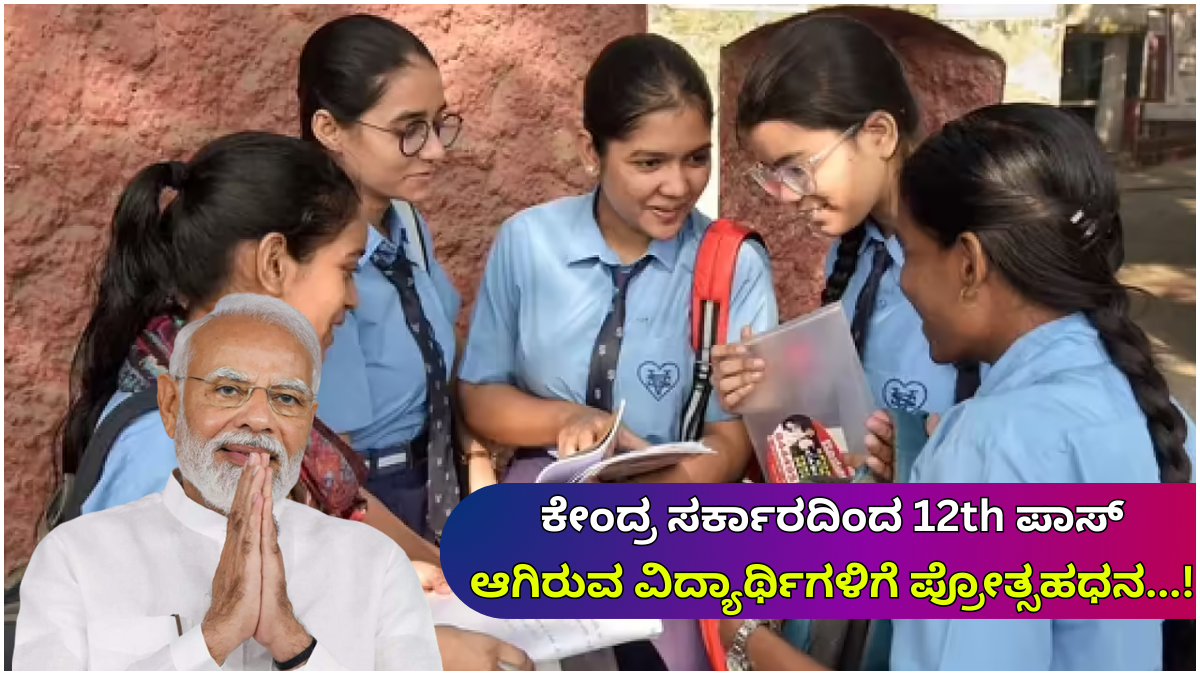
Education plays a major role in shaping the future of India’s youth. Every year, millions of students complete their 12th grade and dream of pursuing higher studies, skill development, or professional courses. However, financial challenges often force many students to discontinue their education or struggle to afford college fees, study materials, or skill training.
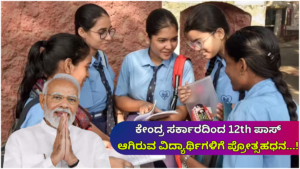
To support such students, the Government of India has introduced several scholarship schemes, financial assistance programs, and skill-development initiatives. While there is no single nationwide scheme that gives a fixed amount to every 12th-passed student, the central government offers multiple scholarships based on merit, economic status, caste category, and skill requirements.
1. Introduction: Why Financial Support After Class 12 Matters
Class 12 is one of the most important milestones in a student’s academic journey. The decisions made after completing higher secondary education often determine a student’s future career path. However, higher education is increasingly becoming expensive. The cost of undergraduate programs such as engineering, medical, management, and even vocational training has risen significantly.
Many families, especially those belonging to economically weaker sections, struggle to fund their children’s higher studies. In rural areas, girls are often forced to drop out due to financial limitations. To address such challenges, the Government of India provides a variety of financial aid programs to empower 12th-pass students and encourage them to continue their studies.
The purpose of these schemes is to:
- Promote equal access to education
- Reduce student dropouts
- Support talented students irrespective of financial background
- Build a skilled workforce
- Strengthen socio-economic development
Let us explore these schemes one by one.
2. Myth vs. Reality: Does the Central Government Directly Give Money to Every 12th-Passed Student?
Before going further, it is important to clarify a common misconception.
❌ Myth:
“The Indian central government gives money directly to every student after they pass 12th.”
✔ Reality:
There is no universal direct cash transfer for all 12th-passed students.
However, the central government does provide financial help through targeted scholarship programs based on criteria such as:
- Merit
- Family income
- Minority status
- Scheduled caste or tribe
- OBC category
- Region
- Course type
- Skill requirements
So, while the government does not give money to every student, it does support eligible 12th-passed students through a wide range of schemes.
3. Major Central Government Scholarship Schemes for 12th-Passed Students
Below are some of the most important national-level scholarship programs offered by the Government of India for students after 12th.
3.1. Central Sector Scheme of Scholarships for College and University Students (CSSS)
This is one of India’s largest merit-based scholarship schemes.
Eligibility
- Student must have scored above 80% in Class 12
- Family income must be less than ₹4 lakh per year
- Must be pursuing a regular degree course
Financial Support
- ₹10,000 per year for the first 3 years
- ₹20,000 per year for postgraduate studies
This scheme encourages meritorious students to continue higher education without financial burden.
3.2. National Scholarship Portal (NSP) — Umbrella Scheme
The National Scholarship Portal (NSP) is the central government’s one-stop platform where students can access and apply for multiple scholarships.
Some major NSP scholarships include:
a) NSP Merit-cum-Means Scholarship for Professional & Technical Courses
- For minority students
- Eligibility: Income < ₹2.5 lakh
- Scholarship amount: ₹20,000 per year + maintenance allowance
b) NSP Post-Matric Scholarships
- For SC, ST, OBC, and minority students
- Covers tuition fees, maintenance allowance, and other benefits
c) Prime Minister’s Scholarship Scheme (PMSS)
- For children of ex-servicemen
- Assistance: ₹30,000 to ₹36,000 per year
NSP is one of the most widely used platforms, benefiting lakhs of 12th-passed students each year.
3.3. INSPIRE Scholarship (For Science Students)
This scheme promotes science education and research.
Eligibility
- Must score within the top 1% in Class 12 board exam
- Must pursue B.Sc., B.Tech, or integrated M.Sc. in natural sciences
Financial Amount
- ₹60,000 annually
- ₹20,000 additional grant for research projects
This is a highly prestigious scholarship for science stream toppers.
3.4. AICTE Scholarships (For Technical Education)
The All India Council for Technical Education (AICTE) offers scholarships such as:
a) Pragati Scholarship for Girls
- For female students studying engineering or technical courses
- Amount: ₹50,000 per year
b) Saksham Scholarship for Differently-Abled Students
- Amount: ₹50,000 per year
These scholarships are designed to support inclusion and equality in technical education.
4. Government Skill Development Schemes for 12th-Passed Students
Many students prefer skill training or vocational courses after Class 12. The central government has launched several initiatives under Skill India Mission to support such students.
4.1. Pradhan Mantri Kaushal Vikas Yojana (PMKVY)
PMKVY is India’s flagship skill-training scheme.
Benefits
- Free training
- Assessment and certification
- Skill-based job opportunities
Courses include IT, healthcare, finance, tourism, retail, and more.
4.2. National Apprenticeship Promotion Scheme (NAPS)
This program encourages students to earn while they learn.
Benefits
- Students receive a monthly stipend
- 25% of the stipend is reimbursed by the government
- Practical training in real industries
4.3. Deen Dayal Upadhyaya Grameen Kaushalya Yojana (DDU-GKY)
For rural students who want to build careers in high-growth industries.
Benefits
- Residential training
- Placement assistance
- Courses aligned with global job markets
5. Educational Loans and Interest Subsidy Schemes
The Government of India also assists students through education loans with subsidized interest rates.
5.1. Vidya Lakshmi Portal
A national portal where students can apply for educational loans from multiple banks.
5.2. Central Government Interest Subsidy Scheme
Students belonging to economically weaker families (income < ₹4.5 lakh) get full interest subsidy on educational loans for the duration of their course.
6. Direct Benefit Schemes for Special Categories
Some schemes directly transfer money to eligible students—mostly for marginalized communities.
Examples:
- Post-Matric Scholarships for SC/ST students
- National Means-cum-Merit Scholarship (NMMS) for economically weaker students
- Minority Welfare Scholarships
These schemes help students meet expenses like:
- Tuition fees
- Hostel fees
- Books and study materials
- Travel and maintenance
7. Benefits of Government Scholarships and Support Programs
7.1. Reduced Financial Pressure
Students can focus on education instead of worrying about fees.
7.2. Encouragement for Higher Studies
Scholarships increase college enrollment rates.
7.3. Support for Girls and Minorities
Special schemes promote equality in education.
7.4. Boost to Skill Development
Skill-based programs make students job-ready.
7.5. Increased Employability
Students get better career opportunities with higher education and vocational training.
8. How Students Can Apply for Central Government Schemes
Popular online portals include:
✔ National Scholarship Portal (NSP)
For most central scholarships
✔ NSDL Vidya Lakshmi Portal
For education loans
✔ Skill India Portal
For PMKVY and skill courses
✔ AICTE Official Portal
For technical scholarships
Students must upload:
- Aadhaar card
- Income certificate
- Caste certificate (if applicable)
- Class 12 marksheet
- Bank passbook
- Passport-size photo
9. Important Tips for Students to Secure Scholarships
- Apply early before deadlines
- Keep documents updated
- Apply only on official websites
- Avoid fake scholarship links
- Maintain good academic scores
- Check renewal criteria for multi-year scholarships
10. Conclusion: Central Government Support Can Transform the Future of 12th-Passed Students
While the central government does not directly give money to all 12th-passed students, it provides multiple scholarship schemes, skill programs, and financial assistance platforms that can greatly support deserving students.
These schemes help students:
- Pursue higher education
- Build strong careers
- Learn job-oriented skills
- Reduce financial stress
- Access equal educational opportunities
For students from economically weaker backgrounds, minority communities, rural areas, and girls, these schemes open the door to a brighter future.
Every 12th-passed student should explore these government programs and make use of the opportunities available. Education is a powerful tool, and with the right support, it can transform lives.