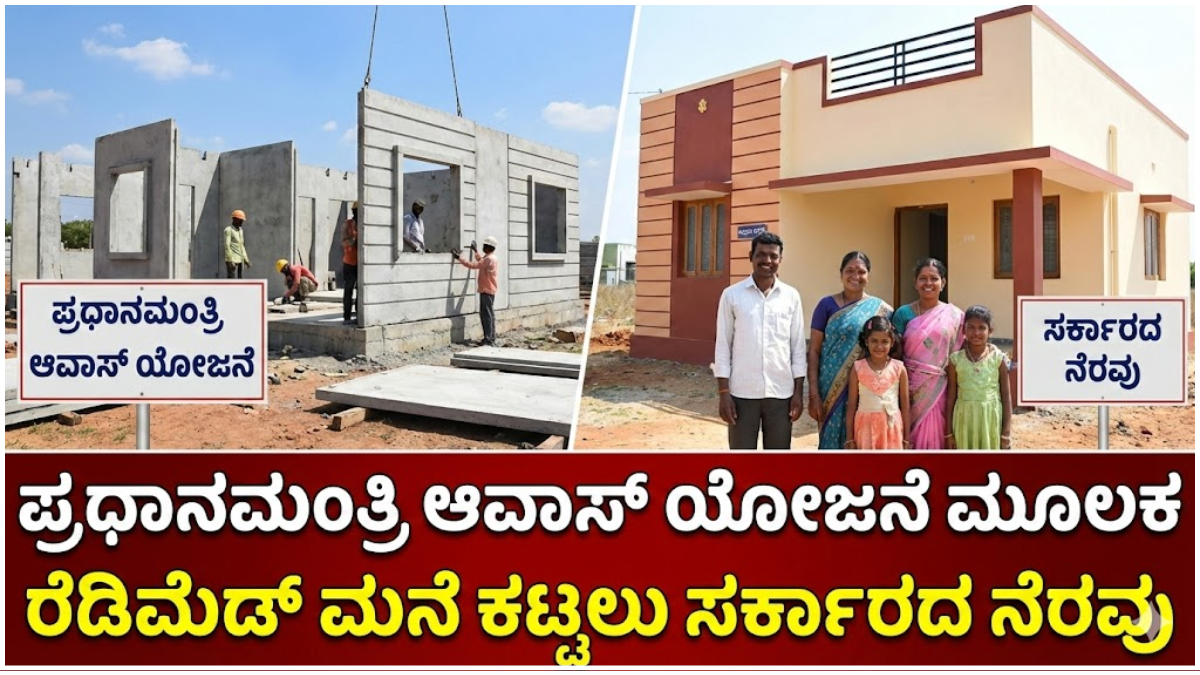
Owning a home is a dream for millions of families in India. With the support of central and state government housing schemes, especially under Pradhan Mantri Awas Yojana (PMAY), this dream is becoming more achievable. In recent years, prefabricated houses—also known as pre-made or modular homes—have emerged as a fast, affordable, and practical alternative to traditional RCC construction.
If you are planning to build a ready-made house in 2026, here is a complete, detailed guide explaining how prefabricated homes work, their cost, benefits, approval process, and how you may be eligible for subsidies under government housing schemes.
1. Government Subsidy for Prefabricated Houses Under PMAY
The Government of India launched Pradhan Mantri Awas Yojana to provide affordable housing for economically weaker sections and middle-income groups. The scheme operates under two main components:
- PMAY-Gramin (PMAY-G) – For rural areas
- PMAY-Urban (PMAY-U) – For urban areas
Can You Build a Prefabricated House Under PMAY?
Yes, you can build a prefabricated house and still be eligible for subsidy—provided that:
- The structure meets government housing standards.
- The house is built on approved residential land.
- It is considered a permanent dwelling (not temporary or movable).
Subsidy Amount (Approximate Range)
- Rural Areas: ₹1.20 lakh to ₹2.30 lakh
- Urban Areas: Subsidy may go up to ₹4 lakh depending on income category and credit-linked subsidy benefits.
The subsidy is usually credited directly to the beneficiary’s bank account in stages, based on construction progress.
2. State-Level Housing Schemes Supporting Prefab Homes
Apart from central schemes, several states provide additional housing benefits. In Karnataka, for example, the Basava Vasati Yojana supports housing construction for eligible low-income families.
Eligibility in State Schemes
- BPL (Below Poverty Line) families
- EWS (Economically Weaker Section) category
- Families without permanent housing
If a prefabricated house is treated as a permanent residential structure, beneficiaries may qualify for assistance.
3. SC/ST and Minority Housing Welfare Schemes
In many districts, housing assistance is also provided through:
- Social Welfare Department (for SC/ST communities)
- Minority Welfare Department
Some districts permit prefabricated homes under these schemes if:
- The structure has a permanent foundation.
- It complies with building norms.
- It is intended for full-time residential use.
Approval rules may vary by district, so applicants should confirm with local authorities before beginning construction.
4. What Is a Prefabricated House?
A prefabricated house (Prefab home) is a structure where building components are manufactured in a factory and later transported to the construction site for assembly.
Instead of constructing walls, slabs, and roofs entirely on-site, the major elements are pre-engineered and pre-built under controlled factory conditions.
Also Known As:
- Pre-made house
- Modular house
- Panel-built house
- Factory-built home
5. Materials Used in Prefabricated Homes
Modern prefab houses are built using a variety of advanced materials. Common options include:
1. Light Gauge Steel (LGS)
A lightweight but strong steel framing system that provides structural stability and earthquake resistance.
2. Cement Fiber Boards
Durable boards used for walls and partitions.
3. PUF (Polyurethane Foam) or EPS Panels
Insulated sandwich panels that provide thermal and sound insulation.
4. Steel Structure with Sandwich Panels
Used for quick assembly and high strength.
5. Wooden Prefabrication
Less common in India but used in certain climates or for aesthetic purposes.
Each material offers different benefits in terms of insulation, durability, cost, and finish quality.
6. Prefabricated House Construction Process
Building a prefab house involves a systematic and efficient process:
Step 1: Site Survey
Engineers examine soil conditions, land measurements, and access.
Step 2: Design and Layout Planning
Architectural drawings and layout plans are prepared.
Step 3: Factory Manufacturing
Walls, panels, roofing systems, and structural frames are manufactured in a controlled factory environment.
Step 4: Foundation Work
A conventional RCC foundation is constructed at the site.
Step 5: On-Site Assembly
Pre-manufactured components are assembled using bolts, fasteners, and structural connectors.
Step 6: Electrical, Plumbing, and Finishing
Internal wiring, plumbing systems, flooring, painting, and fixtures are completed.
7. Time Required for Construction
One of the biggest advantages of prefab homes is speed.
- Typical Construction Time: 30 to 60 days
- Compared to traditional RCC homes: 6 to 12 months
Factory production significantly reduces delays caused by weather, labor shortages, and material procurement.
8. Estimated Cost of Prefabricated Houses (2026)
Costs vary based on material quality, location, and design complexity. Approximate per square foot costs:
| Type | Estimated Cost per Sq. Ft |
|---|---|
| Basic Prefab | ₹1,500 – ₹1,800 |
| Standard Prefab | ₹1,800 – ₹2,300 |
| Premium Prefab | ₹2,500 – ₹3,500 |
Additional Costs May Include:
- Foundation work
- Interior design
- Electrical and plumbing fittings
- Municipal approvals
- Transportation
Even with these additional expenses, prefab homes often remain more affordable than traditional RCC construction.
9. Advantages of Prefabricated Houses
1. Fast Construction
Homes can be completed in one to two months.
2. Cost Control
Factory production minimizes waste and unexpected cost overruns.
3. Reduced Labor Requirement
Less dependency on skilled on-site labor.
4. Earthquake Resistance
Lightweight steel structures perform better in seismic zones.
5. Environmentally Friendly
Lower material wastage and efficient energy insulation.
6. Suitable for Rural and Urban Areas
Can be built in villages, towns, and cities.
10. Disadvantages of Prefabricated Houses
While prefab homes offer many benefits, they also have limitations:
1. Lifespan
Typically 30–50 years (traditional RCC homes may last longer).
2. Modifications
Structural changes later can be challenging.
3. Local Authority Approval
Some municipal bodies may not be fully familiar with prefab technology.
4. Vendor Dependency
Choosing an inexperienced contractor may result in poor quality.
11. Where Are Prefabricated Houses Most Suitable?
Prefab construction works well for:
- Farmhouses
- Rental houses
- Labour quarters
- Site offices
- Resorts
- Homestays
- Semi-permanent residences
They are also ideal when quick occupancy is required.
12. Legal and Approval Requirements
Before constructing a prefabricated house, ensure the following:
1. Local Body Approval
Permission from Panchayat, Municipality, or Corporation.
2. Residential Zoning
Land must be designated for residential use.
3. Permanent Foundation
If the structure is built on an RCC foundation, it is generally treated as a permanent home.
4. Compliance with Building Codes
Design should meet safety and structural standards.
Failure to obtain approvals may affect eligibility for government subsidy.
13. RCC House vs Prefabricated House
| Factor | RCC House | Prefabricated House |
|---|---|---|
| Construction Time | 6–12 months | 1–2 months |
| Cost | Higher | Lower |
| Strength | Very high | Good to very good |
| Modification | Easier | More difficult |
| Waste Generation | Higher | Lower |
RCC remains ideal for long-term generational homes, while prefab suits quick and budget-focused construction.
14. Important Points Before Choosing a Prefab Vendor
Always verify:
- Company experience
- Previous project portfolio
- Material certifications
- Warranty period (10–20 years typical)
- Thermal insulation standards
- Waterproofing systems
- After-sales service
Request a written agreement detailing cost, timeline, and specifications.
15. Is a Prefabricated House Right for You?
A prefab home is a strong option if:
- You need a house quickly
- You have a moderate budget
- You want predictable costs
- You prefer modern construction technology
- You are applying for housing subsidy schemes
However, if you are planning a multi-generational home lasting over 60–80 years, traditional RCC may be more suitable.
Conclusion
Prefabricated houses are transforming the housing landscape in India. With rising construction costs and increasing demand for affordable homes, factory-built modular houses offer a smart alternative to traditional methods.
Under Pradhan Mantri Awas Yojana and various state housing schemes, eligible families can receive financial assistance ranging from ₹1.20 lakh to ₹4 lakh depending on income category and location.
If constructed with a permanent foundation and approved by local authorities, prefab homes can qualify for subsidy benefits. They are fast to build, cost-effective, environmentally friendly, and suitable for both rural and urban settings.
In simple terms:
If you need a house quickly within a controlled budget, a prefabricated home is a practical and modern solution.