Introduction
In recent years, mushroom cultivation has emerged as a profitable and sustainable agribusiness opportunity in India. With increasing awareness about healthy food habits, the demand for mushrooms has grown significantly in both rural and urban markets. Mushrooms are rich in protein, vitamins, and minerals, require very little land, and can be cultivated throughout the year under controlled conditions.
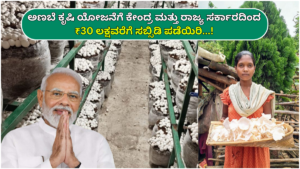
Many farmers, unemployed youth, women entrepreneurs, and small business owners are now showing interest in starting mushroom cultivation as an additional or primary source of income. Recognizing this potential, both the Central and State Governments of India are actively promoting mushroom cultivation through various subsidy and financial assistance schemes.
This article provides a comprehensive and detailed guide on mushroom cultivation subsidies available in India, including government schemes, subsidy percentages, eligibility criteria, application procedures, required documents, and training facilities. If you are planning to start mushroom farming at a small, medium, or commercial level, this guide will help you understand how to access financial support and build a successful venture.
Why Mushroom Cultivation Is a Profitable Business
Mushroom cultivation offers several advantages over traditional agriculture:
- Requires very little land compared to other crops
- Can be grown indoors using sheds, rooms, or polyhouses
- Short production cycle (30–45 days in many varieties)
- High market demand in hotels, restaurants, supermarkets, and export markets
- Low water requirement
- Generates quick and stable income
People living near cities can directly supply fresh mushrooms to hotels, catering services, and local markets, making mushroom farming a highly lucrative enterprise.
Government Support for Mushroom Cultivation in India
To encourage farmers and entrepreneurs, the government provides subsidies and financial assistance through various departments and schemes. These schemes aim to reduce the initial investment burden and promote self-employment and agribusiness development.
The major government schemes under which subsidies are available for mushroom cultivation include:
- Horticulture Department Subsidy (State Government)
- National Horticulture Board (NHB) Scheme
- PMFME Scheme (Prime Minister Formalisation of Micro Food Processing Enterprises)
- PMEGP Scheme (Prime Minister’s Employment Generation Programe )
Each scheme caters to different scales of operation and target beneficiaries.
1. Horticulture Department Subsidy for Mushroom Cultivation
Overview
State Horticulture Departments provide subsidies for setting up low-cost mushroom production units. This scheme is especially suitable for small and medium-scale farmers who want to start mushroom cultivation with limited investment.
Type of Units Covered
- Low-cost mushroom production units
- Small and medium-scale mushroom growing sheds
- Indoor mushroom farming structures
Subsidy Amount
- General Category Farmers:
Subsidy ranging from 40% to 50% of the total project cost - SC/ST Farmers:
Subsidy ranging from 70% to 90% of the total project cost
Project Cost Limit
- Eligible project cost generally ranges between ₹1.5 lakh to ₹3 lakh, depending on state guidelines and unit size.
Eligibility
- Individual farmers
- Small and marginal farmers
- SC/ST beneficiaries
- Applicants must own or lease land/space for setting up the unit
Application Process
- Applications are usually accepted through the State Horticulture Department
- Farmers can apply online through the department’s portal or offline at the local horticulture office
- Field inspection and technical approval are mandatory before subsidy release
This scheme is ideal for beginners who want to start mushroom cultivation with government support and minimal financial risk.
2. National Horticulture Board (NHB) Subsidy Scheme
Overview
The National Horticulture Board (NHB), operating under the Ministry of Agriculture and Farmers Welfare, Government of India, provides financial assistance for large-scale and commercial mushroom production units.
This scheme is suitable for entrepreneurs aiming to establish modern, commercial mushroom farms with advanced infrastructure.
Subsidy Pattern
- 40% of the total project cost
- Maximum subsidy limit: ₹30 lakh
Eligible Beneficiaries
- Individual farmers
- Farmer Producer Organizations (FPOs)
- Self Help Groups (SHGs)
- Companies, cooperatives, and agri-entrepreneurs
Key Features
- Encourages commercial mushroom production
- Supports modern infrastructure and equipment
- Promotes large-scale employment generation
Application Process
- Applications must be submitted through the NHB online portal
- A detailed project report (DPR) is mandatory
- Bank loan sanction is usually required before final approval
- Physical verification and technical evaluation are conducted by NHB officials
This scheme is highly beneficial for those planning to enter mushroom cultivation as a full-scale commercial enterprise.
3. PMFME Scheme for Mushroom Cultivation
Overview
The Prime Minister Formalisation of Micro Food Processing Enterprises (PMFME) Scheme focuses on supporting micro food processing units, including mushroom cultivation combined with processing, packaging, and value addition.
This scheme is particularly useful for entrepreneurs interested in producing and selling processed mushroom products such as dried mushrooms, pickles, powder, or packaged fresh mushrooms.
Subsidy Details
- 50% subsidy on total project cost
- Maximum financial assistance: ₹15 lakh
Eligible Activities
- Mushroom cultivation
- Mushroom processing and packaging
- Value-added mushroom products
Eligible Beneficiaries
- Individual entrepreneurs
- Self Help Groups (SHGs)
- Farmer Producer Organizations (FPOs)
- Cooperatives
Additional Benefits
- Skill development and training
- Branding and marketing support
- Credit-linked subsidy
Application Process
- Apply through the PMFME official portal
- Coordination with District Industries Centre (DIC) or State Nodal Agency
- Submission of project report and business plan
PMFME is an excellent scheme for those who want to integrate mushroom farming with food processing and marketing.
4. PMEGP Scheme for Mushroom Cultivation
Overview
The Prime Minister’s Employment Generation Programme (PMEGP) is designed to promote self-employment and entrepreneurship in rural and urban areas. Mushroom cultivation is an approved activity under this scheme.
Subsidy Structure
- Urban Areas:
25% subsidy on total project cost - Rural Areas:
35% subsidy on total project cost
Beneficiaries
- Individual entrepreneurs
- Unemployed youth
- Traditional artisans and farmers
Implementing Agencies
- District Industries Centre (DIC)
- Khadi and Village Industries Commission (KVIC)
Application Process
- Applications can be submitted online through the PMEGP portal
- Alternatively, visit the District Industries Centre (DIC) for guidance
- Bank loan approval is required
- Mandatory entrepreneurship development training
PMEGP is ideal for first-time entrepreneurs who want to start mushroom cultivation as a small business.
Documents Required for Mushroom Cultivation Subsidy
To apply for any government subsidy scheme, applicants must keep the following documents ready:
- Aadhaar Card copy
- PAN Card
- Voter ID or any valid identity proof
- Land ownership documents (RTC/Patta) or rental/lease agreement
- Bank passbook copy (linked with Aadhaar)
- Caste certificate (only if applicable – SC/ST/OBC)
- Passport-size photographs
- Detailed Project Report (DPR)
Additional documents may be required depending on the scheme and state guidelines.
Importance of Project Report
A project report is a critical document for subsidy approval. It should include:
- Type of mushroom (Button, Oyster, Milky, etc.)
- Scale of production
- Infrastructure details
- Cost estimation
- Expected yield and income
- Marketing strategy
A well-prepared project report increases the chances of approval and faster subsidy release.
Mushroom Cultivation Training Facilities
Before starting mushroom cultivation, it is highly recommended to undergo proper training. Training helps in understanding:
- Mushroom varieties
- Spawn preparation
- Environmental control
- Disease and pest management
- Harvesting and storage
- Marketing techniques
Where to Get Training
- Krishi Vigyan Kendras (KVKs)
- Agricultural Universities
- State Horticulture Training Centres
- ICAR institutes
Many training programs are conducted free of cost or at minimal fees and are often mandatory for subsidy schemes like PMEGP and PMFME.
Conclusion
Mushroom cultivation is a low-investment, high-return agribusiness that offers excellent income opportunities for farmers, rural youth, women entrepreneurs, and small business owners. With strong government support through subsidies, training, and credit-linked schemes, starting a mushroom farming venture has become easier than ever.
Whether you want to start a small low-cost unit or a large commercial enterprise, schemes like Horticulture Department Subsidy, NHB, PMFME, and PMEGP provide significant financial assistance. Proper planning, training, and documentation can help you successfully avail these benefits and build a sustainable mushroom cultivation business.
If you are interested in mushroom farming, take the first step by visiting your local agriculture or horticulture office and exploring the most suitable scheme for your needs.