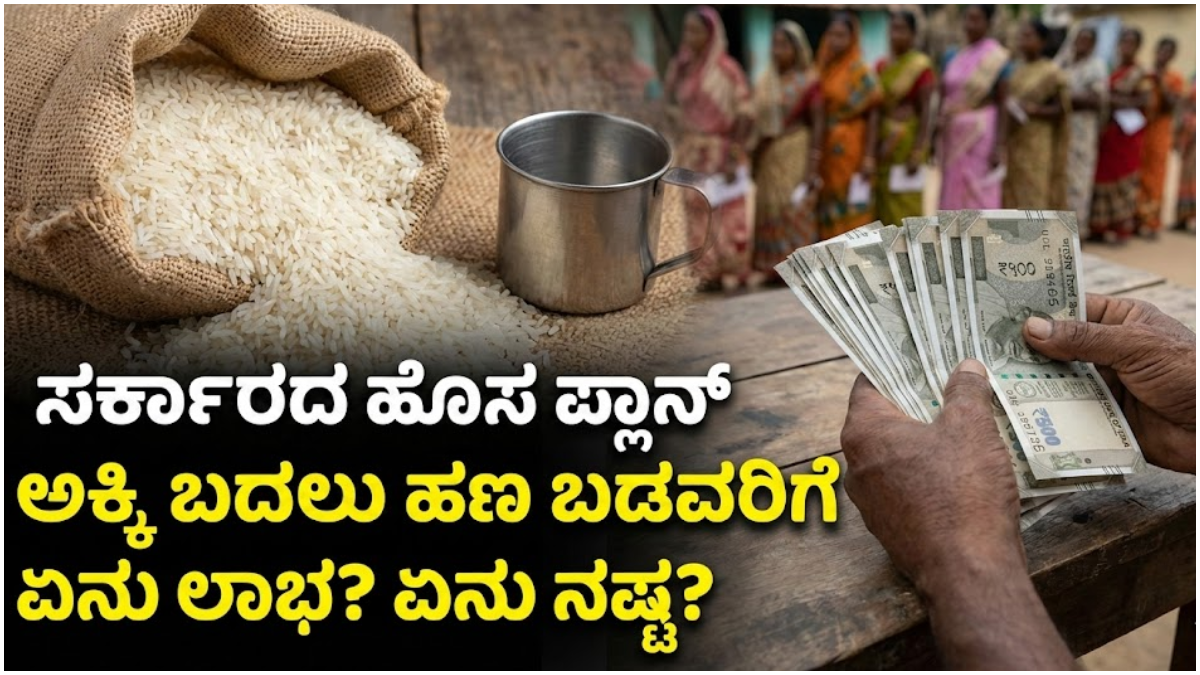
In recent months, discussions around reforming India’s public distribution system (PDS) have gained momentum. The central government is reportedly exploring a major policy shift that could change how food support is delivered to millions of low-income families across the country. Instead of providing subsidized or free food grains like rice and wheat through ration shops, the government is considering transferring cash directly into beneficiaries’ bank accounts every month.
If you are a BPL (Below Poverty Line) ration card holder, this potential reform could directly impact your household. The idea being debated is simple but transformative: what if, instead of standing in long queues at ration shops and receiving fixed quantities of food grains, eligible families receive around ₹1,000 per month in their bank accounts and decide for themselves what to buy?
This article explains the background of this proposal, why the government is considering such a move, how the ₹1,000 figure is being calculated, the possible benefits for citizens, the concerns raised by experts, and what may happen next.
Background: How the Current Ration System Works
India’s Public Distribution System (PDS) is one of the largest food security programs in the world. Under this system, eligible families—especially those falling under the BPL and priority household categories—receive subsidized or free food grains such as rice and wheat through fair price shops (ration shops).
The objective of this system is to ensure food security for vulnerable populations and prevent hunger and malnutrition. However, running such a massive logistics operation comes with enormous costs and administrative challenges. From procurement to storage to transportation and last-mile delivery, the government bears the financial and operational burden at every step.
Over the years, policymakers, economists, and social welfare experts have debated whether in-kind food distribution is the most efficient way to support poor households, or whether direct cash transfers could achieve similar or better outcomes with lower leakage and higher efficiency.
Why Is the Government Considering a Shift to Direct Cash Transfers?
1. High Cost of Procurement and Distribution
To provide food grains at subsidized rates, the government purchases rice and wheat from farmers at minimum support prices. These grains are then stored in warehouses, transported across states, and distributed through ration shops. Each of these steps involves significant expenditure.
For example, when the government distributes one kilogram of rice to a beneficiary, the total cost incurred—after procurement, storage, handling, and transportation—can be much higher than the price at which it is given to the public. The same applies to wheat and other grains.
Experts point out that while beneficiaries may receive rice at a highly subsidized rate (or even free), the government may be spending several times more per kilogram to ensure it reaches them. This raises questions about the long-term financial sustainability of the current model.
2. Food Grain Wastage and Storage Losses
Another major concern is the wastage of food grains during storage and transportation. Due to inadequate storage facilities, exposure to moisture, pest infestations, and logistical inefficiencies, large quantities of food grains deteriorate before they can be distributed.
Studies and reports have highlighted that thousands of tonnes of food grains are damaged or wasted every year due to poor storage conditions and supply chain issues. This not only represents a financial loss for the government but also a moral concern, as food meant for vulnerable populations is lost before reaching them.
3. Leakages, Diversion, and Corruption
Leakages in the PDS system have been a long-standing issue. In some regions, beneficiaries do not receive their full entitlements due to diversion of food grains to the open market, corruption at various levels, or manipulation of beneficiary lists.
Although digitization, Aadhaar seeding, and electronic point-of-sale machines have helped reduce leakages in recent years, challenges still remain. Cash transfers, when directly deposited into beneficiaries’ bank accounts, are seen as a way to minimize intermediaries and reduce opportunities for corruption.
4. Administrative and Logistical Complexity
Running ration shops across urban and rural India requires extensive infrastructure and manpower. Maintaining warehouses, transport networks, and monitoring systems adds to the administrative burden. Shifting to a direct benefit transfer (DBT) model could simplify the system by reducing the need for physical handling of food grains on such a large scale.
How Was the ₹1,000 Per Month Figure Estimated?
The proposed cash transfer amount is not arbitrary. It is based on the approximate cost the government currently incurs to supply food grains to a typical family under the ration system.
To understand this, consider a standard household of five members:
- Under the existing system, each person is entitled to around 5 kilograms of food grains per month.
- This means a family of five receives about 25 kilograms of rice or wheat every month.
- When the government factors in procurement costs, storage, transportation, and distribution, the total cost per kilogram can be substantial.
When these costs are multiplied by the total monthly quantity provided to a family, the government’s expenditure roughly aligns with a figure close to ₹1,000 per household per month. The idea behind the proposal is to transfer this amount directly to the beneficiary’s bank account instead of providing food grains in kind.
Potential Benefits of the Cash Transfer Model
1. Freedom of Choice for Beneficiaries
Under the ration system, beneficiaries typically receive a fixed quantity of specific food grains, often limited to rice and wheat. With cash transfers, families would have the freedom to choose what food items they want to purchase based on their dietary preferences, cultural habits, and nutritional needs.
Some families may prefer millets, pulses, or other locally available staples instead of rice or wheat. Direct cash support allows households to diversify their diets and make choices that best suit their needs.
2. Improved Food Quality
Many beneficiaries have complained about the quality of food grains received through ration shops, including issues like old stock, poor milling quality, or contamination. With cash in hand, families can purchase fresh and better-quality food from local markets or shops of their choice.
This could lead to improved nutrition outcomes, especially for children, pregnant women, and the elderly.
3. Reduced Corruption and Leakages
Direct transfers into bank accounts reduce the number of intermediaries involved in delivering benefits. When money is credited directly to beneficiaries, the scope for diversion and pilferage is significantly lower compared to physical distribution of food grains.
The DBT model also creates a transparent audit trail, making it easier to track whether benefits have reached the intended recipients.
4. Boost to Local Markets and Rural Economy
When households receive cash, they spend it in local markets and shops. This can stimulate local economies, support small retailers, and encourage the growth of village-level businesses. Increased purchasing power at the grassroots level can have positive ripple effects on rural and semi-urban economies.
Concerns and Challenges Associated with Cash Transfers
While the idea of direct cash transfers has several advantages, experts and social activists have raised important concerns:
1. Access to Banking and Digital Infrastructure
Although financial inclusion has improved significantly in recent years, there are still remote and rural areas where access to banking services, ATMs, and digital payment infrastructure is limited. Some beneficiaries may face difficulties in withdrawing or using the cash credited to their accounts.
Ensuring that every eligible household has an active bank account and easy access to financial services is crucial for the success of any DBT-based scheme.
2. Risk of Misuse of Funds
One common concern is that cash transfers may not always be used for purchasing food. In households facing multiple financial pressures, the money may be diverted to other urgent needs such as medical expenses, debt repayment, or social obligations. While these needs are legitimate, they could compromise household food security if food expenditure is deprioritized.
3. Impact of Market Price Fluctuations
Food grain prices in the open market are subject to inflation and seasonal fluctuations. If market prices rise sharply, the fixed cash transfer amount may not be sufficient to purchase the same quantity of food that households previously received through the ration system. This could expose vulnerable families to price shocks and food insecurity.
4. Regional and Cultural Differences
Food consumption patterns vary widely across regions. A uniform cash transfer amount may not adequately account for differences in local food prices and dietary habits. Policymakers would need to consider regional cost-of-living variations to ensure that beneficiaries are not disadvantaged in high-price areas.
What Could Be the Next Step? Pilot Projects and Choice-Based Models
According to reports and policy discussions, the government is unlikely to replace the ration system overnight. Instead, a phased approach may be adopted.
One possibility is to offer beneficiaries a choice between continuing with ration supplies or opting for cash transfers. This would allow families to select the option that best suits their circumstances. Additionally, pilot projects may be launched in selected districts or states to study the real-world impact of cash transfers on food security, nutrition, and household spending patterns.
The outcomes of these pilot programs would provide valuable data to policymakers and help refine the design of any future nationwide rollout.
Broader Objectives of the Proposed Reform
The underlying goals of the proposed shift include:
- Enhancing the dignity and autonomy of beneficiaries by giving them control over their food choices.
- Improving efficiency in the delivery of social welfare benefits.
- Reducing wastage of food grains and minimizing financial losses.
- Strengthening transparency and accountability in welfare programs.
- Ensuring long-term sustainability of food security initiatives.
Important Note for Readers
At present, there is no official notification confirming the nationwide implementation of a ₹1,000 monthly cash transfer scheme in place of ration distribution. The information discussed in this article is based on media reports, expert opinions, and policy debates currently taking place in public forums.
Government welfare policies are subject to change based on political decisions, budgetary allocations, and the outcomes of pilot programs. Beneficiaries are advised to rely on official announcements from government departments and state authorities for accurate and up-to-date information.
Conclusion
The proposal to replace in-kind food distribution with direct cash transfers represents a significant shift in India’s approach to food security and social welfare. While the idea promises greater efficiency, flexibility, and transparency, it also raises valid concerns around financial inclusion, food price volatility, and household nutrition.
If implemented carefully, with strong safeguards and a phased rollout, such a reform could empower beneficiaries and reduce systemic inefficiencies. However, ensuring that no vulnerable household is left behind will be the true test of success.
As discussions continue, the coming months and years will be crucial in determining whether India’s food support system evolves toward a cash-based model or retains a hybrid approach combining both food and financial assistance.