Relief Amid Rising Living Costs
At a time when household expenses continue to rise sharply, any relief from financial pressure is welcome news for ordinary citizens. Over the past year, the prices of essential commodities, groceries, fuel, and even restaurant meals have steadily increased. For middle-class families, daily wage workers, students, and salaried employees, managing monthly budgets has become increasingly difficult.
In such an environment, transportation costs play a crucial role in determining daily expenses. For thousands of people who rely on public buses for commuting to work, college, or business, even a small increase in ticket fares can significantly impact their monthly spending.
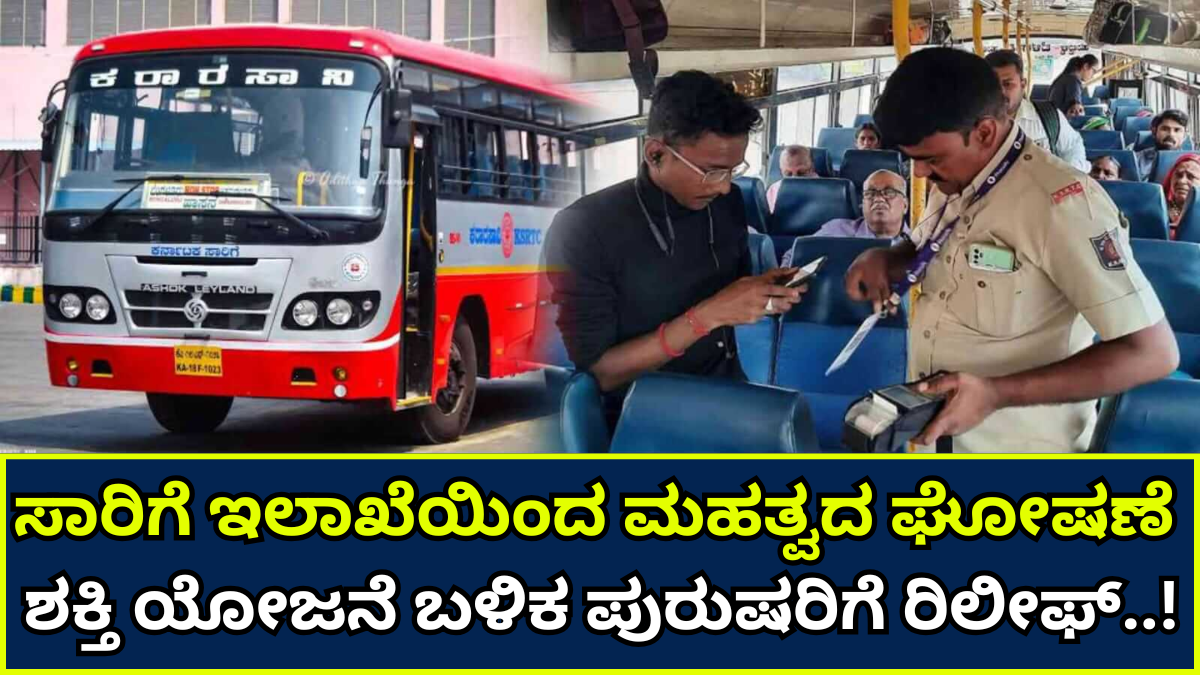
In a positive development, the Karnataka Transport Department has decided not to increase bus fares in both the Bengaluru city transport system and state-run intercity services for now. This decision has brought considerable relief, especially to male passengers who form a major portion of the fare-paying commuters.
No Fare Hike in BMTC and KSRTC Services
The Karnataka government has officially announced that there will be no immediate increase in ticket prices for services operated by:
- Bangalore Metropolitan Transport Corporation
- Karnataka State Road Transport Corporation
This announcement was made by Karnataka’s Transport Minister Ramalinga Reddy, who clarified that fare revision is not being considered at this time.
For daily commuters in Bengaluru city as well as passengers traveling across districts in Karnataka, this announcement offers substantial financial relief. In practical terms, it means bus ticket prices will remain unchanged despite inflationary pressures.
Why Was a Fare Hike Expected?
To understand the importance of this decision, it is necessary to look at recent developments in public transport finances.
In January of the previous year, state transport corporations were reportedly facing severe financial strain. Rising fuel prices, maintenance costs, staff salaries, and operational expenses had pushed these corporations into heavy losses. As a corrective measure, ticket fares were increased by approximately 15%.
There were also discussions within government circles about implementing a structured fare revision mechanism, similar to models used in electricity tariffs or metro rail services, where prices are revised periodically based on cost factors.
Given these past developments, many commuters feared that another fare hike might be announced this year. However, the government has now decided to postpone any such move.
The Key Reason: No Expert Committee Formed
According to the Transport Minister, fare revision requires recommendations from a designated expert committee. This committee is supposed to study operational costs, passenger load, revenue patterns, and financial sustainability before suggesting any price changes.
However, due to administrative reasons, this committee has not yet been constituted.
The Minister clearly stated that without the formation of this committee and submission of its report, there is no question of implementing a fare hike. In simple terms, since the committee does not exist yet, the process required for increasing fares cannot even begin.
This procedural gap has effectively put a brake on any immediate revision of ticket prices.
Impact of the “Shakti” Scheme
Another significant factor influencing the transport revenue structure is the Karnataka government’s “Shakti” scheme. Under this initiative, women residents of the state are allowed to travel free of cost in state-run buses, including services operated by KSRTC and BMTC (with certain categories excluded).
The scheme was introduced as a welfare measure aimed at empowering women, enhancing mobility, and reducing financial burden on households. Since its implementation, a large percentage of women passengers travel without paying fares.
While the government compensates transport corporations for revenue losses under the scheme, the actual cash revenue generated directly from ticket sales primarily comes from male passengers and students.
As a result, any fare hike would directly impact this group of paying passengers — especially working men who commute daily to offices, factories, shops, and construction sites.
The decision to avoid a fare increase therefore provides particular relief to:
- Daily wage laborers
- Private sector employees
- Small traders
- College and university students
- Rural commuters traveling for work
For many families, even a modest increase in daily bus fares can add up to a significant monthly expense.
Financial Relief for the Middle Class
Public transportation is a backbone of urban and semi-urban mobility in Karnataka. In cities like Bengaluru, thousands rely on BMTC buses for daily commuting. Similarly, KSRTC connects towns and villages across the state, serving as an essential link for economic activity.
If ticket prices were raised again, it would have created additional financial strain, especially for middle-class families already grappling with:
- Rising food prices
- Increased electricity bills
- Higher rent and housing costs
- Fuel price volatility
- Education expenses
By maintaining current fare levels, the government has prevented another direct cost burden on households.
For someone commuting five or six days a week, even a ₹5–₹10 increase per trip could translate into hundreds of rupees extra per month. Over a year, that becomes a substantial amount for budget-conscious families.
No Immediate Hike Until 2027?
Another notable aspect of the announcement is the timeline involved in any potential future fare revision.
Even if the expert committee is formed within the next few months, it will require time to:
- Conduct financial analysis
- Study operational costs
- Gather data from transport corporations
- Prepare and submit a detailed report
- Obtain government approval
- Implement revised pricing
Given this multi-stage process, officials have hinted that any fare change is unlikely to be implemented before the end of 2026. This effectively means passengers may not face revised ticket prices until early 2027, if at all.
While this is not an official long-term freeze announcement, the procedural delay provides temporary stability and predictability for commuters.
Focus Shifts to Modernization Instead of Fare Hike
While holding fares steady, the Transport Department is focusing on improving services and modernizing the fleet.
Expansion of Electric Buses
One of the major initiatives underway is the expansion of electric bus services, particularly in Bengaluru. Diesel prices have fluctuated considerably in recent years, increasing operational costs for transport corporations.
Electric buses offer several advantages:
- Lower long-term fuel costs
- Reduced carbon emissions
- Quieter operation
- Lower maintenance expenses over time
BMTC has been gradually adding electric buses to its fleet to reduce dependency on diesel and improve sustainability.
Replacement of Old Buses
Another key priority is replacing outdated and worn-out buses with modern, well-equipped vehicles. Many older buses have been in service for years and require frequent repairs.
KSRTC is reportedly moving toward purchasing newer buses that offer:
- Better passenger comfort
- Improved safety features
- Enhanced fuel efficiency
- Modern seating arrangements
- Improved suspension systems
Modern buses not only improve the travel experience but also reduce long-term maintenance costs.
Service Quality Improvements
Even without increasing ticket fares, the department aims to improve overall service standards. The goals include:
- Ensuring buses operate on schedule
- Reducing breakdown incidents
- Enhancing passenger safety
- Improving cleanliness
- Increasing reliability in rural routes
For passengers, timely and dependable service is just as important as fare affordability.
Economic and Political Dimensions
Public transport pricing is often a sensitive political issue. Fare hikes can trigger public criticism, especially during periods of inflation. Governments must balance financial sustainability with public welfare.
Transport corporations typically operate under financial pressure due to:
- Salary commitments to staff
- Rising fuel costs
- Vehicle maintenance expenses
- Infrastructure upgrades
- Loan repayments
However, raising fares too frequently may discourage public transport usage and push commuters toward private vehicles, worsening traffic congestion and pollution.
By holding fares steady, the government appears to be prioritizing public welfare and affordability, at least in the short term.
Importance of Public Transport in Karnataka
Public bus networks play a crucial role in Karnataka’s economic and social framework.
In Bengaluru, BMTC buses reduce dependency on private cars and two-wheelers, helping manage traffic congestion.
Across districts, KSRTC connects:
- Rural villages to district headquarters
- Students to educational institutions
- Patients to hospitals
- Traders to markets
- Workers to industrial hubs
Affordable transportation ensures economic mobility and social inclusion.
When fares remain stable, more people are encouraged to use public transport rather than switching to costlier private alternatives.
A Temporary Pause, Not a Permanent Freeze
It is important to understand that the current decision does not permanently rule out future fare hikes. Rather, it postpones any immediate revision due to procedural and administrative reasons.
Once the expert committee is formed and submits its recommendations, the government may review pricing again.
However, for now, commuters can plan their expenses without worrying about sudden increases in bus ticket rates.
Public Reaction
The announcement has been widely welcomed by daily commuters. For working men who depend on buses for two-way travel every day, this decision translates directly into financial stability.
Students, particularly those from middle-income families, also benefit from stable fares.
Transport employees, meanwhile, may look forward to modernization efforts that could improve operational efficiency and working conditions.
Conclusion: Stability in Uncertain Times
In an era marked by inflation and rising living costs, the decision to maintain current bus fares in Karnataka provides meaningful relief to thousands of commuters.
While transport corporations continue to face financial challenges, the government has chosen to prioritize affordability and public convenience for the time being.
By postponing fare revision and focusing instead on modernization, electric mobility, and service quality improvements, the Karnataka Transport Department aims to strike a balance between financial sustainability and social responsibility.
For male passengers and other fare-paying commuters, this announcement ensures that their daily travel costs will remain unchanged — at least for the foreseeable future.
In uncertain economic times, even the decision not to increase prices can feel like a significant victory for the common citizen.