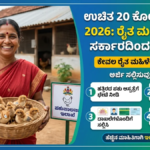
The Karnataka Animal Husbandry and Veterinary Services Department has announced an opportunity for interested rural women farmers to receive free country chicken chicks under its poultry distribution programme. The initiative aims to encourage small-scale poultry farming, improve rural livelihoods, and create an additional source of income for women engaged in agricultural activities.
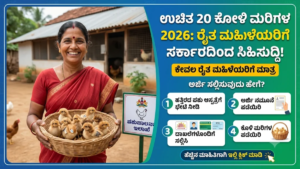
Under this programme, eligible women beneficiaries can apply to receive 20 country chicken chicks free of cost, subject to the availability of government funds and district-level allocations. The chicks provided under the scheme are reported to be four weeks old, making it easier for beneficiaries to begin raising them at home.
This initiative is particularly useful for women who want to start poultry farming on a small scale without making a significant initial investment. By raising country chickens in their backyards or small poultry spaces, rural households may generate additional income through the sale of eggs and grown-up birds.
Women interested in taking advantage of this opportunity can submit their applications through their nearest government veterinary hospital.
In this article, we explain the scheme’s benefits, eligibility requirements, application procedure, necessary documents, and important instructions for applicants.
1. Overview of the Free Country Chicken Distribution Scheme
Poultry farming is one of the accessible livelihood activities for rural families. Unlike large commercial poultry operations, backyard poultry farming can be started with limited space and relatively low investment.
Understanding the importance of poultry farming in improving rural household incomes, the Karnataka Animal Husbandry and Veterinary Services Department implements initiatives to encourage women to take up small-scale poultry activities.
The free chicken distribution programme is intended to support women farmers by providing country chicken chicks without requiring them to purchase the initial stock.
The programme is implemented with the involvement of the Karnataka Cooperative Poultry Federation Limited and the Animal Husbandry and Veterinary Services Department.
The main objective is to make poultry farming more accessible to rural women, particularly those who are already involved in agriculture and related activities.
Key Highlights of the Scheme
| Particulars | Details |
|---|---|
| Scheme name | Free Country Chicken Chick Distribution |
| State | Karnataka |
| Implementing department | Animal Husbandry and Veterinary Services Department |
| Supporting organisation | Karnataka Cooperative Poultry Federation Limited |
| Main beneficiaries | Women farmers |
| Assistance provided | 20 country chicken chicks |
| Chick age | Four weeks |
| Financial assistance | Free distribution of chicks |
| Application method | Offline |
| Application location | Nearest government veterinary hospital |
| Selection | Subject to eligibility and availability |
| Helpline number | 8277100200 |
Important: The information above reflects the scheme details provided in the announcement. Applicants should confirm the current year’s availability, selection conditions, and distribution schedule with their local veterinary department before applying.
2. What Benefits Are Available Under the Scheme?
The primary benefit of this programme is the distribution of 20 country chicken chicks to eligible women beneficiaries.
Starting a poultry business can be challenging for rural households because purchasing chicks and arranging the initial setup requires money. Through this initiative, the government aims to reduce that initial financial burden.
The chicks are reportedly supplied at four weeks of age.
Country chicken farming can provide several livelihood opportunities for rural families.
A. Free Supply of 20 Chicken Chicks
Eligible women applicants can receive 20 country chicken chicks without paying the purchase cost.
This assistance can help women begin poultry farming even if they do not have sufficient money to purchase chicks independently.
B. Additional Household Income
Country chickens can provide an additional source of income for rural households.
Depending on the breed, feeding conditions, management, and local market demand, beneficiaries may earn money by selling eggs and mature birds.
However, income is not guaranteed and depends on successful poultry management and market conditions.
C. Encouragement for Women Farmers
The programme is designed to encourage women to become financially independent through small-scale livestock and poultry activities.
Women who are already involved in farming can combine poultry rearing with their existing agricultural activities.
D. Support for Backyard Poultry Farming
Backyard poultry farming is suitable for households that have adequate space and arrangements to care for birds.
It may not require the same infrastructure as a large commercial poultry farm.
Nevertheless, beneficiaries should arrange proper housing, clean drinking water, balanced feed, and protection against predators and diseases.
E. Opportunity for Small-Scale Self-Employment
Women who are interested in starting a small home-based activity can consider poultry farming as a supplementary livelihood option.
With proper care and planning, the activity may gradually become a regular source of additional household income.
3. Who Is Eligible to Apply?
The scheme is primarily intended for women farmers interested in raising country chickens.
According to the information provided in the announcement, women from different social categories can apply, subject to the applicable departmental eligibility requirements.
The following conditions should be considered before submitting an application.
1. Women applicants are eligible
The programme is intended for women beneficiaries. Interested women farmers can approach their nearest government veterinary hospital to enquire about the application process.
2. Preference for women involved in agriculture
Women actively engaged in agricultural activities may receive priority during beneficiary selection.
Applicants who are involved in farming should provide relevant land or agricultural records if requested by the department.
3. Applicants who received chicks previously
Women who have already received chicken chicks under this departmental distribution programme during the previous year are reportedly not eligible to apply again for the current distribution cycle.
This restriction is intended to provide opportunities to new beneficiaries.
4. Interest in poultry farming
Applicants should be genuinely interested in raising country chickens and should have suitable arrangements for their maintenance.
Beneficiaries should be prepared to provide proper feed, water, shelter, and healthcare for the birds.
5. Availability of funds
Distribution is dependent on the availability of funds and the number of beneficiaries approved in each district.
Submitting an application does not automatically guarantee selection.
4. How to Apply for Free Country Chicken Chicks in Karnataka?
The application process described in the announcement is offline.
Eligible women applicants should visit their nearest government veterinary hospital and submit their applications along with the required documents.
There is no online application link mentioned in the supplied announcement.
Follow these steps to apply.
Step 1: Visit Your Nearest Veterinary Hospital
Visit the government veterinary hospital in your taluk during official working hours.
You can contact the veterinary officer and ask whether applications are currently being accepted under the free country chicken distribution programme.
Step 2: Enquire About Beneficiary Selection
Request information about the current year’s poultry distribution programme.
Ask the officials about the availability of chicks, eligibility conditions, application deadlines, and beneficiary selection procedure.
Step 3: Collect the Application Form
If applications are being accepted, obtain the relevant application form from the veterinary hospital.
Check whether the department requires any additional information or supporting certificates.
Step 4: Attach the Required Documents
Prepare photocopies of the necessary documents and attach them to the application.
Make sure your personal information, bank details, and other particulars are accurate.
Step 5: Submit Your Application
Submit the completed application form and supporting documents to the concerned veterinary department official.
If possible, request an acknowledgement or application reference number for future enquiries.
Step 6: Wait for Verification and Selection
The department may verify the submitted information before finalising the beneficiary list.
Selection will depend on eligibility, departmental guidelines, and the availability of funds and chicks.
Applicants should contact their local veterinary hospital for information about the final selection and distribution dates.
5. Documents Required to Apply for the Scheme
Applicants should keep the following documents ready before visiting the veterinary hospital.
The documents mentioned in the original announcement are:
| Sl. No. | Required document |
|---|---|
| 1 | Aadhaar Card |
| 2 | Recent passport-size photograph |
| 3 | Bank Passbook |
| 4 | Agricultural land record (RTC/Pahani) |
| 5 | Active mobile number |
Details of the Required Documents
1. Aadhaar Card
A copy of the applicant’s Aadhaar card may be required to verify her identity and personal details.
Ensure that the information provided in the application matches the details on the identity document.
2. Applicant Photograph
Keep a recent passport-size photograph ready for attachment to the application form.
3. Bank Passbook
A copy of the applicant’s bank passbook may be required for recording banking information.
Carry the passbook of an active bank account.
4. RTC or Pahani Document
Women involved in agricultural activities should keep their land record documents ready.
The RTC, also known as Pahani, contains important information about agricultural land.
If the land is registered in another family member’s name, ask the local veterinary officer what supporting documents will be accepted.
5. Mobile Number
Provide an active mobile number so that departmental officials can contact you regarding application verification or beneficiary selection.
Note: The local department may request additional documents depending on the applicable guidelines. Confirm the complete document list before submitting your application.
6. Where Should Applicants Submit Their Applications?
Women interested in receiving free country chicken chicks should approach the government veterinary hospital located in their respective taluk.
The application should be submitted directly to the concerned departmental office.
Applicants are advised to visit during regular office hours.
Application Office Details
Government Veterinary Hospital
Your respective taluk, Karnataka
10:00 AM to 5:30 PM (as stated in the announcement)
Department Helpline
8277100200
Confirm office timings and working days locally before visiting.
Applicants from different districts should contact their respective taluk veterinary hospitals to find out whether the scheme is available in their area.
7. Important Instructions Before Applying
Before submitting an application, women farmers should remember the following points.
- Applications are intended for eligible women beneficiaries.
- Women engaged in agricultural activities may receive priority.
- Applicants who received chicks through the same programme during the previous year are reportedly not eligible again.
- The announced benefit is 20 country chicken chicks per selected beneficiary.
- The chicks are stated to be four weeks old.
- Distribution depends on the availability of funds and chicks in the respective district.
- Applications must be submitted through the concerned veterinary hospital, according to the announcement.
- Applicants should verify the current application dates and selection procedure with departmental officials.
- Do not pay money to unauthorised individuals claiming to guarantee selection or free chicks.
8. How Can Women Earn Income Through Country Chicken Farming?
Country chicken farming can be a useful supplementary livelihood activity for rural women.
However, receiving free chicks is only the first step. Proper care and management are necessary to raise healthy birds and make poultry farming economically beneficial.
Here are some important practices that beneficiaries should follow.
Provide Suitable Shelter
Chickens should be kept in a clean, dry, and well-ventilated shelter.
The poultry area should protect birds from rain, excessive heat, cold weather, and predators.
Arrange Nutritious Feed
Provide appropriate poultry feed according to the age and growth requirements of the birds.
Although country chickens may forage in open spaces, they still need adequate nutrition to maintain good health and productivity.
Ensure Clean Drinking Water
Fresh drinking water should always be available.
Clean water containers regularly to reduce the risk of disease transmission.
Follow Veterinary Advice
Vaccination and disease prevention are essential parts of poultry farming.
Beneficiaries should consult their local veterinary doctor regarding vaccination schedules, deworming, and treatment.
Maintain Hygiene
Clean poultry shelters and remove waste regularly.
Avoid overcrowding and isolate sick birds when advised by a veterinary professional.
Explore Local Markets
Once the birds mature, beneficiaries may explore opportunities to sell eggs and grown-up chickens.
Before expanding poultry farming, understand the demand and prevailing prices in the local market.
9. Frequently Asked Questions (FAQs)
1. How many free chicken chicks are provided under this scheme?
According to the announcement, eligible selected women beneficiaries can receive 20 country chicken chicks.
2. Are the chicks provided free of cost?
Yes. The programme is described as a free chick distribution initiative for eligible beneficiaries.
3. What is the age of the chicks distributed?
The announcement states that four-week-old chicks will be distributed.
4. Who can apply for this programme?
Women farmers interested in poultry farming can apply, subject to the department’s eligibility conditions.
5. Can women from all categories apply?
According to the supplied scheme information, women from all social categories can submit applications, subject to the applicable guidelines.
6. Will women who received chicks last year be eligible?
According to the announcement, beneficiaries who received chicks under the programme during the previous year cannot apply again this year.
7. Is there an online application facility?
The supplied announcement describes an offline application process. Applicants should visit their nearest government veterinary hospital.
8. Which documents are required?
Aadhaar card, passport-size photograph, bank passbook, RTC/Pahani document, and mobile number are listed as the required documents.
9. Where should the application be submitted?
Applications should be submitted at the government veterinary hospital in the applicant’s taluk.
10. What is the helpline number?
The helpline number provided in the announcement is 8277100200.
10. Conclusion
The free country chicken chick distribution programme is an opportunity for women farmers in Karnataka who want to start small-scale backyard poultry farming.
Through this initiative, eligible beneficiaries can receive 20 country chicken chicks, reportedly four weeks old, without paying the purchase cost.
The programme aims to promote rural self-employment, encourage women to participate in poultry farming, and create additional income opportunities for agricultural households.
Interested applicants should visit their nearest government veterinary hospital with the required documents and enquire about the availability of applications in their district.
Since the distribution is subject to fund availability and departmental approval, applicants should confirm all details directly with the concerned veterinary officials before submitting their applications.
For further information, contact the Animal Husbandry Department helpline: 8277100200