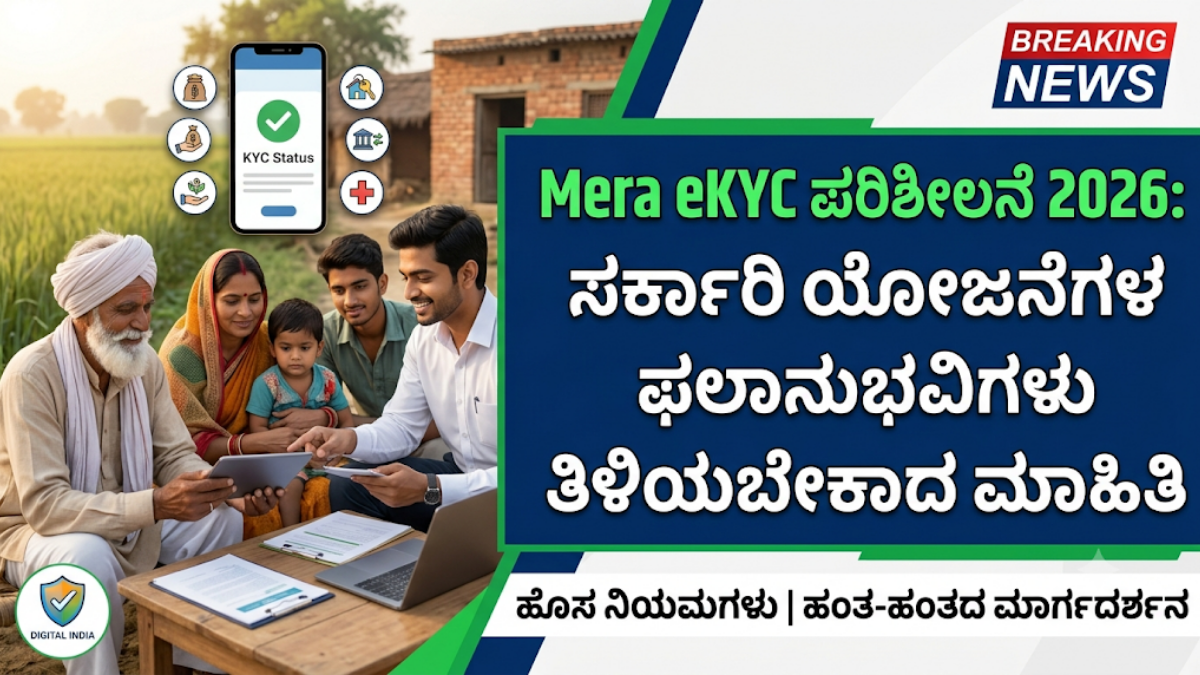
Digital services have made it easier for citizens to access many government schemes without depending entirely on physical paperwork. As part of this digital transformation, electronic Know Your Customer, commonly known as eKYC, is used by various departments and service providers to verify the identity and information of beneficiaries.
For individuals receiving pensions, subsidies, scholarships, farmer assistance, welfare payments, or other government-supported benefits, maintaining correct and updated records can be important. When a particular scheme requires eKYC, beneficiaries may need to complete the verification within the period specified by the concerned authority.
However, citizens should understand that eKYC requirements are not identical for every government scheme. The process, documents, deadline, and authentication method can differ according to the service.
What Is Mera eKYC?
Mera eKYC can be understood as an electronic identity verification process through which a beneficiary’s information is checked against authorized records.
Depending on the scheme, Aadhaar-based authentication may be one of the available verification methods. Some services may also require additional information or verification through a bank, service provider, government office, or authorized center.
The main purpose is to make sure that benefits are connected to genuine and eligible beneficiaries.
Electronic verification can help authorities:
- Maintain updated beneficiary records
- Reduce duplicate entries
- Identify incorrect information
- Limit fraudulent claims
- Improve the delivery of government assistance
- Support digital payment systems
Why Are Beneficiaries Asked to Complete eKYC?
Government databases can contain outdated information when people change their mobile numbers, addresses, banking details, or other personal information. In some cases, records may also contain errors or duplicate entries.
An eKYC requirement gives the concerned authority an opportunity to verify that the beneficiary’s information is still valid.
For beneficiaries, completing a mandatory verification requirement on time can reduce the possibility of administrative issues. However, eKYC by itself does not guarantee eligibility for a particular benefit. The beneficiary must continue to meet the rules of the relevant scheme.
Who May Be Required to Complete eKYC?
The requirement depends on the individual scheme. People associated with the following types of services may encounter eKYC requirements:
Pension Beneficiaries
Certain pension programs may require beneficiaries to periodically verify their identity or continued eligibility.
LPG-Related Services
Some LPG-related benefits and subsidy arrangements may involve identity and account verification.
Farmers
Beneficiaries of agricultural assistance programs may be asked to ensure that their identity and other records are correctly linked.
Scholarship Recipients
Students receiving government-supported scholarships may need to maintain accurate personal and banking information.
Food and Welfare Programs
Some ration, social-security, and welfare services can use electronic verification to improve beneficiary records.
The exact requirements should always be confirmed with the department responsible for the particular scheme.
What Information Is Usually Needed?
There is no universal document list for every eKYC service. Depending on the program, you may be asked for:
- Aadhaar or another approved identity document
- Registered mobile number
- Beneficiary identification details
- Bank account information
- Scheme-related documents
- Other information required by the responsible authority
Before beginning the process, check the official instructions so that you do not submit unnecessary personal information.
How Can You Complete the Verification?
The procedure varies, but a typical digital verification process may involve the following steps.
Step 1: Confirm the Requirement
Find out whether your particular government benefit actually requires eKYC. Do not assume that every government scheme has the same requirement.
Step 2: Find the Official Verification Channel
Use the official government website, authorized mobile application, bank, LPG distributor, or approved service center associated with your scheme.
Step 3: Enter Your Details
Provide the information requested by the authorized platform. Carefully check spelling, identification numbers, and other details before proceeding.
Step 4: Complete Authentication
Depending on the service, authentication may be completed through an OTP, biometric verification, or another approved method.
Step 5: Submit the Verification
After reviewing the information, complete the process and wait for confirmation.
Step 6: Keep the Acknowledgment
If the system provides a reference number, receipt, or confirmation message, save it. It may be useful if you need to follow up later.
What If Your eKYC Fails?
A failed verification does not necessarily mean that you are no longer eligible for a government benefit.
Several issues can prevent successful authentication. For example, the name or other details in different records may not match. The registered mobile number may also be outdated, an OTP may not arrive, or biometric authentication may fail.
Technical problems can also occur when a government portal or authentication service is temporarily unavailable.
If you encounter an error, read the message displayed by the authorized service and follow the recommended correction procedure. If the problem continues, contact the relevant department or visit an authorized service center.
Be Careful With Fake eKYC Links
Online verification involves sensitive personal information, so beneficiaries should remain alert to fraudulent messages.
Scammers may send SMS messages, emails, WhatsApp messages, or phone calls claiming that a pension, subsidy, ration benefit, or other payment will be stopped unless eKYC is completed immediately.
Do not click suspicious links or provide confidential information simply because a message uses the name of a government scheme.
In particular, never disclose an OTP, ATM PIN, internet-banking password, UPI PIN, or other banking credentials to an unknown person. Legitimate verification should be performed through an appropriate authorized channel.
How to Keep Your Records Updated
Maintaining accurate records can make future verification easier. If your mobile number, bank account, address, or other important information changes, follow the official procedure for updating it.
You should also check whether your name and other details are consistent across the records used by the relevant scheme.
Keeping copies of important acknowledgments and application references can also help when contacting authorities about a delayed or unsuccessful verification.
Frequently Asked Questions
Is Mera eKYC mandatory for everyone?
No. eKYC requirements depend on the government scheme or service. A person should verify whether the specific program they use requires it.
Can eKYC be completed online?
Some schemes provide online verification, while others may require biometric authentication or assistance from an authorized center.
Does completing eKYC guarantee government benefits?
No. eKYC generally verifies identity or records. Eligibility for a benefit is determined separately according to the rules of the relevant scheme.
What should I do if my Aadhaar details do not match?
Contact the appropriate authority or authorized service provider and follow the official correction process. Do not provide incorrect information simply to make the verification succeed.
Conclusion
Mera eKYC is part of the broader move toward digital identity and beneficiary verification in India. For people enrolled in government schemes, keeping their records accurate and completing any mandatory verification within the specified period can help avoid unnecessary administrative difficulties.
At the same time, beneficiaries should not rush into completing eKYC through links received from unknown sources. Always confirm the requirement and use an official or authorized channel.
By checking the applicable rules, keeping personal information updated, protecting authentication credentials, and retaining verification records, citizens can make the eKYC process safer and easier while continuing to access services for which they are eligible.