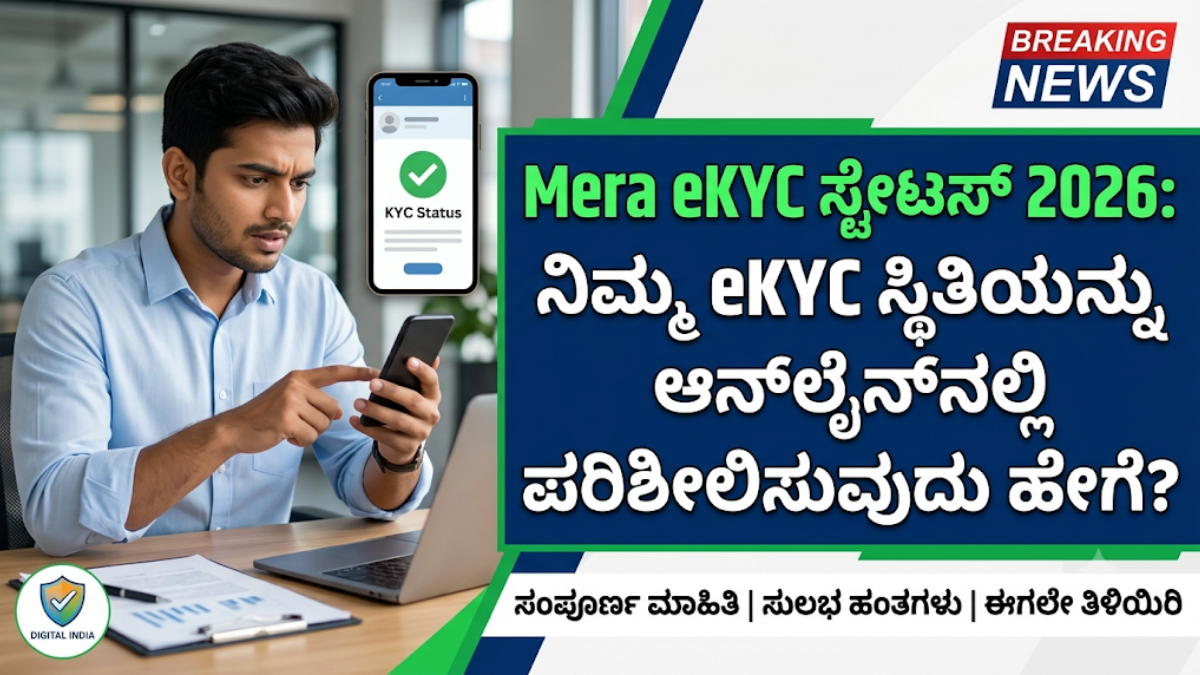
The Government of India continues to promote digital identity verification to make welfare programs more transparent, efficient, and secure. One important part of this system is eKYC (Electronic Know Your Customer), which allows an individual’s identity and beneficiary information to be verified electronically.
For people receiving benefits through government welfare programs, subsidies, pensions, scholarships, financial assistance, or other support schemes, keeping their identification details updated can be important. Depending on the particular scheme, beneficiaries may be asked to complete an eKYC process before continuing to receive services or payments.
If you have received an official notification asking you to complete eKYC, it is advisable to verify the request through the relevant government department or authorized service provider rather than relying on an unfamiliar website or message.
What Does Mera eKYC Mean?
Mera eKYC generally refers to the electronic verification of a person’s identity and associated records. Aadhaar-based authentication may be used for eligible services, although the exact procedure can vary depending on the government scheme or department involved.
Instead of depending entirely on physical paperwork, electronic verification allows authorized agencies to confirm beneficiary information digitally.
The broader purpose of eKYC is to:
- Confirm that benefits are being provided to the correct person
- Reduce duplicate or fraudulent beneficiary records
- Improve the accuracy of government databases
- Support electronic and Direct Benefit Transfer (DBT) payments
- Reduce unnecessary paperwork
- Make verification and service delivery more convenient
It is important to remember that there is no single eKYC procedure that applies to every government scheme. The required process depends on the service or benefit involved.
Who May Need to Complete eKYC?
eKYC requirements can apply to different groups of beneficiaries. For example, verification may be requested from people associated with:
- Government pension programs
- LPG-related benefits or subsidies
- Farmer assistance schemes
- Scholarships and educational support
- Ration and food-security programs
- Social welfare schemes
- Financial assistance programs
- Other government services that require identity verification
Not every person in these categories will necessarily have the same deadline or verification requirements. Beneficiaries should therefore check the instructions issued by the relevant department.
Why Is eKYC Important?
Completing a required verification can help ensure that government records contain accurate and current information.
1. Helps Maintain Accurate Records
Electronic verification can help authorities identify duplicate, outdated, or incorrect beneficiary records. This makes it easier to maintain reliable databases.
2. Supports Benefit Payments
Where eKYC is a mandatory requirement for a particular scheme, completing the verification may help prevent administrative problems with future payments or services.
3. Reduces the Risk of Fraud
Identity authentication provides an additional layer of protection against fraudulent claims and unauthorized access to benefits.
4. Makes Verification More Convenient
Digital verification can reduce the need for repeated visits to government offices and minimize paperwork when online authentication is available.
5. Supports Direct Benefit Transfers
For eligible schemes using DBT, accurate identity and banking information can help government payments reach the intended beneficiary.
Documents and Information You May Need
The information required for eKYC depends on the specific scheme. In many cases, beneficiaries may need some combination of the following:
- Aadhaar number or another approved identity document
- Mobile number registered for authentication, where applicable
- Bank account information
- Beneficiary or scheme identification details
- Other documents requested by the relevant department
Before submitting any information, make sure you are using an official government portal, authorized application, bank, LPG distributor, or approved service center.
How to Complete eKYC
The exact steps vary between schemes, but the process generally follows this pattern:
Step 1: Identify the Correct Service
First, determine which government scheme or service has requested your verification.
Step 2: Use an Official Channel
Visit the department’s official website, authorized application, bank, service provider, or government-approved center.
Step 3: Provide the Required Details
Enter the requested identification or beneficiary information carefully. Avoid sharing Aadhaar numbers, OTPs, passwords, or banking credentials with unknown websites or individuals.
Step 4: Complete Authentication
Depending on the service, authentication may involve an OTP, biometric verification, or another approved method.
Step 5: Check Your Information
Review your name, identification details, bank information, and other records before submitting the request.
Step 6: Save the Confirmation
After successful verification, keep the acknowledgment, transaction number, or confirmation message for future reference if one is provided.
What Can Cause eKYC Problems?
Sometimes verification may not be completed successfully. Common issues can include:
- Differences between Aadhaar and scheme records
- Incorrect personal information
- An unavailable or outdated registered mobile number
- Failed OTP authentication
- Biometric authentication problems
- Incorrect bank or beneficiary information
- Technical problems with the portal or authentication system
If your verification fails, do not repeatedly submit random information. Instead, contact the relevant department, bank, service provider, or authorized center to find out what needs to be corrected.
Stay Alert for Fake eKYC Messages
Because eKYC involves personal information, beneficiaries should be particularly careful about scams. Fraudsters may send messages claiming that a government benefit will immediately stop unless the recipient clicks a link or shares an OTP.
Do not provide sensitive information to unknown callers, websites, or messages. Government agencies and legitimate service providers should be verified before you submit personal or financial information.
Also, an unfamiliar website using terms such as “Mera eKYC” does not automatically mean that it is an official government portal.
Final Words
Mera eKYC and other electronic verification systems can play an important role in maintaining accurate beneficiary records and delivering government services efficiently. However, the requirements, deadlines, and authentication methods differ from one scheme to another.
If you have been instructed to complete eKYC, first confirm the requirement with the relevant government department or authorized service provider. Use only trusted channels, carefully check your details, and keep your confirmation information after successful verification.
Most importantly, never share an OTP, password, PIN, or other confidential banking information with an unknown person simply because they claim to be calling about eKYC. Taking a few minutes to verify the source can help protect both your personal information and your government benefits.