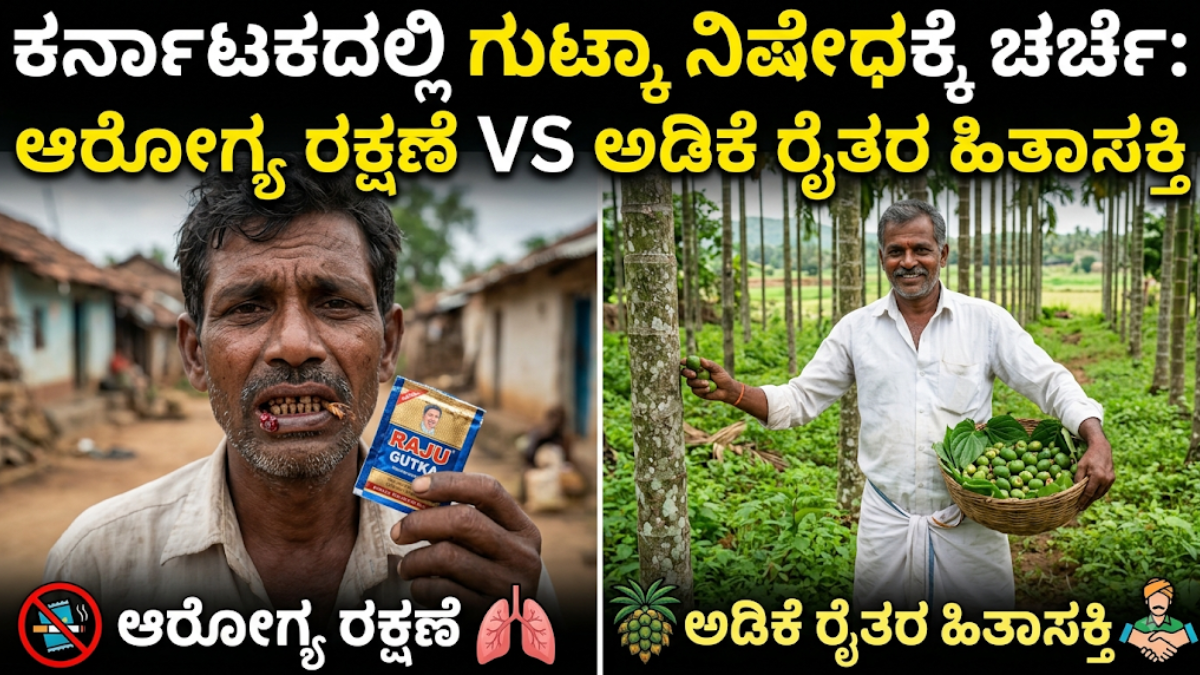
The debate over a possible ban on gutka, pan masala, and other tobacco-related products in Karnataka is once again attracting public attention. The issue has two important sides: protecting people from the harmful effects of tobacco consumption and safeguarding the livelihoods of farmers who depend on areca nut cultivation.
Gutka and similar smokeless tobacco products have long been associated with serious health concerns. Regular consumption can increase the risk of oral health problems and several forms of cancer. It can also contribute to nicotine dependence and other long-term health complications. Because of these concerns, many people believe that stronger restrictions on products containing tobacco and related harmful substances could help protect public health.
At the same time, a complete ban raises questions about its possible impact on Karnataka’s agricultural community. Areca nut, commonly known as supari or betel nut, is an important commercial crop for many farmers in the state. Numerous farming families depend on areca nut cultivation for their income, and the crop supports employment and economic activity across rural areas.
This creates an important distinction in the debate. A ban on gutka or tobacco products does not necessarily mean a ban on areca nut cultivation. Areca nut is used in several products and industries, and its cultivation has an economic role independent of tobacco consumption. Therefore, any government policy should carefully examine how restrictions on processed products could affect demand, prices, traders, workers, and farmers.
Supporters of a ban argue that public health should remain the priority. They believe that reducing the availability and consumption of harmful tobacco products could discourage addiction, particularly among young people. From this perspective, stronger enforcement, awareness campaigns, age restrictions, and action against illegal sales could complement any proposed prohibition.
Those who oppose an immediate ban, however, argue that policy decisions should consider the economic consequences for farmers. They believe that the government should provide adequate support and alternative market opportunities if a major policy change affects the demand for agricultural products.
A balanced approach could therefore involve distinguishing between tobacco-containing products and legitimate agricultural produce. Instead of allowing farmers to bear the burden of a policy designed to address tobacco-related health risks, authorities could explore measures that protect public health while supporting growers through alternative markets, value-added products, agricultural assistance, and better market access.
The question ultimately goes beyond a simple choice between farmers and the public. Farmers are also members of the public, and their economic well-being matters. At the same time, protecting citizens from preventable health risks is an important responsibility of any government.
So, what should Karnataka do?
Should gutka and harmful tobacco products face stricter restrictions or a complete ban in the interest of public health? Or should policymakers first assess the potential consequences for areca nut farmers and introduce safeguards for their livelihoods?
Vote and share your opinion:
🟢 Yes — Strong action or a ban is necessary to protect public health.
🔴 No — The government should first consider the impact on farmers and provide suitable alternatives.
What do you think? Should Karnataka prioritize a stronger crackdown on gutka and tobacco products, or should greater attention be given to the interests of areca nut farmers while framing the policy? Share your views in the comments and take part in the discussion.