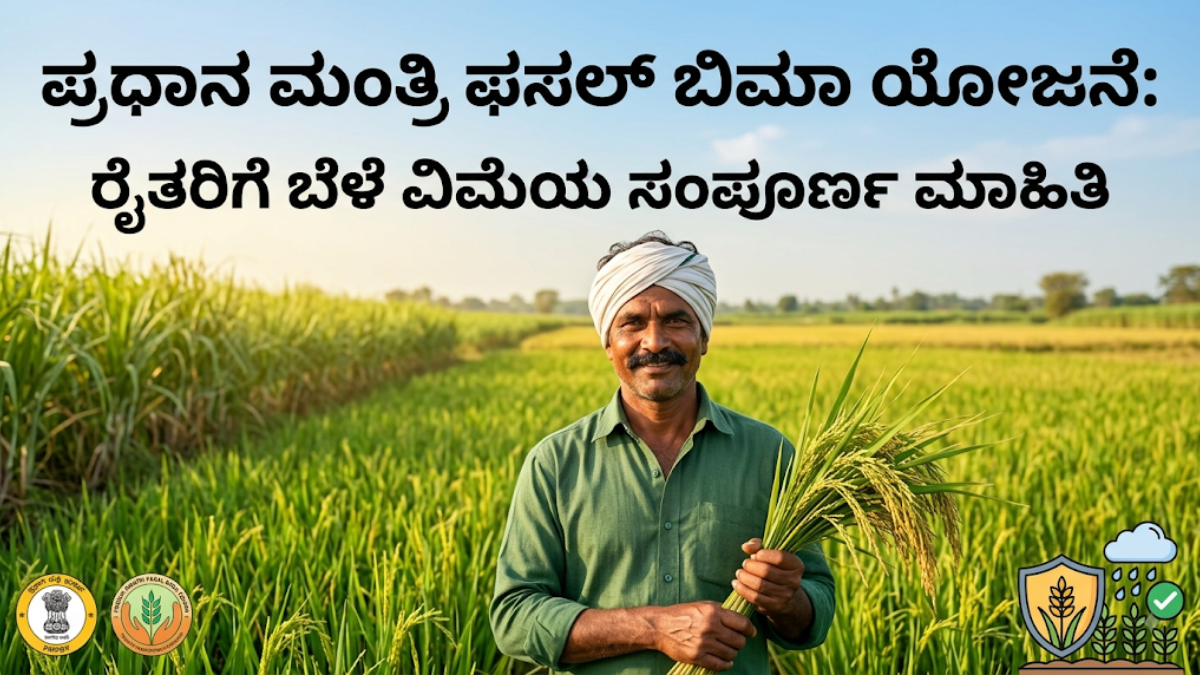
Pradhan Mantri Fasal Bima Yojana (PMFBY) is a crop insurance scheme introduced by the Government of India to provide financial protection to farmers against crop losses caused by natural calamities, pests, and diseases. Agriculture is highly dependent on weather conditions, making farmers vulnerable to droughts, floods, cyclones, excessive rainfall, hailstorms, and other unexpected events. PMFBY aims to reduce the financial burden created by such risks and provide farmers with greater economic stability.
What Is Pradhan Mantri Fasal Bima Yojana?
The Pradhan Mantri Fasal Bima Yojana was launched in 2016 as a nationwide crop insurance programme. Its primary purpose is to provide affordable crop insurance and compensation when insured crops suffer damage from covered risks. The scheme covers food crops, oilseeds, annual commercial crops, and annual horticultural crops, subject to the applicable guidelines and state-level implementation.
Farmers generally pay only a limited share of the insurance premium, while the remaining eligible premium is supported through government assistance. This makes crop insurance more affordable for cultivators, particularly small and marginal farmers.
Main Objectives of PMFBY
The scheme has several important objectives. First, it seeks to provide financial support to farmers when their crops are damaged. Second, it encourages farmers to continue agricultural activities even after serious crop losses. Third, it helps stabilize farm income and reduces dependence on high-cost borrowing after a bad harvest. Finally, PMFBY encourages the adoption of modern agricultural practices and contributes to the long-term development of the farming sector.
Coverage Provided Under the Scheme
PMFBY can provide protection against several crop-related risks, depending on the notified crop, area, and applicable insurance terms. These may include drought, floods, cyclones, storms, hailstorms, pests, and diseases. Certain localized risks and post-harvest losses may also be covered under specified conditions.
The actual coverage is not identical everywhere. State governments notify the crops and areas covered under the scheme, while insurance companies implement the approved insurance arrangements. Therefore, farmers should check the current notification applicable to their location and crop before purchasing or relying on coverage.
Farmer Premium
One of the significant features of PMFBY is the subsidized premium structure. Farmers generally contribute a fixed maximum share of the premium for eligible crops, while the balance is shared by the government according to the scheme’s provisions. The applicable farmer contribution can differ by crop category.
This structure allows farmers to obtain insurance protection without paying the entire actuarial premium themselves.
How Farmers Can Benefit
Farmers who insure their notified crops may receive compensation when an insured crop suffers a covered loss. Claims are assessed according to the prescribed procedures, including crop-loss assessment and the use of available technology and field-level information. When a claim is approved, the eligible compensation is transferred according to the applicable process.
Farmers should provide accurate information while enrolling and keep relevant records, such as insurance details, land or cultivation documents, and bank account information.
Importance of PMFBY
Crop insurance plays an important role in protecting farmers from agricultural uncertainty. A single natural disaster can destroy months of investment in seeds, fertilizers, labour, irrigation, and other inputs. Insurance compensation can help farmers recover part of the financial loss and prepare for the next agricultural season.
PMFBY therefore represents an important safety mechanism for India’s farming community. Its effectiveness depends on accurate enrollment, transparent claim assessment, timely communication, and efficient settlement of eligible claims.
Conclusion
Pradhan Mantri Fasal Bima Yojana is an important government initiative designed to protect farmers from financial losses caused by specified crop-related risks. By making crop insurance more affordable and providing a framework for compensation, the scheme seeks to strengthen agricultural resilience and support farmers’ incomes. Farmers should understand the crops, risks, premium, deadlines, and claim procedures applicable to their area and obtain information from official government or authorized insurance channels before enrollment.