Introduction
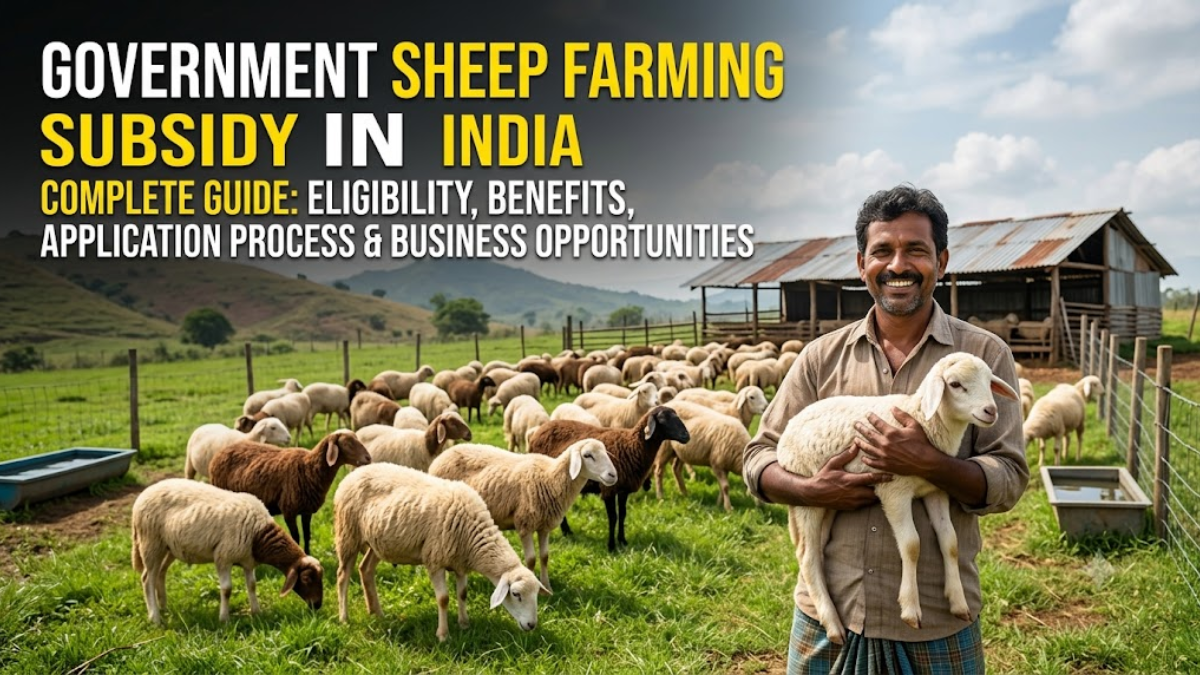
Sheep farming has emerged as one of the fastest-growing livestock businesses in India. With rising demand for mutton, wool, and breeding animals, many farmers and rural entrepreneurs are turning to sheep rearing as a reliable source of income. Compared to several other agricultural businesses, sheep farming requires relatively moderate investment and can provide continuous earnings through the sale of lambs, meat, manure, and wool.
Recognizing the importance of livestock in strengthening the rural economy, both the Central Government and various State Governments have introduced different financial assistance programs for sheep farmers. These initiatives are generally implemented through the Animal Husbandry Department, State Livestock Development Boards, cooperative institutions, and banks that provide agricultural finance.
The primary objective of these schemes is to encourage self-employment, improve the income of small and marginal farmers, support women and youth in rural areas, and promote scientific livestock management. Depending on the applicable scheme and state guidelines, eligible applicants may receive subsidies for purchasing sheep, constructing livestock sheds, obtaining bank loans, accessing veterinary services, participating in training programs, and improving overall farm management.
Since every state has its own policies and budget allocations, the amount of financial assistance and eligibility conditions may differ. Therefore, prospective applicants should always verify the latest official notifications before submitting an application.
Importance of Sheep Farming in India
India has one of the world’s largest livestock populations, and sheep farming plays an essential role in supporting rural livelihoods. Millions of families, especially in semi-arid and dry regions, depend on sheep rearing as an additional source of income.
Unlike many other farming activities, sheep can adapt to various climatic conditions. They can graze on natural pastures and agricultural residues, making them suitable for areas where crop cultivation alone may not generate sufficient income.
Sheep farming contributes to:
- Rural employment generation
- Meat production
- Wool production
- Organic manure for agriculture
- Income diversification
- Sustainable livestock development
As consumer demand for quality mutton continues to increase across India, sheep farming offers attractive opportunities for new entrepreneurs as well as experienced livestock farmers.
Purpose of Government Sheep Farming Subsidy Schemes
Government assistance programs are designed to reduce the financial burden associated with establishing or expanding a sheep farm.
The major objectives include:
- Promoting livestock-based entrepreneurship
- Encouraging unemployed youth to start businesses
- Supporting small and marginal farmers
- Increasing sheep population through scientific breeding
- Improving rural household income
- Enhancing meat and wool production
- Promoting modern livestock management practices
- Reducing migration from rural areas by creating local employment opportunities
These schemes also help improve animal health through vaccination programs, veterinary support, disease prevention measures, and farmer awareness initiatives.
Benefits Available Under Sheep Farming Schemes
The assistance provided varies depending on the scheme and implementing authority. Eligible beneficiaries may receive one or more of the following benefits.
1. Financial Assistance for Purchasing Sheep
Many government programs provide financial support to purchase breeding sheep, rams, or complete livestock units.
This helps new farmers begin their business without bearing the full investment cost.
2. Subsidy for Livestock Shed Construction
A proper shelter is essential for maintaining healthy animals.
Some schemes offer financial assistance for constructing:
- Sheep sheds
- Feeding areas
- Water facilities
- Storage rooms
- Fencing
The subsidy amount depends on project cost and applicable government guidelines.
3. Bank Loan Support
Several sheep farming projects are financed through banks.
Under eligible schemes:
- Farmers may receive agricultural loans.
- Government subsidy may reduce the repayment burden.
- Interest concessions may be available under selected programs.
Loan approval remains subject to the bank’s assessment and applicable rules.
4. Veterinary Healthcare
Healthy livestock is the foundation of a successful sheep farm.
Government departments often provide:
- Regular health check-ups
- Vaccination programs
- Disease prevention services
- Deworming
- Emergency veterinary treatment
- Artificial breeding support where applicable
5. Farmer Training
Training programs help new entrepreneurs learn scientific sheep management practices.
Topics generally include:
- Breed selection
- Feeding techniques
- Disease management
- Housing design
- Marketing
- Financial planning
- Record keeping
- Breeding management
6. Technical Guidance
Livestock experts may provide practical advice regarding:
- Farm planning
- Nutrition
- Disease control
- Breeding improvement
- Productivity enhancement
- Farm expansion
Who Can Apply?
Although eligibility differs across schemes, applicants generally need to satisfy certain conditions.
Typical eligibility requirements include:
- Indian citizenship
- Permanent residence in the concerned state
- Minimum age of 18 years
- Farmer, livestock owner, or rural entrepreneur
- Compliance with income criteria, if applicable
- Ability to provide required documents
- Availability of land or suitable space for livestock, where required
Some schemes may also reserve benefits for:
- Scheduled Castes
- Scheduled Tribes
- Women entrepreneurs
- Self Help Groups
- Farmer Producer Organizations
- Persons with disabilities
- Unemployed youth
Applicants should carefully read the scheme guidelines before applying.
Documents Required
The exact documentation varies according to the scheme.
Commonly required documents include:
- Aadhaar Card
- Identity proof
- Residence certificate
- Income certificate
- Caste certificate (if applicable)
- Passport-size photographs
- Bank account details
- Bank passbook
- Mobile number
- Land ownership or lease documents (where applicable)
- Project report (for bank-financed schemes)
Applicants may also need to submit declarations or affidavits depending on state regulations.
How to Apply for a Sheep Farming Subsidy
The application procedure may vary across states, but the general process is similar.
Step 1: Visit the Animal Husbandry Department
Contact the nearest District Animal Husbandry Office or Block Veterinary Office.
Officials can provide information about active schemes available in your district.
Step 2: Obtain the Application Form
Collect the prescribed application form or download it from the official government portal if online applications are available.
Step 3: Prepare the Required Documents
Arrange all necessary documents before submission.
Ensure that photocopies are clear and self-attested if required.
Step 4: Submit the Application
Fill out the form carefully.
Attach all supporting documents and submit them to the designated authority.
Incomplete applications may be rejected.
Step 5: Verification Process
Officials may verify:
- Personal details
- Eligibility
- Documents
- Land availability
- Proposed sheep shed
- Project feasibility
In some cases, a field inspection may also be conducted.
Step 6: Approval
After successful verification, the department processes the application according to available funds and applicable guidelines.
Eligible applicants are informed about approval through the concerned office or bank.
Step 7: Release of Benefits
Financial assistance, subsidy, or loan support is provided according to the approved project and government rules.
The release schedule may vary depending on the scheme.
Choosing the Right Sheep Breed
Selecting a suitable breed is one of the most important decisions for profitable farming.
Popular breeds in India include:
- Deccani
- Nellore
- Marwari
- Madras Red
- Muzaffarnagari
- Bellary
- Mecheri
- Mandya
- Gaddi
- Jaisalmeri
The ideal breed depends on local climate, market demand, disease resistance, and farming objectives.
Basic Infrastructure Needed
A successful sheep farm requires proper planning.
Essential infrastructure includes:
- Clean housing
- Adequate ventilation
- Drinking water
- Feeding equipment
- Fencing
- Grazing area
- Medicine storage
- Isolation pen for sick animals
Maintaining hygiene helps reduce disease outbreaks and improve productivity.
Income Opportunities in Sheep Farming
Sheep farming provides income from multiple sources.
These include:
Sale of Lambs
Healthy lambs can be sold for breeding or meat production.
Meat Production
Growing demand for mutton creates strong market opportunities throughout the year.
Wool Production
Certain sheep breeds produce wool that can generate additional income.
Organic Manure
Sheep manure is widely used as organic fertilizer and has commercial value.
Breeding Services
Experienced farmers may also earn income by selling breeding stock.
Challenges in Sheep Farming
Like any business, sheep farming also involves certain risks.
Common challenges include:
- Disease outbreaks
- Feed shortages
- Climate-related stress
- Market price fluctuations
- Limited grazing land
- Poor management practices
- High transportation costs
Proper planning and veterinary support can help reduce these risks.
Tips for Successful Sheep Farming
To improve productivity and profitability:
- Purchase healthy animals from reliable sources.
- Maintain proper vaccination schedules.
- Provide balanced nutrition.
- Ensure clean drinking water.
- Keep sheds clean and dry.
- Monitor animal health regularly.
- Maintain breeding records.
- Consult veterinary experts whenever necessary.
- Insure livestock if insurance options are available.
- Follow scientific management practices.
Important Points to Remember
Before applying for any subsidy scheme:
- Confirm whether the scheme is currently active.
- Read all eligibility conditions carefully.
- Verify the latest subsidy amount.
- Understand the project requirements.
- Check whether bank financing is mandatory.
- Submit genuine documents only.
- Keep copies of all submitted papers.
- Follow instructions issued by the concerned department.
Avoid relying on unverified information circulated through social media or messaging platforms.
Frequently Asked Questions (FAQs)
Is sheep farming profitable?
Yes. Sheep farming can be profitable when animals are managed scientifically and marketed effectively.
Can new farmers apply?
Many schemes encourage first-time entrepreneurs, subject to eligibility and project approval.
Is a bank loan compulsory?
Not always. Some schemes involve bank financing, while others may provide direct assistance. The requirement depends on the specific government program.
Is training necessary?
Certain schemes include mandatory training, while others provide optional technical guidance to beneficiaries.
Can women apply?
Yes. Many livestock development programs encourage women entrepreneurs and Self Help Groups to participate.
Conclusion
Sheep farming continues to be one of the most promising livestock enterprises for farmers, rural youth, and aspiring entrepreneurs in India. With increasing demand for sheep meat and improved government focus on livestock development, the sector offers considerable opportunities for sustainable income generation.
Government subsidy programs can significantly reduce the initial financial burden by supporting the purchase of sheep, construction of livestock sheds, access to institutional finance, veterinary healthcare, and technical training. However, the availability of benefits, subsidy percentage, beneficiary selection process, and project requirements differ from one state and scheme to another.
Prospective applicants should always verify the latest information through the official Animal Husbandry Department, district livestock offices, or authorized government portals before investing in a project. Careful planning, scientific management, and compliance with official guidelines can help transform sheep farming into a stable and profitable long-term business.