Introduction
Bima Sakhi Yojana 2026 is an important initiative aimed at promoting financial inclusion, insurance awareness, and women’s empowerment across India. The scheme focuses on encouraging women to become active participants in the insurance sector while helping families understand the importance of financial security. Through this program, women receive training, guidance, and opportunities to work as insurance facilitators within their communities.
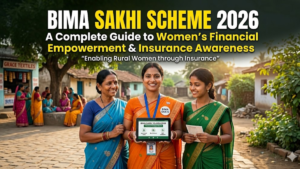
In a country where millions of families remain underinsured or unaware of the benefits of life insurance, health insurance, and financial planning, Bima Sakhi Yojana serves as a bridge between insurance providers and the public. The scheme not only creates employment opportunities for women but also strengthens financial literacy at the grassroots level.
As India moves toward greater financial inclusion and economic development in 2026, Bima Sakhi Yojana has become a significant step toward ensuring that women contribute to and benefit from the country’s growing financial ecosystem.
What is Bima Sakhi Yojana?
Bima Sakhi Yojana is a women-centered initiative designed to train and support women in spreading awareness about insurance and financial protection. The term “Bima” means insurance, while “Sakhi” means friend or companion. Thus, a Bima Sakhi acts as a trusted guide who helps people understand insurance products and financial security solutions.
The scheme aims to create a network of trained women who can educate families about the importance of insurance coverage, savings, risk management, and long-term financial planning.
These women become local representatives who help bridge the information gap between insurance institutions and rural or urban communities.
Objectives of Bima Sakhi Yojana 2026
The primary objectives of the scheme include:
1. Women Empowerment
The program provides women with training, employment opportunities, and a source of income. By becoming Bima Sakhis, women gain confidence and financial independence.
2. Financial Inclusion
Many families in India still lack access to insurance services. The scheme helps bring insurance awareness to underserved populations.
3. Insurance Awareness
The initiative educates citizens about various types of insurance, including life, health, accident, and savings-linked insurance products.
4. Community Development
Bima Sakhis work within their own communities, making financial education more accessible and trustworthy.
5. Employment Generation
The program creates opportunities for women to earn commissions and incentives while serving society.
6. Long-Term Financial Security
The scheme encourages households to adopt financial protection measures that safeguard their future.
Importance of Insurance in Modern India
Insurance plays a critical role in protecting families against unexpected financial losses. Medical emergencies, accidents, natural disasters, and the death of a family breadwinner can severely impact household finances.
Despite its importance, insurance penetration in many regions remains low. Lack of awareness, misinformation, and limited accessibility are among the major reasons.
Bima Sakhi Yojana addresses these challenges by:
- Explaining insurance concepts in simple language.
- Building trust within communities.
- Providing guidance on suitable insurance products.
- Helping families understand long-term benefits.
The scheme contributes to creating a financially resilient society where individuals are better prepared for uncertainties.
Key Features of Bima Sakhi Yojana 2026
The scheme includes several important features designed to benefit both women and communities.
Training Programs
Selected women receive professional training in:
- Insurance basics
- Financial literacy
- Customer communication
- Digital tools
- Policy servicing
- Ethical practices
This training equips them with the knowledge necessary to assist families effectively.
Monthly Support and Incentives
Depending on program guidelines, eligible participants may receive stipends, performance-based incentives, commissions, or other forms of financial support.
Skill Development
Participants gain valuable skills such as:
- Public speaking
- Leadership
- Marketing
- Communication
- Financial counseling
These skills improve their employability and personal development.
Community Outreach
Bima Sakhis organize awareness campaigns, meetings, and educational sessions within villages, towns, and urban neighborhoods.
Career Opportunities
The scheme can serve as a pathway to long-term careers in the insurance and financial services industry.
Eligibility Criteria
Although eligibility requirements may vary according to official guidelines, typical eligibility conditions may include:
Gender
Applicants should generally be women.
Age
Applicants must fall within the prescribed age range specified by the implementing authority.
Educational Qualification
Basic educational qualifications may be required to ensure effective communication and understanding of insurance concepts.
Residency
Applicants should be residents of the area where they intend to work.
Interest in Community Service
Women interested in financial education and public outreach are usually preferred.
Communication Skills
Basic communication abilities are important for interacting with community members.
Role and Responsibilities of a Bima Sakhi
A Bima Sakhi performs multiple responsibilities within her community.
Educating Families
She explains the importance of insurance and financial planning.
Conducting Awareness Sessions
She organizes workshops, meetings, and discussions.
Assisting with Documentation
She helps individuals understand application processes and documentation requirements.
Building Trust
Since she belongs to the local community, people often find it easier to approach her for guidance.
Supporting Financial Literacy
She promotes responsible financial behavior and encourages savings habits.
Encouraging Insurance Coverage
She helps families recognize risks and choose appropriate protection plans.
Benefits of Bima Sakhi Yojana for Women
The scheme offers numerous advantages to participating women.
Economic Independence
Women gain opportunities to earn income and support their families.
Professional Growth
Training and field experience improve career prospects.
Confidence Building
Regular interaction with communities enhances leadership abilities.
Social Recognition
Bima Sakhis become respected members of society who contribute to community welfare.
Networking Opportunities
Participants connect with professionals, institutions, and community leaders.
Digital Empowerment
Training often includes the use of digital platforms and technology.
Benefits for Communities
The impact of the scheme extends beyond individual participants.
Better Awareness
Families become more informed about financial protection.
Increased Insurance Coverage
More households gain access to insurance services.
Reduced Financial Vulnerability
Insurance helps families manage unexpected crises.
Stronger Financial Planning
People learn the importance of savings and future planning.
Community Development
Financially secure households contribute to overall social stability.
Training Structure Under Bima Sakhi Yojana
Training is one of the most important components of the program.
Insurance Fundamentals
Participants learn about:
- Life insurance
- Health insurance
- Accident insurance
- Savings products
Customer Engagement
Women are trained to interact professionally with customers.
Financial Education
Training includes budgeting, savings, investment basics, and risk management.
Technology Usage
Participants learn to use digital tools for record keeping and communication.
Practical Learning
Field visits and community interactions provide real-world experience.
Challenges Addressed by the Scheme
Bima Sakhi Yojana addresses several longstanding challenges.
Lack of Awareness
Many people do not understand insurance products.
Gender Inequality
Women often face barriers to economic participation.
Rural Accessibility
Financial services are sometimes difficult to access in remote areas.
Financial Illiteracy
Many households lack basic financial knowledge.
Trust Deficit
People may hesitate to engage with financial institutions due to lack of familiarity.
The scheme directly tackles these issues through local outreach and education.
Economic Impact of Bima Sakhi Yojana
The scheme contributes to economic development in several ways.
Increased Insurance Penetration
Higher insurance adoption improves financial resilience.
Employment Creation
Women gain income-generating opportunities.
Financial Inclusion
More citizens become part of the formal financial system.
Community Stability
Financially protected households are better able to recover from crises.
Support for National Development
Greater financial literacy supports sustainable economic growth.
Digital Transformation and Bima Sakhi Yojana
Technology plays a crucial role in modern financial services.
Bima Sakhis are increasingly trained to use:
- Mobile applications
- Online registration systems
- Digital payment platforms
- Customer management tools
- Virtual communication channels
Digital integration improves efficiency and expands outreach.
Women Empowerment Through Financial Leadership
One of the most remarkable aspects of the scheme is its focus on women as financial leaders.
Historically, women have often been excluded from financial decision-making processes. Bima Sakhi Yojana changes this narrative by positioning women as educators, advisors, and community influencers.
As women gain knowledge and financial independence, they become role models for future generations.
Their participation contributes to:
- Gender equality
- Economic development
- Family welfare
- Community leadership
Future Prospects of Bima Sakhi Yojana
The future of the scheme appears promising.
Potential developments may include:
Expanded Training Programs
Advanced financial education and certification opportunities.
Greater Digital Integration
Use of mobile technologies and artificial intelligence tools.
Wider Geographic Coverage
Expansion into more rural and urban regions.
Enhanced Financial Products
Broader access to insurance and financial planning solutions.
Stronger Community Networks
Creation of large networks of trained women professionals.
These developments can further strengthen the scheme’s impact.
Success Factors for Effective Implementation
To maximize effectiveness, the following factors are important:
- Quality training programs.
- Continuous support for participants.
- Strong community engagement.
- Transparent processes.
- Effective monitoring and evaluation.
- Access to digital infrastructure.
- Collaboration between stakeholders.
These elements ensure sustainable and long-lasting results.
Conclusion
Bima Sakhi Yojana 2026 represents a powerful combination of women’s empowerment, financial inclusion, and social development. By training women to become insurance awareness ambassadors, the scheme creates employment opportunities while helping families secure their financial futures.
The initiative demonstrates how empowering women can generate positive change across entire communities. Through education, outreach, and financial literacy, Bima Sakhis play a vital role in building a more informed, protected, and economically resilient society.
As India continues its journey toward inclusive growth, Bima Sakhi Yojana stands as an example of how targeted social programs can create meaningful opportunities, strengthen financial security, and promote sustainable development for future generations.