Introduction
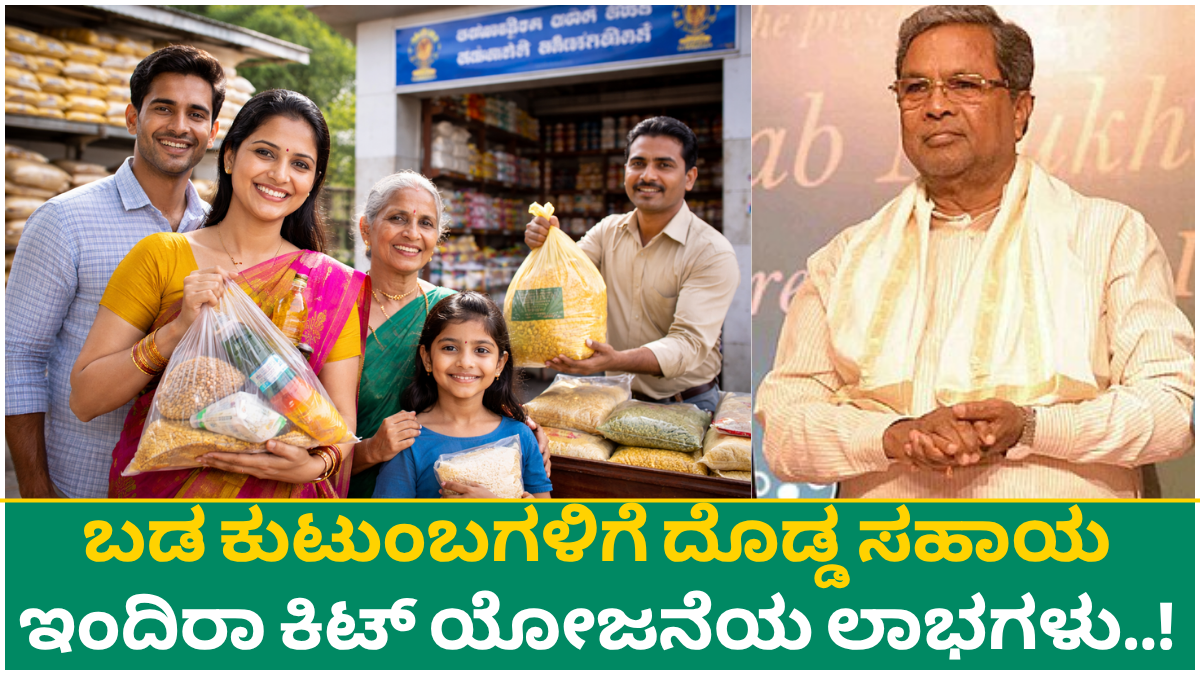
In recent years, the Government of Karnataka has taken several steps to improve the living conditions of economically weaker sections of society. One of the most impactful initiatives among these is the Indira Kit Scheme. This program has been designed to provide essential food items and household commodities to eligible ration card holders across the state.

The Indira Kit scheme is not just a food distribution program; it represents a shift toward providing balanced nutrition and financial support to low-income families. Instead of offering only basic grains like rice, the government has introduced a package that includes a variety of daily-use items. This approach ensures that beneficiaries receive more comprehensive support for their everyday needs.
The scheme is closely linked to the state’s Public Distribution System (PDS), which has been a backbone of food security programs in India. By enhancing the existing system, the Indira Kit aims to improve both efficiency and effectiveness in delivering benefits.
This article explains the scheme in detail, including its background, objectives, eligibility requirements, contents, benefits, and its role in improving the lives of people in Karnataka.
Origin and Development of the Scheme
The Indira Kit scheme was introduced as an improvement to earlier food distribution programs in Karnataka. Previously, under schemes like Anna Bhagya, eligible families were provided with a fixed quantity of rice every month. While this helped address hunger, it did not fully meet the nutritional needs of households.
To overcome this limitation, the government decided to diversify the type of support provided. Instead of giving only rice, a portion of the allocation was converted into a package of multiple essential items. This led to the creation of the Indira Kit.
The main idea behind this transformation was to ensure that families receive not just sufficient calories but also essential nutrients. It also aimed to reduce misuse of food grains and improve the overall impact of welfare programs.
Objectives of the Indira Kit Scheme
The Indira Kit scheme has several important goals that focus on both economic and social welfare. These objectives include:
- Providing consistent food support to economically weaker families
- Improving the nutritional quality of food available to beneficiaries
- Reducing the burden of rising food prices
- Supporting vulnerable sections of society such as women, elderly individuals, and disabled persons
- Enhancing transparency and accountability in food distribution
By addressing these areas, the scheme contributes to overall social development and poverty reduction.
Eligibility Criteria
The benefits of the Indira Kit scheme are targeted toward specific groups of people who need financial and food support.
Eligible Beneficiaries
To receive the Indira Kit, a person must meet the following conditions:
- Must be a permanent resident of Karnataka
- Must possess a valid ration card issued by the state government
- Should belong to one of the following categories:
- Below Poverty Line (BPL)
- Antyodaya Anna Yojana (AAY)
- Must fall within the income limits specified by the government
Priority Groups
Certain groups are given special priority under the scheme, such as:
- Women-led households
- Senior citizens
- Widows
- Persons with disabilities
These groups are considered more vulnerable and are given preference in receiving benefits.
Ineligible Categories
The following individuals are usually not eligible:
- Above Poverty Line (APL) ration card holders
- Individuals with higher income levels
- Families already receiving similar benefits under other schemes
Contents of the Indira Kit
One of the main features of the Indira Kit scheme is the variety of items included in the package. These items are selected to meet daily household needs.
Typical Items Included
The Indira Kit generally contains:
- Pulses such as toor dal or chickpeas
- Cooking oil
- Sugar
- Salt
- Other essential grocery items
In some cases, additional items may also be provided depending on availability and government decisions. These may include:
- Wheat flour
- Tea powder
- Spices
Occasionally, hygiene-related items such as soap or detergent may also be included to improve overall living standards.
The exact contents and quantity may vary, but the aim is to provide a balanced mix of essential commodities.
Distribution System
The Indira Kit is distributed through a well-organized system to ensure that it reaches the intended beneficiaries.
How Distribution Works
- Identification of Beneficiaries
The government uses ration card databases to identify eligible families. - Information Sharing
Beneficiaries are informed through SMS alerts, announcements, or local authorities. - Collection Process
Kits are distributed through fair price shops (ration shops) located in different areas. - Verification
Beneficiaries must present their ration card and Aadhaar card for identity verification. - Confirmation
Receipt of the kit is confirmed through signature or biometric authentication.
This system ensures transparency and reduces the chances of duplication or fraud.
Importance of the Scheme
The Indira Kit scheme plays a significant role in improving the quality of life for many families.
Nutritional Benefits
By including pulses and other food items, the scheme ensures a more balanced diet compared to providing only rice. This helps improve health and reduce malnutrition.
Financial Support
The cost of essential groceries can be a major burden for low-income families. The Indira Kit reduces this burden by providing necessary items free of cost or at subsidized rates.
Protection Against Inflation
With increasing food prices, many families struggle to afford basic necessities. The scheme acts as a safeguard against inflation.
Social Welfare
The scheme supports vulnerable groups and contributes to social equality by ensuring that basic needs are met for everyone.
Impact on Beneficiaries
The Indira Kit scheme has made a noticeable difference in the lives of people across Karnataka.
- It has improved food security for millions of families
- It has helped reduce hunger and poverty
- It has supported both rural and urban communities
- It has strengthened trust in government welfare programs
For many families, the kit serves as a reliable source of essential goods every month.
Challenges Faced by the Scheme
While the scheme has many advantages, there are also some challenges that need attention.
Supply Issues
In some areas, there may be delays in distribution or shortages of certain items.
Limited Coverage
The scheme mainly benefits BPL and AAY families, leaving out middle-income groups who may also need support.
Awareness Problems
Not all eligible beneficiaries are fully aware of the scheme or how to access it.
Quality Control
Maintaining consistent quality of items across all regions can be difficult.
Government Efforts for Improvement
The Karnataka government is actively working to improve the scheme in several ways:
- Using digital systems to track distribution
- Increasing the variety and nutritional value of items
- Ensuring timely supply to all regions
- Supporting local farmers by sourcing locally produced goods
These efforts aim to make the scheme more effective and sustainable.
Role of Public Distribution System (PDS)
The Indira Kit scheme operates under the Public Distribution System, which is responsible for delivering essential commodities to the public.
The PDS plays a crucial role by:
- Identifying eligible beneficiaries
- Managing distribution through ration shops
- Ensuring transparency and accountability
The integration of the Indira Kit with the PDS helps in smooth implementation and monitoring.
How to Check Eligibility and Status
Beneficiaries can check their eligibility and status through several methods:
- Visiting the nearest ration shop
- Contacting local government offices
- Using online portals provided by the Food and Civil Supplies Department
Keeping personal details updated in the ration card database is important to avoid issues in receiving benefits.
Future Scope of the Scheme
The Indira Kit scheme has strong potential for expansion and improvement in the coming years.
Possible developments include:
- Addition of more nutritious food items
- Better digital tracking systems
- Expansion to cover more beneficiaries
- Improved supply chain management
With continuous improvements, the scheme can become even more beneficial for society.
Conclusion
The Indira Kit scheme is a significant welfare initiative that aims to support ration card holders in Karnataka by providing essential food items and reducing financial stress. It represents a progressive step toward improving food security and ensuring a better quality of life for economically weaker sections.
By offering a variety of essential commodities, the scheme goes beyond traditional food distribution methods and focuses on overall well-being. Although there are some challenges, ongoing improvements and government efforts are helping to make the scheme more effective.
For millions of families, the Indira Kit is more than just a collection of goods—it is a vital support system that ensures dignity, stability, and hope for a better future.