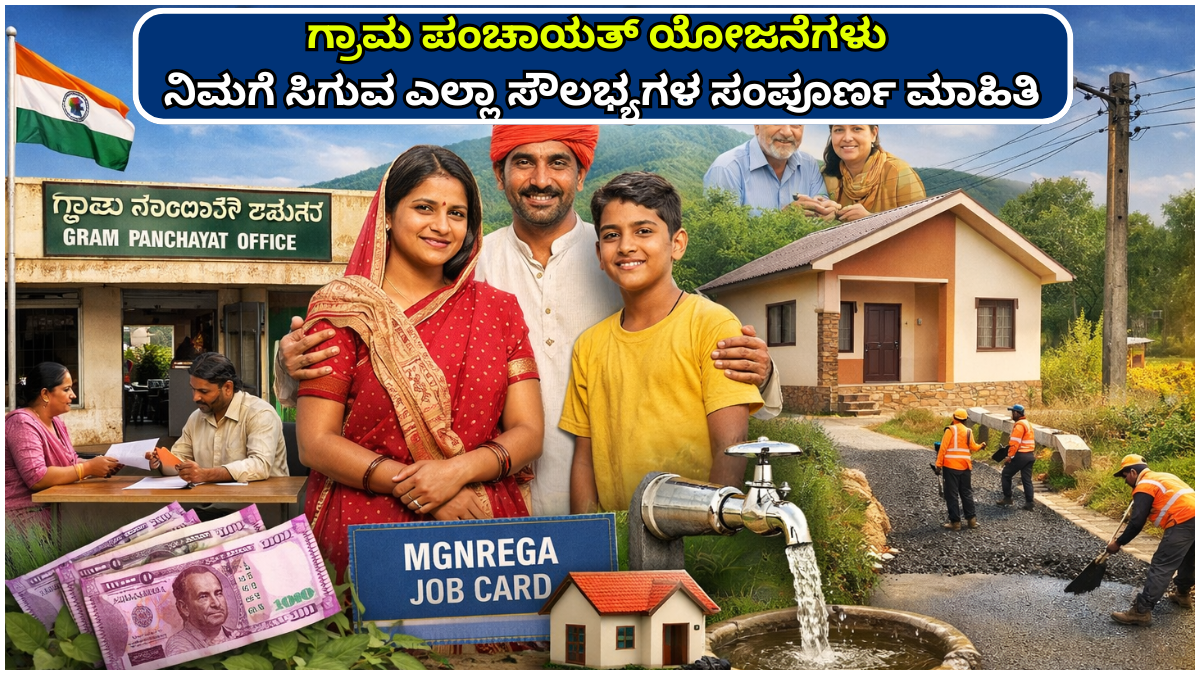
A Gram Panchayat office in a village is not just a place to pay taxes or obtain certificates. It is the foundation of rural self-governance and a powerful local institution that connects people to a wide range of government welfare programs. Inspired by the vision of “Gram Swaraj” (village self-rule), Panchayats play a key role in improving the quality of life in rural areas.
From birth to old age, from farming to housing, and from employment to sanitation, numerous schemes are implemented through the Gram Panchayat. However, due to lack of awareness, many eligible families miss out on benefits meant for them. This comprehensive guide explains what facilities and schemes are available through your Gram Panchayat and how you can apply for them.
1. Gram Panchayat: Your Village Government
The Gram Panchayat is the lowest tier of local self-government in rural India. It functions under the constitutional framework established by the 73rd Constitutional Amendment and serves as the grassroots administrative body responsible for local development and public welfare.
It acts as the bridge between villagers and higher levels of government, ensuring that schemes and benefits reach the people who need them the most.
Key Responsibilities of a Gram Panchayat
The Panchayat is responsible for planning, implementing, and maintaining essential services and development programs in the village.
1.1 Safe Drinking Water
One of the most important responsibilities is ensuring access to clean and safe drinking water. Under the Jal Jeevan Mission, efforts are made to provide functional household tap connections to every rural home. The Panchayat helps identify beneficiaries, supervise water supply systems, and maintain pipelines and overhead tanks.
1.2 Basic Infrastructure
The Gram Panchayat oversees the development and maintenance of basic infrastructure such as:
- Village roads
- Drainage systems
- Street lighting
- Public buildings
- Community halls
Funds for these works may come from central and state schemes or local grants. The Panchayat also prioritizes works based on the needs expressed in Gram Sabha meetings.
1.3 Health and Sanitation
Maintaining village cleanliness is a core duty. This includes:
- Solid waste management
- Drain cleaning
- Public sanitation facilities
- Awareness campaigns on hygiene
Under the Swachh Bharat Mission, many households receive support for constructing toilets, and the Panchayat monitors implementation.
1.4 Birth and Death Registration
The Gram Panchayat office often facilitates the registration of births and deaths. These records are essential for obtaining:
- School admissions
- Aadhaar enrollment
- Government scheme benefits
- Pension claims
- Property transfers
Prompt registration ensures that families can access future services without complications.
1.5 Education and Primary Health Support
While schools and health centers may be managed by other departments, the Panchayat supports their functioning by:
- Ensuring proper infrastructure
- Monitoring attendance
- Supporting vaccination drives
- Coordinating public health awareness programs
2. Employment Guarantee: Financial Security for Rural Families
Unemployment in rural areas often forces families to migrate to cities. To address this issue, the government introduced the Mahatma Gandhi National Rural Employment Guarantee Act (MGNREGA).
This scheme guarantees 100 days of wage employment per year to rural households willing to do unskilled manual work.
2.1 What Kind of Work Is Provided?
MGNREGA works typically include:
- Pond desilting
- Water conservation projects
- Road repair
- Land development
- Plantation work
- Canal cleaning
These projects not only provide employment but also create durable rural assets.
2.2 Who Can Apply?
Any adult member (18 years or older) of a rural household can apply. The household must:
- Register with the Gram Panchayat
- Obtain a Job Card
- Submit a written or verbal request for work
If work is not provided within 15 days of request, the applicant may be eligible for unemployment allowance.
2.3 Payment Process
Wages are directly transferred to the worker’s bank account through Direct Benefit Transfer (DBT), ensuring transparency and minimizing delays.
3. Housing Schemes: A Roof for Every Family
Many rural families lack safe and permanent housing. To address this, the government runs housing schemes such as the Pradhan Mantri Awas Yojana – Gramin.
3.1 Who Benefits?
The scheme primarily supports:
- Families without a pucca (permanent) house
- Households living in kutcha or dilapidated houses
- Economically weaker sections
Beneficiary lists are prepared based on socio-economic surveys and approved in Gram Sabha meetings.
3.2 What Assistance Is Provided?
Eligible families receive financial assistance in installments to build a permanent house. Additional benefits may include:
- Toilet construction support
- LPG connection
- Electricity connection
- Drinking water supply
Funds are transferred directly to the beneficiary’s bank account.
4. Agriculture and Farmer Support
Since agriculture is the backbone of rural livelihoods, several schemes support farmers through the Gram Panchayat.
4.1 Income Support for Farmers
Under the Pradhan Mantri Kisan Samman Nidhi, eligible farmers receive annual financial assistance in three installments directly into their bank accounts.
4.2 Irrigation and Water Conservation
Schemes focus on:
- Farm ponds
- Drip irrigation
- Water harvesting structures
- Minor irrigation projects
Many of these works are implemented through MGNREGA or state agricultural departments in coordination with the Panchayat.
4.3 Crop Insurance
Farmers can enroll in crop insurance schemes like the Pradhan Mantri Fasal Bima Yojana, which protects them against crop loss due to natural calamities, pests, or diseases.
5. Social Welfare Schemes
The Gram Panchayat plays a crucial role in identifying beneficiaries for various social security programs.
5.1 Old Age, Widow, and Disability Pensions
Eligible individuals can apply for monthly pensions through state or central social security schemes. The Panchayat helps in:
- Verifying documents
- Forwarding applications
- Updating beneficiary lists
5.2 Support for Women and Children
Programs for maternal health, nutrition, and child welfare are implemented through Anganwadi centers, often in coordination with Panchayats.
These include:
- Nutrition supplements
- Maternity benefits
- Immunization programs
6. Financial Inclusion and Public Distribution
6.1 Ration Cards and Food Security
Under the National Food Security Act, eligible households receive subsidized food grains. The Panchayat helps with:
- Ration card applications
- Corrections and updates
- Beneficiary verification
6.2 Self-Help Groups (SHGs)
Many Panchayats support women’s Self-Help Groups through schemes linked to the National Rural Livelihoods Mission. These groups receive financial assistance, skill training, and access to bank loans for income-generating activities.
7. How to Apply for Gram Panchayat Schemes
Understanding the application process is essential to accessing benefits.
Step 1: Visit the Gram Panchayat Office
Approach the Panchayat Development Officer (PDO) or Secretary and inquire about the specific scheme.
Step 2: Check Eligibility
Each scheme has specific eligibility criteria based on:
- Income level
- Caste category (if applicable)
- Landholding status
- Age
- Social category
Step 3: Submit Required Documents
Common documents include:
- Aadhaar card
- Ration card
- Bank passbook
- Income certificate
- Caste certificate (if applicable)
- Photographs
Step 4: Application Submission
Applications can be submitted:
- Directly at the Panchayat office
- Through online portals (where available)
- During special camps or Gram Sabha meetings
Step 5: Verification and Approval
The Panchayat verifies documents and forwards the application to higher authorities if required. Approved beneficiaries are notified, and funds are transferred directly to bank accounts.
8. Role of the Gram Sabha
The Gram Sabha, consisting of all registered voters in the village, plays a vital role in:
- Approving beneficiary lists
- Prioritizing development works
- Ensuring transparency
- Monitoring scheme implementation
Villagers are encouraged to attend Gram Sabha meetings to voice concerns and stay informed.
9. Why Awareness Matters
Despite the wide range of schemes, many families remain unaware of their rights and entitlements. Active participation in Gram Sabha meetings, regular visits to the Panchayat office, and staying informed through local announcements can ensure that no eligible family is left behind.
Conclusion
The Gram Panchayat is much more than a local administrative office. It is the cornerstone of rural development and democratic participation. From clean drinking water and housing to employment guarantees and farmer support, it serves as a gateway to numerous welfare schemes.
If you live in a rural area, your Gram Panchayat is your first point of contact for government assistance. Stay informed, participate actively, and make use of the opportunities available. With awareness and engagement, rural communities can fully realize the vision of self-reliant and empowered villages.