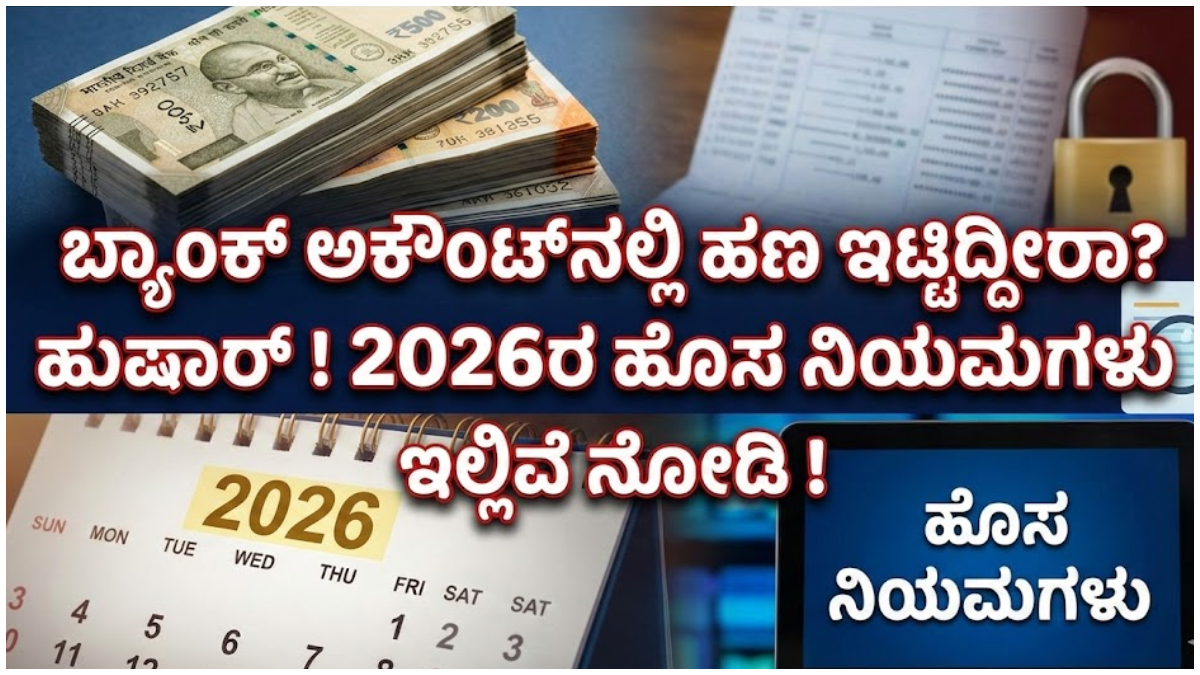
India’s digital transformation has changed how we save, spend, and move money. With UPI, net banking, and cashless payments becoming the norm, financial transparency is higher than ever. Alongside this digital revolution, the Income Tax Department has significantly strengthened its monitoring systems.
From 2026 onwards, your bank transactions are no longer just private dealings between you and your bank. Large deposits, frequent withdrawals, and unexplained cash movements can be automatically reported to tax authorities. Even a small mistake or lack of documentation can result in heavy tax demands, penalties, and in extreme cases, legal trouble.
Many people believe that simply keeping money in a bank account is safe and worry-free. While banks are secure, tax compliance is equally important. If you do not understand the reporting limits and documentation requirements, your own hard-earned money could be treated as “unexplained income,” leading to massive financial losses.
This article explains the most important banking and income tax rules applicable from 2026 in simple terms, so you can manage your finances confidently and legally.
1. Is There a Limit on How Much Money You Can Keep in a Bank Account?
One of the most common misconceptions is that there is a legal limit on how much money you can keep in your bank account. The truth is simple:
👉 There is no restriction on the amount of money you can maintain in your bank account.
You can keep ₹1 lakh, ₹10 lakh, or even ₹1 crore in your account without any legal problem—as long as the source of money is legitimate and properly documented.
However, what triggers scrutiny is not the balance, but the movement of cash and large-value transactions during a financial year (April 1 to March 31).
Reporting of High-Value Transactions (SFT – Specified Financial Transactions)
Banks and financial institutions are required to report certain transactions to the Income Tax Department under the Annual Information Statement (AIS) and Specified Financial Transaction (SFT) framework.
Key thresholds include:
- Savings Account:
Cash deposits exceeding ₹10 lakh in a financial year may be reported. - Current Account:
Cash deposits exceeding ₹50 lakh in a financial year may be reported. - Fixed Deposits (FDs):
Total deposits above ₹10 lakh in a year (across all FDs in a bank) may be reported.
This does not mean that depositing more than these limits is illegal. It only means that such transactions come under official reporting and can be questioned if they appear inconsistent with your declared income.
2. Cash Withdrawals and TDS: Can the Government Tax Your Own Money?
Many people are surprised to learn that tax can be deducted when they withdraw their own money from the bank. This is not exactly a “tax on your money,” but a Tax Deducted at Source (TDS) mechanism to discourage excessive cash usage and unreported transactions.
TDS on Cash Withdrawals (Section 194N)
From 2026 onwards, the rules continue to focus on large cash withdrawals:
- For ITR filers (people who file income tax returns regularly):
- Cash withdrawals exceeding ₹1 crore in a financial year may attract 2% TDS on the excess amount.
- For Non-filers (people who have not filed ITR for the previous years):
- Withdrawals above ₹20 lakh in a year may attract 2% TDS.
- Withdrawals above ₹1 crore may attract 5% TDS.
The logic behind this rule is simple:
The government wants to reduce large cash transactions and encourage digital payments, which are easier to track and audit.
The TDS deducted can be claimed as a refund or adjusted while filing your income tax return, provided your income is properly declared.
3. Unexplained Money and Section 68: How Penalties Can Go Up to 78%
One of the most feared provisions of the Income Tax Act is related to unexplained cash credits.
If you deposit a large amount of money into your bank account and cannot prove its source, the tax department may treat it as undisclosed income.
What Happens If You Can’t Explain the Source?
Under relevant tax provisions (including Section 68 and related penalty provisions):
- The amount may be taxed at a very high effective rate,
- Including basic tax, surcharge, and penalties,
- Which can go up to nearly 78% of the amount in extreme cases.
Example:
If you deposit ₹10 lakh in cash and cannot provide proper proof (such as salary slips, business income records, sale agreements, gift deeds, or agricultural income documents), the tax authorities may treat this as unexplained income.
In such a case, a large portion of the ₹10 lakh could be lost in tax and penalties.
How to Stay Safe:
- Always maintain documentation for:
- Property sales
- Business income
- Gifts received
- Loans
- Agricultural income
- Avoid depositing large amounts of cash without a clear paper trail.
4. The ₹2 Lakh Cash Transaction Rule: Why Cash Deals Can Cost You Dearly
To reduce black money and promote digital transactions, the government has imposed strict limits on cash dealings.
Cash Transaction Limit (Section 269ST)
You cannot receive ₹2 lakh or more in cash:
- From a single person in one day, or
- For a single transaction, or
- For transactions related to one event or occasion.
Example:
If you sell a used car for ₹3 lakh and accept the full amount in cash, this can attract a penalty equal to the amount received in cash. That means you may have to pay ₹3 lakh as penalty.
This rule applies to individuals, businesses, and professionals.
Safe Alternatives:
- Bank transfer
- UPI
- Cheque
- Demand Draft
Digital payments protect both the buyer and the seller and create a clear financial record.
5. PAN Requirement for Large Transactions and PAN–Aadhaar Linking
PAN for High-Value Banking Transactions
PAN (Permanent Account Number) is mandatory for:
- Cash deposits above ₹50,000 in a single transaction,
- Demand Drafts, Pay Orders, or banker’s cheques above ₹50,000,
- Opening certain types of bank accounts.
If PAN is not provided, banks may either refuse the transaction or report it to tax authorities.
PAN–Aadhaar Linking
If PAN is not linked with Aadhaar:
- PAN may become inoperative,
- Banking and financial transactions may be restricted,
- Refunds and tax processing can get delayed.
Ensuring PAN–Aadhaar linking helps avoid unnecessary account restrictions.
6. Tax on Interest Income: Savings Account and Fixed Deposit Rules
Interest earned from bank accounts is also taxable under income tax laws.
Tax Benefits Under Sections 80TTA and 80TTB
- For Individuals (non-senior citizens):
Deduction up to ₹10,000 per year on savings account interest under Section 80TTA. - For Senior Citizens:
Deduction up to ₹50,000 per year on interest from savings accounts and fixed deposits under Section 80TTB.
Any interest income above these limits must be added to your taxable income.
Many people forget to include bank interest in their income tax return, which can later lead to mismatches in AIS and tax notices.
7. How to Avoid Income Tax Notices Related to Bank Accounts
Here are some practical steps to stay on the right side of tax laws:
1. Prefer Digital Transactions
Use UPI, net banking, or cheques instead of cash wherever possible. Digital transactions automatically create proof of payment.
2. Maintain Proper Records
Keep copies of:
- Sale agreements
- Gift deeds
- Loan confirmations
- Business invoices
- Agricultural income proofs
Ideally, preserve financial records for at least 6–8 years.
3. File Your Income Tax Return Regularly
Even if your income is below the taxable limit, filing ITR:
- Builds a financial record,
- Makes it easier to explain bank transactions,
- Helps in claiming TDS refunds,
- Improves loan and visa approvals.
4. Match Bank Data with Your Tax Returns
Check your AIS (Annual Information Statement) and Form 26AS regularly. If there is a mismatch between your bank activity and declared income, clarify it early.
8. Why Financial Transparency Is Increasing in 2026
The Indian financial system is becoming more data-driven. Banks, mutual funds, digital wallets, and financial institutions share transaction data with tax authorities. Artificial intelligence and analytics tools are being used to identify unusual transaction patterns.
This does not mean honest taxpayers should panic. The goal is to:
- Reduce tax evasion
- Curb black money
- Encourage digital payments
- Increase transparency in the financial ecosystem
For law-abiding citizens, these changes actually make life easier by reducing harassment and improving the efficiency of tax administration.
Conclusion: Protect Your Hard-Earned Money by Staying Informed
The financial year 2026 marks a new phase of transparency and accountability in India’s banking and tax system. Large deposits, frequent cash withdrawals, and unexplained money movements can easily come under scrutiny.
The key to staying safe is not avoiding the system, but understanding and working within it:
- Use digital payments
- Keep documentation for every major transaction
- File your income tax returns on time
- Declare interest income properly
- Avoid large cash deals
Your money is safe in the bank—but only if your paperwork and compliance are equally strong.
What Should You Do Next?
- Have you ever received a notice from the Income Tax Department regarding your bank transactions?
- Are you unsure how much tax you might have to pay on your income or interest earnings?
If you want, you can share your situation (without personal details), and I can help you understand the basics of what it might mean and what steps you can consider next.
Disclaimer
This article is for general informational purposes only. Tax laws and regulations change over time and may vary based on individual circumstances. Before making large financial decisions or responding to tax notices, consult a qualified Chartered Accountant (CA) or professional tax advisor.