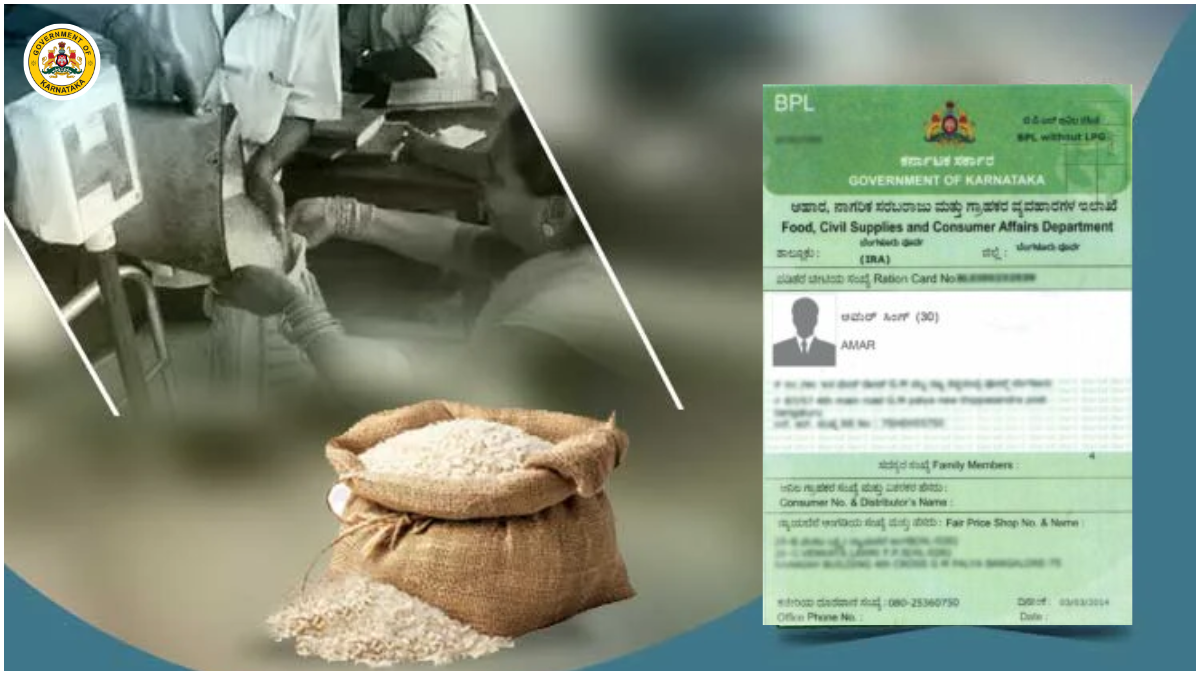
In India, the Ration Card is one of the most important government-issued documents. It plays a crucial role in providing food security to millions of families and acts as a gateway to several welfare schemes introduced by both the Central and State Governments. A ration card not only helps citizens purchase essential food items at subsidized rates but also serves as a valid proof of identity and address for many official purposes.
This article explains everything you need to know about ration cards in India, including their meaning, benefits, types, eligibility, required documents, and the complete procedure to apply for a new ration card both online and offline.
What is a Ration Card?
A Ration Card is an official document issued by the State Government under the Public Distribution System (PDS). It enables eligible households to purchase essential food commodities such as rice, wheat, sugar, pulses, and kerosene at subsidized prices through Fair Price Shops (FPS), commonly known as ration shops.
The ration card system is designed to ensure food security, especially for economically weaker sections of society. In addition to food grains, ration cards are often linked to other government benefits like LPG gas subsidies, pensions, scholarships, and housing schemes.
Importance of a Ration Card in India
The ration card is much more than just a food coupon. It has evolved into a multi-purpose document that helps citizens access various government services and welfare programs.
Key Reasons Why a Ration Card is Important
- Ensures access to subsidized food items
- Helps identify economically weaker households
- Acts as proof of residence and family composition
- Enables access to government welfare schemes
- Supports transparency in subsidy distribution
Benefits of Having a Ration Card
1. Access to Subsidized Food Grains
Ration card holders can purchase essential commodities such as rice, wheat, sugar, and pulses at prices much lower than market rates. This significantly reduces the monthly food expenses of low-income families.
2. Food Security and Nutritional Support
The Public Distribution System ensures that food items distributed through ration shops meet government quality standards. This helps provide consistent and safe food supply to beneficiaries.
3. Eligibility for Government Welfare Schemes
Many central and state government schemes require a ration card as a mandatory or supporting document. These include:
- Free food distribution schemes
- LPG gas subsidy schemes
- State-specific welfare programs
4. Support During Emergencies
During national emergencies such as the COVID-19 pandemic, ration card holders received free food grains and pulses under special relief schemes like the Pradhan Mantri Garib Kalyan Anna Yojana (PMGKAY).
5. Special Provisions for Senior Citizens and Disabled Persons
State governments often provide additional quotas or special benefits to senior citizens, persons with disabilities, and vulnerable groups through the ration card system.
6. Proof of Address
A ration card is widely accepted as valid proof of residence. It can be used while applying for:
- Aadhaar Card
- PAN Card
- Passport
- Driving License
- Voter ID
7. Opening a Bank Account
Many banks accept ration cards as address proof while opening savings accounts, especially for individuals who lack other formal documents.
8. Pension and Social Security Benefits
Ration cards are required when applying for:
- Old-age pension
- Widow pension
- Disability pension
- Other social security benefits
9. Access to Utility and Education Benefits
Ration cards are used to avail:
- LPG gas connections and subsidies
- Electricity and water subsidies
- Educational scholarships for students
- Housing schemes like PMAY
Types of Ration Cards in India
Ration cards are issued based on a household’s income level, economic status, and eligibility criteria. While names and colors may vary from state to state, the major categories remain the same.
1. BPL Ration Card (Below Poverty Line)
- Issued to families living below the poverty line
- Provides maximum subsidy on food grains
- Monthly quota of rice, wheat, sugar, and pulses
- Ideal for low-income households
2. AAY Ration Card (Antyodaya Anna Yojana)
- Designed for the poorest of the poor
- Includes destitute families, daily wage laborers, and homeless individuals
- Offers highly subsidized or free food grains
- Highest level of government support
3. APL Ration Card (Above Poverty Line)
- Issued to families living above the poverty line
- Limited or no subsidy on food grains
- Mostly used for identification and address proof
- Benefits vary depending on state policies
4. Non-Subsidized Ration Card
- Issued to individuals who do not require food subsidies
- Mainly used as a government-recognized identity and address document
- Useful for documentation and official verification
Eligibility Criteria for Ration Card
Eligibility conditions may vary slightly from state to state, but the general criteria include:
- Applicant must be a resident of the state
- Applicant should not already possess a ration card in another state
- Family income must fall within the prescribed limits for BPL or APL
- Newly married couples can apply for a new ration card
- Families who have recently migrated can apply after surrendering old cards
Documents Required to Apply for a Ration Card
To apply for a new ration card, the following documents are generally required:
- Aadhaar Card of all family members
- Proof of residence (Electricity Bill, Water Bill, Rent Agreement)
- Passport-size photographs
- Income certificate (if required)
- Bank passbook or bank statement
- Mobile number linked with Aadhaar
Note: Document requirements may vary slightly depending on the state.
How to Apply for a New Ration Card (Offline Method)
Step 1: Obtain the Application Form
Visit your nearest Food and Civil Supplies Department office or Fair Price Shop to collect the ration card application form.
Step 2: Fill in the Details
Carefully fill in all required information such as:
- Head of the family
- Family members’ details
- Address
- Income details
Step 3: Attach Required Documents
Submit self-attested copies of all required documents along with passport-size photographs.
Step 4: Submit the Application
Submit the completed application form to the concerned department or ration office.
Step 5: Verification Process
Officials will verify the submitted information, sometimes through a home visit.
Step 6: Ration Card Issuance
If all details are verified successfully, the ration card will be issued and either delivered to your address or made available for collection.
How to Apply for a New Ration Card Online
Most Indian states have digitized ration card services, allowing citizens to apply online from the comfort of their homes.
Online Services Available
- New ration card application
- Check application status
- Add or remove family members
- Address correction
- Download digital ration card
General Steps to Apply Online
- Visit the official Food and Civil Supplies Department website of your state
- Select “New Ration Card Application”
- Register using your mobile number
- Fill in the application form carefully
- Upload scanned copies of required documents
- Submit the application
- Note the acknowledgment or reference number
How to Check Ration Card Application Status
Applicants can track the status of their ration card application online by:
- Visiting the official state ration card portal
- Entering the application or acknowledgment number
- Checking approval, rejection, or pending status
Digital Ration Card and Portability
With the introduction of One Nation One Ration Card (ONORC), beneficiaries can now access ration benefits from any Fair Price Shop across India. Digital ration cards linked with Aadhaar make the system more transparent and portable, especially for migrant workers.
Conclusion
The ration card remains one of the most essential documents for Indian citizens. It not only ensures food security but also acts as a key to accessing numerous government schemes and services. With the availability of online application facilities, applying for a new ration card has become easier, faster, and more transparent.
Whether you belong to a BPL, APL, or AAY category, having a ration card can significantly improve your access to essential resources and social welfare benefits. If you are eligible and do not yet have one, it is strongly recommended to apply at the earliest through the official channels.